
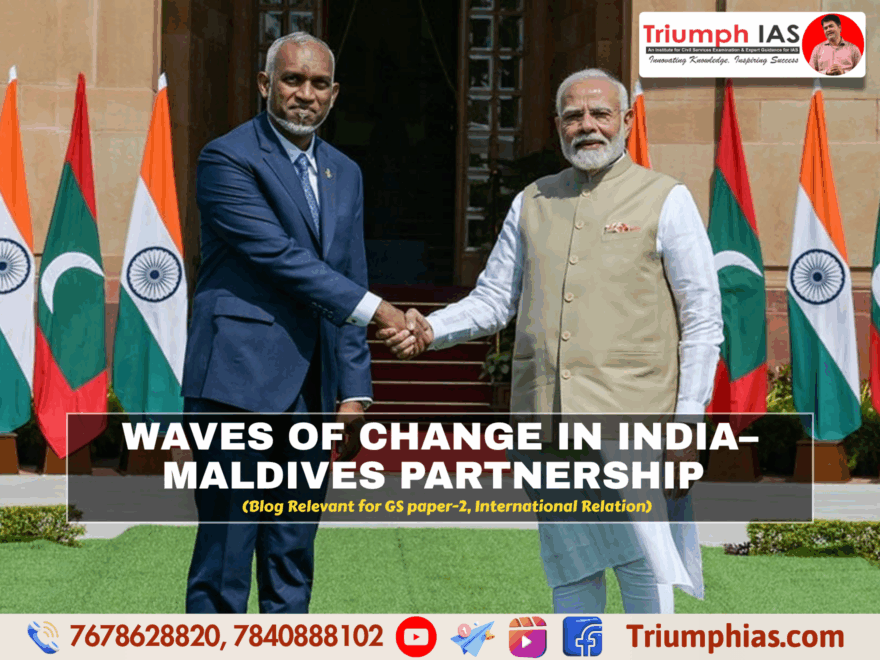
Waves of Change in India-Maldives Partnership
(Relevant for GS paper-2, International Relation)
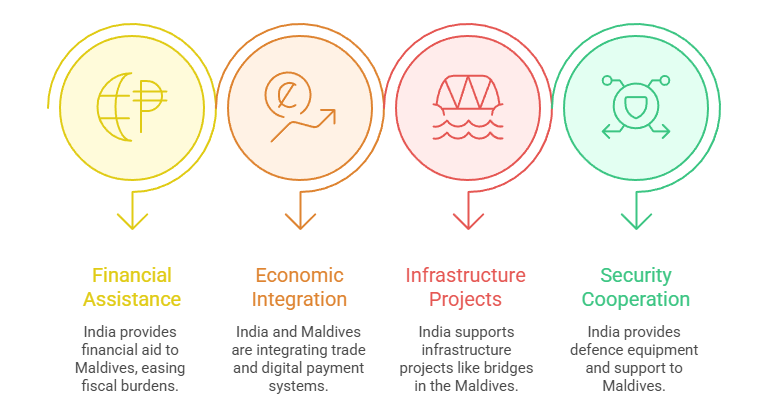
Introduction: India-Maldives PartnershipIndia-Maldives relations have witnessed a dramatic evolution in recent years. Once mired in tension following the 2023 election of Maldives’ President Mohamed Muizzu on an “India‑Out” plank, bilateral relations have undergone a marked reset as India emerges again as the Maldives’ anchor partner in diplomacy, development, and security. Prime Minister Narendra Modi’s two-day state visit to the Maldives in July 2025 symbolized this strategic realignment and underscored India’s continuing primacy in its maritime neighbourhood. From Strain to Strategic ResetMuizzu’s call for the withdrawal of Indian military personnel—who had been deployed for search, rescue, and medical aid missions—triggered a low in relations. India complied by replacing troops with civilian technical staff to operate gifted aircraft, diffusing sovereignty concerns while ensuring continuity of services. Political missteps such as Maldivian ministers’ derogatory online remarks about India contributed to a tourism boycott and heightened diplomatic friction. The Diplomatic TurnaroundPM Modi’s invitation as the guest of honour at Maldives’ 60th Independence Day was both symbolic and substantive. He presided over multiple high-profile engagements, reaffirming shared sovereignty, regional stability, and mutual respect between the leaders of both nations. Key highlights included six memoranda of understanding (MoUs) spanning areas like fisheries, meteorology, digital public infrastructure, and the integration of UPI and RuPay into Maldives’ digital economy. A new Line of Credit worth ₹4,850 crore (~US $565 million) was extended, alongside a 40% reduction in Maldives’ annual debt repayment obligations from roughly US $51 million to US $29 million. Modi also inaugurated infrastructure and community projects, including road and drainage systems in Addu City, and handed over 3,300 social housing units and defence vehicles. Deepening Cooperation: Key Deliverables
Strategic Rationale & Regional ImplicationsUnder its “Neighbourhood First” and SAGAR policy frameworks, India views Maldives as a strategic partner pivotal to ensuring maritime security and influence in the Indian Ocean region. The resetting of relations also reflects a strategic contest with China, whose growing presence via the Belt and Road Initiative and earlier high-level agreements prompted India’s diplomatic and financial outreach. Successful Indian engagement has ranged from crisis response—most famously Operation Cactus in 1988—to development aid during the 2004 tsunami, 2014 water crisis, COVID‑19, and recent financial bailouts. That historical goodwill has re‑emerged as a powerful tool in rebuilding trust. Challenges & Risks AheadDespite renewed warmth, challenges persist in sustaining stability:
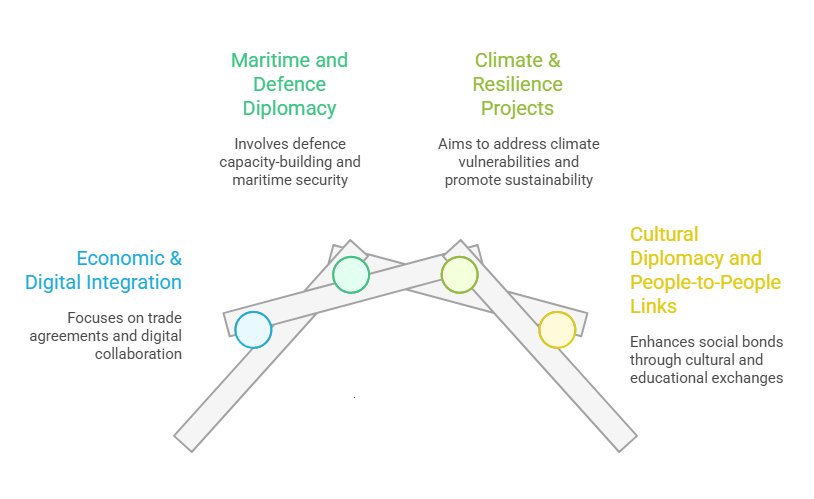
Policy Imperatives for Bilateral Growth
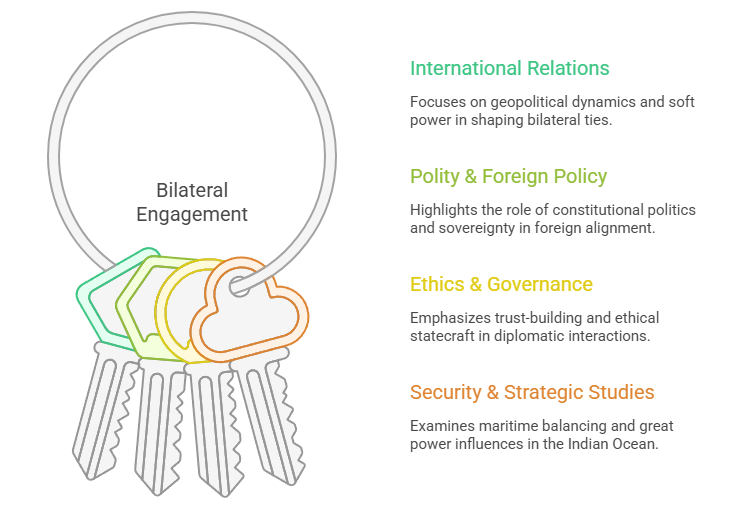
Significance for UPSC Aspirants
This diplomatic reset offers rich insights across UPSC themes:
ConclusionThe recasting of India–Maldives diplomacy represents not only a restoration of ties but a deeper strategic realignment. India’s fine balance of firm diplomatic outreach, development cooperation, and maritime engagement is realigning its position as the Maldives’ preferred partner amid global power shifts. The bilateral journey now hinges on sustainable cooperation in trade, climate resilience, and trust-based partnerships that go beyond transient political landscapes. |
To Read more topics, visit: www.triumphias.com/blogs
2 comments