

Transformation of Electoral Practices
(Relevant for GS paper-2, Electoral Process)
Electoral PracticesIndia’s electoral system, one of the world’s largest democracies, faces evolving challenges—from transparency and campaign financing to inclusivity and technological integration. Strengthening democratic processes requires continuous reforms that preserve electoral integrity, enhance public trust, and ensure that the constitutional principle of adult franchise is honored. Recent developments spotlight the Election Commission of India (ECI), judiciary, and civil society as active participants in driving systemic change. Strengthening Voter Registration & Voter Rolls
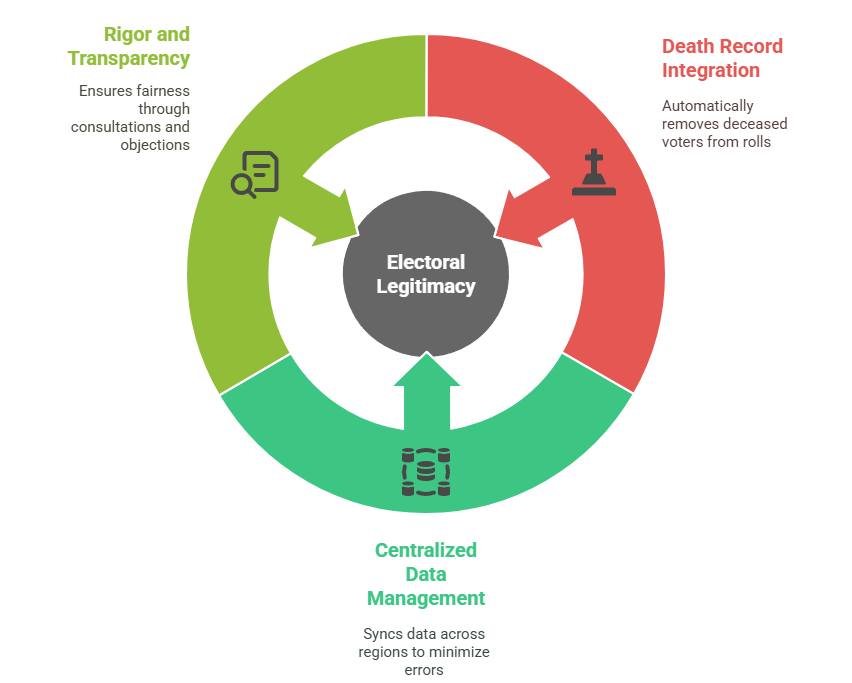
A credible electoral process depends on accurate voter lists. Allegations of bogus and duplicate entries—especially during Maharashtra and Delhi roll revisions—have sparked concerns. In response, the ECI launched several reforms:
Enhanced Voter Facilitation & ParticipationTo enhance civic participation, especially among youth and women, the ECI continues to expand its SVEEP outreach—managing awareness campaigns, counsellor mobilization, and targeted interventions Concurrently:
Such reforms reduce barriers to voting, particularly for first-time and marginalized voters. Technological Interventions in Voting & CountingIndia’s adoption of EVMs coupled with VVPATs in 2004 boosted efficiency and accuracy but also faced criticism over verifiability. To improve confidence, some allege full VVPAT matching should be mandated. While the Supreme Court declined full matching, it mandated enhanced sampling and new solutions like an AI‑powered VVPAT counter—a tech-led innovation that can scale verification without causing delays. Emerging proposals—from blockchain voting to machine‑vision counters—signal a tech-driven path forward for electoral reforms. Fairness in Campaign Finance & Expenditure
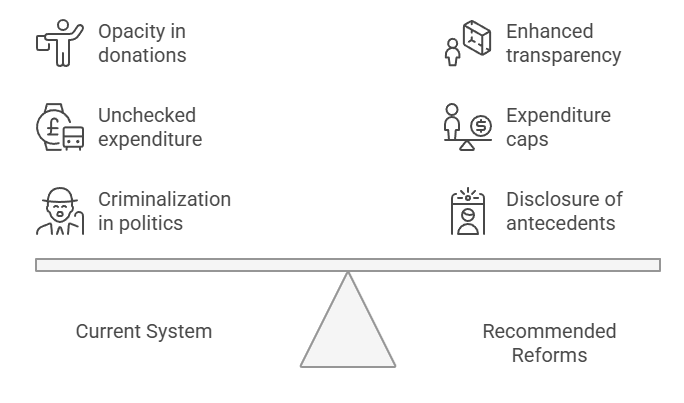
India’s campaign financing system still harbors opacity and malpractices:
Key recommended reforms include:
These align with Supreme Court and Law Commission recommendations on electoral integrity. Electoral System & Structural ReformsSeveral systemic proposals are in play:
These widen the debate on federalism, constitutional design, efficiency, and democratic representation. Strengthening the Election Commission
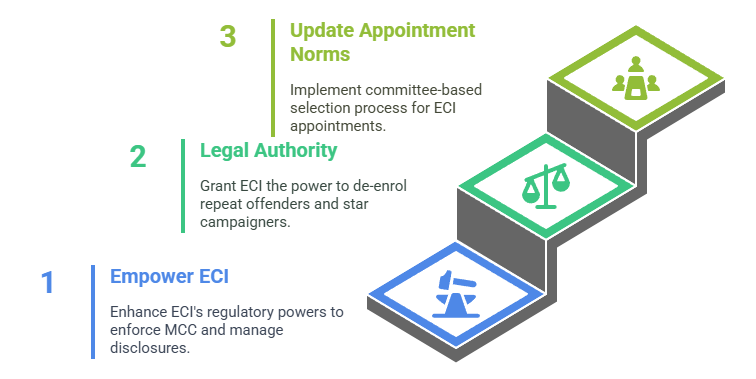
Effective reforms hinge on a credible institutional setup. Recommendations include:
These measures would bolster ECI’s institutional autonomy and operational integrity. Civic Engagement & Electoral LiteracyEmpowering voters is essential for meaningful reforms:
Voter education promotes informed participation and strengthens democratic accountability. Way Forward
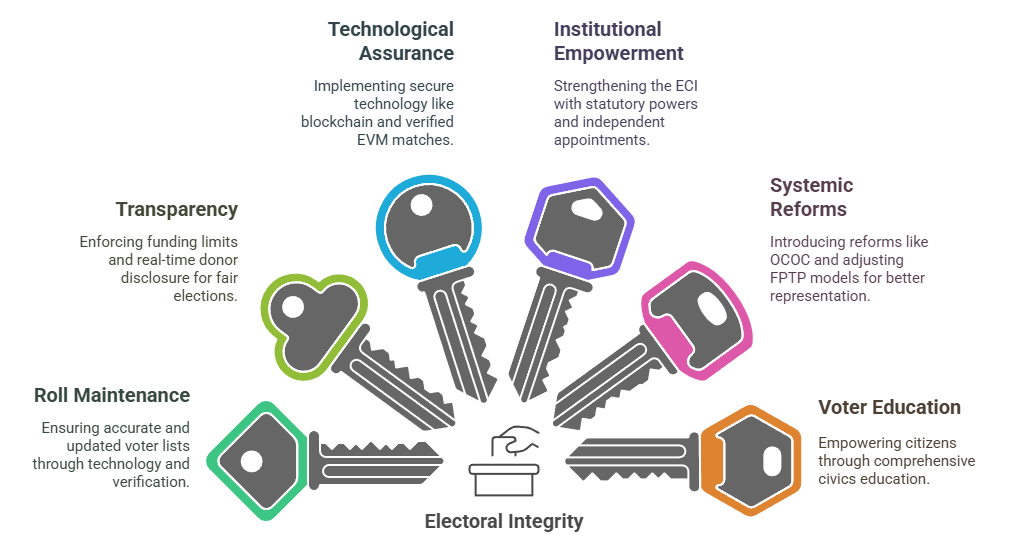
India’s electoral reforms aim to safeguard the foundational pillars of democracy—trust, transparency, and equal voice. Reforms must address:
ConclusionA vibrant democracy thrives on the credibility of its electoral processes. As India confronts evolving challenges—from roll accuracy to tech assurance, funding transparency, and institution-building—ambitious reforms are underway. |
To Read more topics, visit: www.triumphias.com/blogs
One comment