
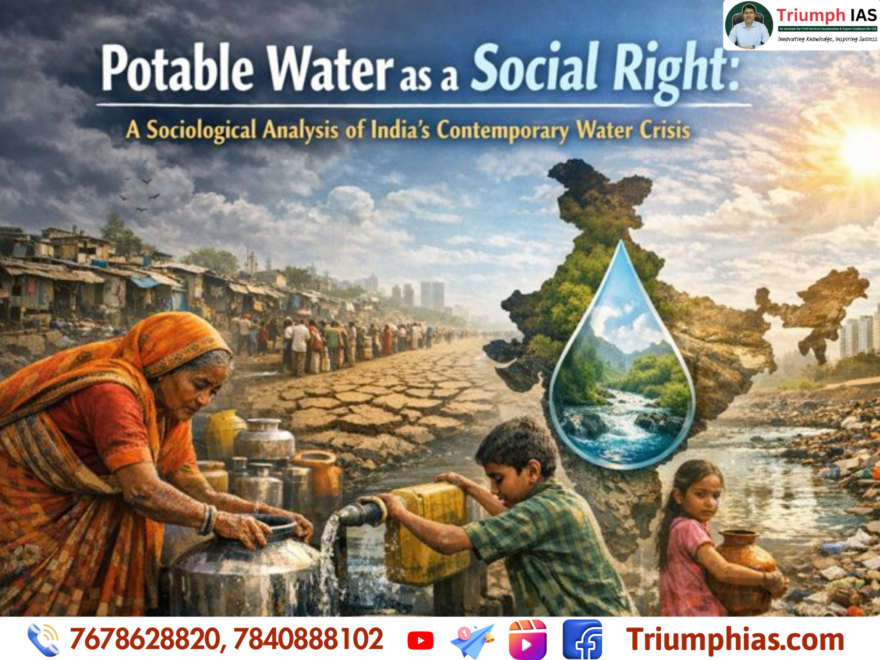
Potable Water as a Social Right: A Sociological Analysis of India’s Contemporary Water Crisis
(Relevant for Sociology Paper I and II)
|
Water is the most fundamental requirement for human survival, yet access to safe and potable drinking water remains deeply unequal across societies. Recent reports of deaths caused by contaminated drinking water in cities such as Indore—often celebrated for administrative efficiency and cleanliness—have once again brought India’s water governance failures into sharp focus. These incidents challenge the assumption that economic growth, urban development, or high cleanliness rankings automatically translate into improved quality of life for all citizens. From a sociological perspective, India’s water crisis cannot be reduced to a technical or infrastructural problem alone. Instead, it must be understood as a complex social issue rooted in structural inequalities, governance deficits, environmental degradation, and the commodification of basic resources. Viewing potable water as a social right rather than a market service offers a powerful lens to examine the crisis and its broader implications for social justice, citizenship, and democracy. Water and Society: Beyond a Technical Understanding
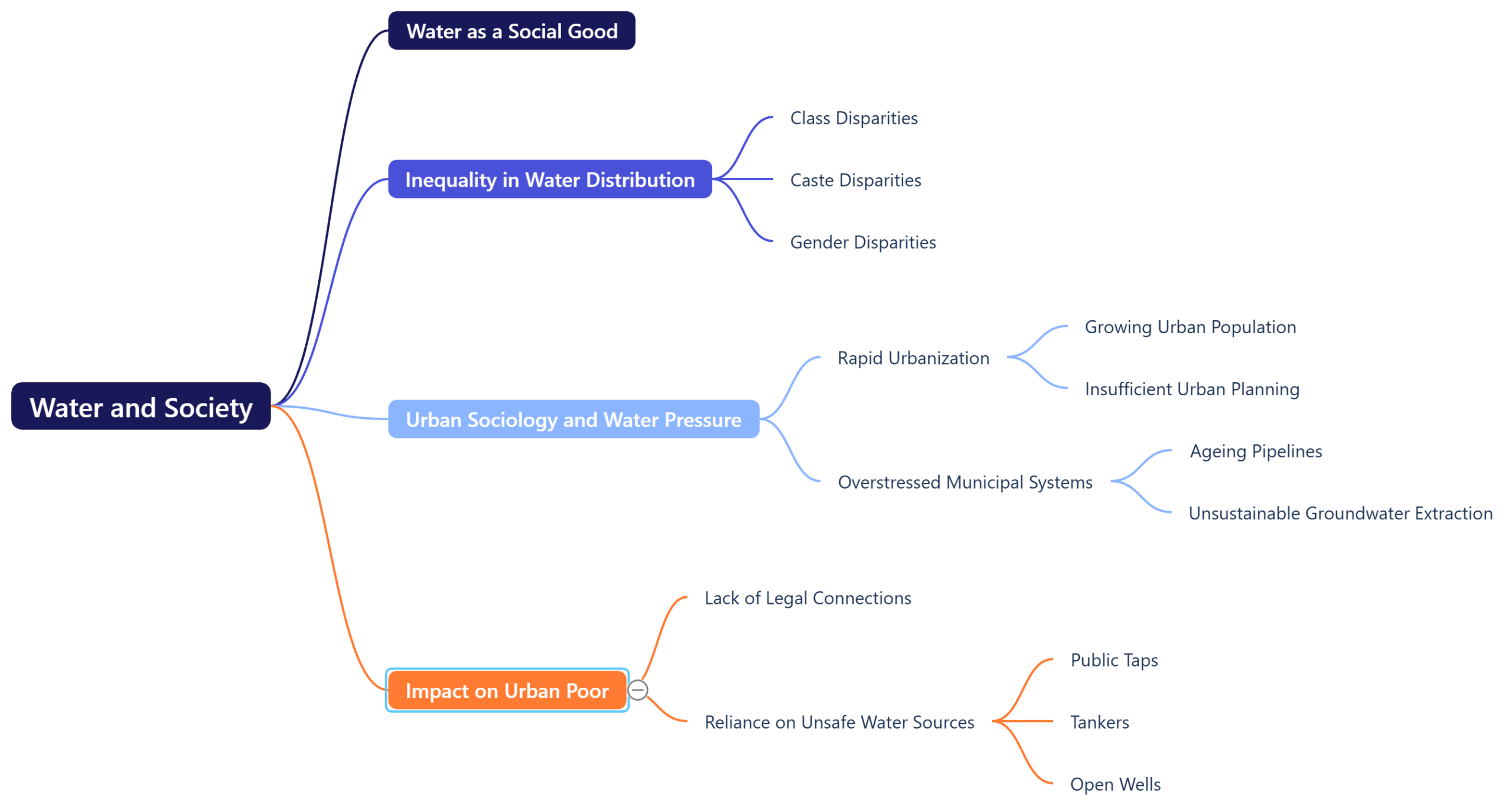
Sociology treats water not merely as a physical resource but as a social good embedded in power relations, institutions, and cultural practices. The distribution of water reflects broader patterns of inequality based on class, caste, gender, and location. In India, disparities between urban and rural areas, formal and informal settlements, and rich and poor households are stark. Urban sociology highlights how rapid urbanisation has placed immense pressure on water infrastructure. According to Census trends, India’s urban population has grown rapidly, yet urban planning has failed to keep pace. Municipal water systems are overstretched, pipelines are ageing, and groundwater is being extracted at unsustainable levels. These structural pressures disproportionately affect the urban poor, who often lack legal connections to municipal water supply and rely on unsafe sources such as public taps, tankers, or open wells. This unequal access demonstrates what sociologists describe as “stratified citizenship”, where formal rights exist on paper but are unequally realised in practice. While affluent households can purchase water through private suppliers or install advanced filtration systems, marginalised communities are forced to consume contaminated water, exposing them to health risks and economic vulnerability. Functionalist Perspective: Institutional Failure and Social DysfunctionFrom a structural-functionalist viewpoint, social institutions such as municipal corporations, water boards, and public health systems are meant to ensure stability and meet the basic needs of society. Clean drinking water is essential for maintaining public health, labour productivity, and social order. When water institutions fail to perform their functions, it leads to social dysfunction. Reports from agencies like the Delhi Jal Board revealing significant contamination in water samples indicate institutional breakdowns in monitoring, regulation, and maintenance. Leakages in pipelines allow sewage to mix with drinking water, while weak accountability mechanisms prevent timely corrective action. Such failures undermine trust in public institutions and weaken the legitimacy of the state. Functionalism also emphasises the interdependence of social systems. Water contamination leads to disease outbreaks, increased healthcare costs, loss of workdays, and educational disruptions—particularly among children. Thus, the water crisis has cascading effects across social institutions, destabilising the social system as a whole. Conflict Perspective: Power, Inequality, and Resource Control
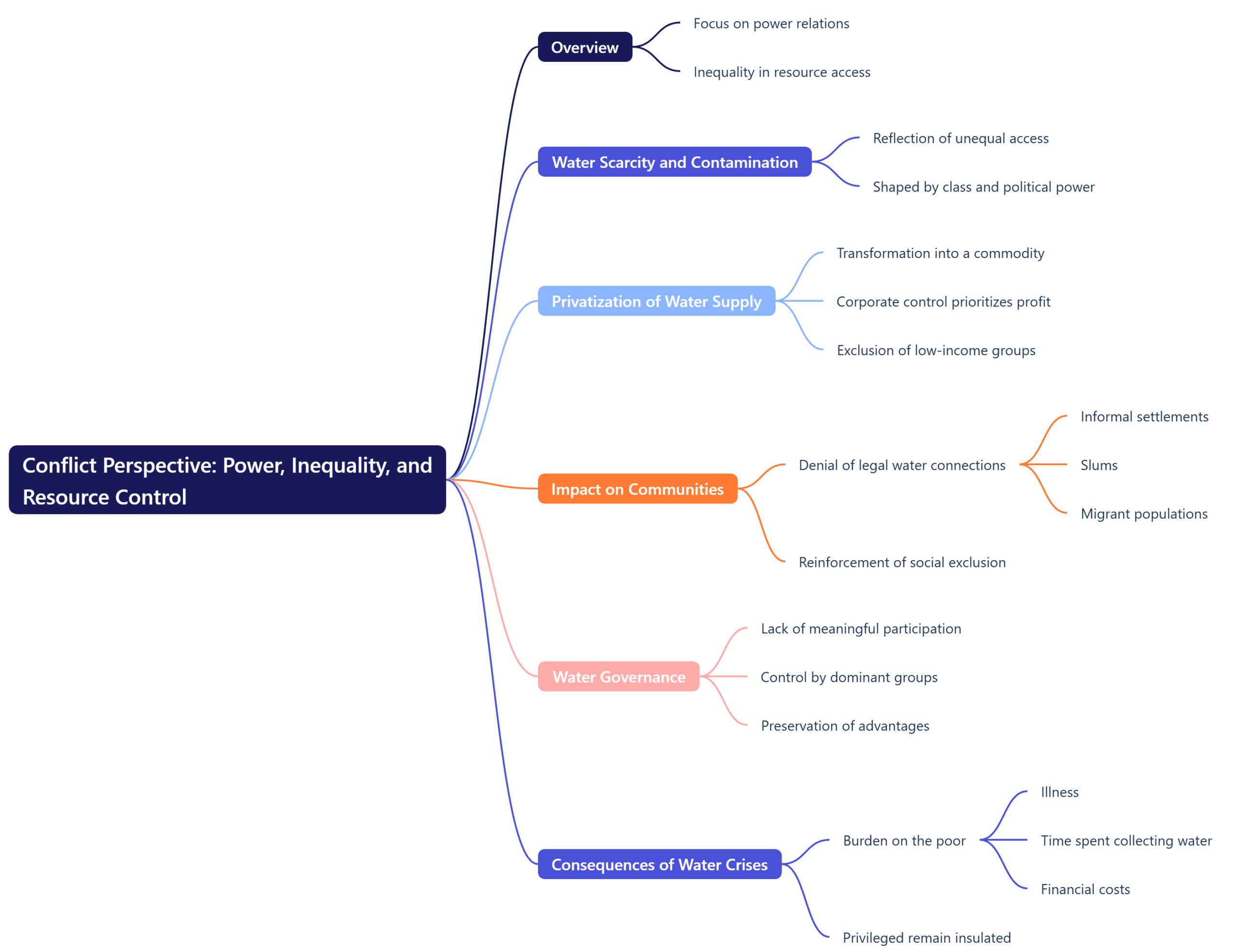
While functionalism focuses on system stability, conflict theory, rooted in Marxist thought, draws attention to power relations and inequality. From this perspective, water scarcity and contamination are not accidental but reflect unequal access to resources shaped by class and political power. Privatisation of water supply in many cities has transformed water into a commodity rather than a public good. Corporate control over water infrastructure often prioritises profit over universal access, leading to exclusion of low-income groups. Informal settlements, slums, and migrant populations are frequently denied legal water connections, reinforcing social exclusion. Moreover, water governance decisions are often made without meaningful participation from affected communities. This aligns with conflict theorists’ argument that dominant groups control resources and institutions to preserve their advantage. The burden of water crises—illness, time spent collecting water, financial costs—falls disproportionately on the poor, while the privileged remain insulated. Gender and Water: A Feminist Sociological LensA feminist sociological perspective reveals the gendered nature of water scarcity. In both rural and urban India, women bear primary responsibility for water collection, storage, and household management. When water supply is irregular or unsafe, women’s unpaid labour increases significantly. Time spent fetching water reduces women’s opportunities for education, paid employment, and political participation. Additionally, contaminated water directly affects maternal and child health, reinforcing intergenerational cycles of disadvantage. Feminist scholars argue that ignoring gender dimensions in water policy leads to ineffective and unjust outcomes. Thus, the water crisis is not gender-neutral; it reinforces patriarchal divisions of labour and deepens gender inequality. Environmental Sociology and the Risk SocietyEnvironmental sociology situates India’s water crisis within broader ecological transformations. Climate change, erratic rainfall, declining groundwater tables, and pollution of rivers have intensified water insecurity. Indian cities increasingly depend on distant water sources, leading to ecological stress and inter-regional conflicts. German sociologist Ulrich Beck’s concept of the “risk society” is particularly relevant here. Modern development, industrialisation, and urban expansion generate new risks that transcend class and geography, though their impacts remain socially uneven. Water contamination is a manufactured risk produced by inadequate infrastructure, industrial pollution, and unsustainable consumption patterns. Beck argues that such risks challenge traditional governance models and demand reflexive modernisation—where societies critically reassess their development trajectories. India’s water crisis thus reflects the unintended consequences of rapid modernisation without ecological and social safeguards. Right to Water and the Idea of Citizenship
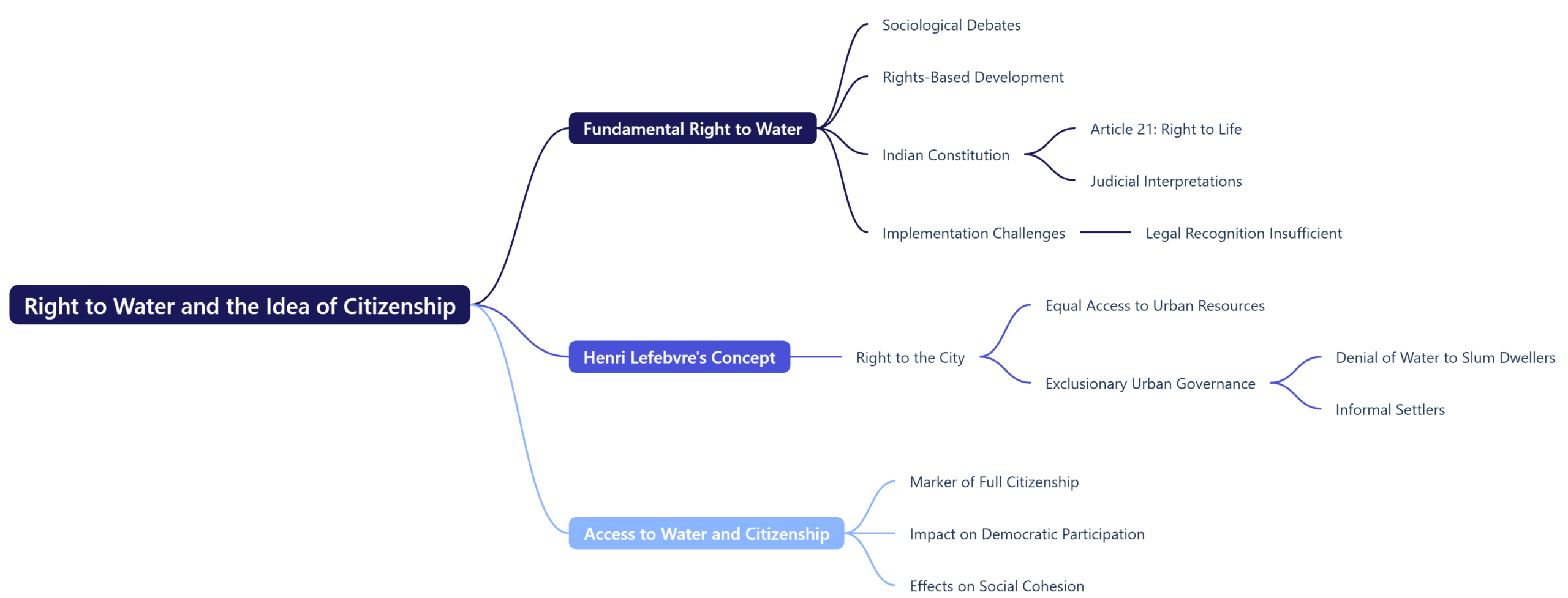
The demand to recognise potable water as a fundamental right aligns with sociological debates on rights-based development. While the Indian Constitution does not explicitly mention the right to water, judicial interpretations have derived it from Article 21 (Right to Life). However, sociologists caution that legal recognition alone is insufficient without effective implementation. French sociologist Henri Lefebvre’s concept of the “Right to the City” is useful in this context. Lefebvre argued that all urban residents—not just property owners—should have equal access to urban resources and services. Denial of safe drinking water to slum dwellers and informal settlers represents a violation of this right and reflects exclusionary urban governance. Access to water becomes a marker of full citizenship. When basic needs are unmet, democratic participation loses meaning, and social cohesion weakens. Rural–Urban Continuum and Developmental ContradictionsSociology also emphasises that the water crisis cannot be understood in isolation from rural distress. Over-extraction of groundwater for agriculture, inadequate irrigation policies, and declining rural water availability have driven migration to cities, intensifying urban water demand. This highlights a key contradiction of India’s development model—urban growth often depends on rural resource extraction, leading to uneven development. The rural–urban divide in water access underscores the need for integrated planning that transcends administrative boundaries. Policy, Governance, and Community ParticipationSociological research consistently shows that top-down, technocratic solutions are insufficient to address complex social problems like water scarcity. While initiatives such as Jal Jeevan Mission aim to expand water access, their success depends on local governance, transparency, and community involvement. Participatory governance models, where local communities are involved in monitoring water quality and managing resources, have shown promise. Such approaches align with sociologist Amartya Sen’s capability approach, which emphasises expanding people’s real freedoms and agency rather than merely providing services. Conclusion: Towards a Sociological Reimagining of Water GovernanceIndia’s contemporary water crisis is a mirror reflecting broader social inequalities, governance failures, and environmental risks. Treating potable water as a social right rather than a commodity is essential for achieving inclusive development and social justice. A sociological approach reveals that technological solutions must be complemented by institutional reform, democratic participation, gender sensitivity, and ecological sustainability. Without addressing the social dimensions of water access, even the most advanced infrastructure will fail to ensure equitable outcomes. Ultimately, ensuring safe drinking water for all is not merely a policy challenge—it is a test of India’s commitment to equality, citizenship, and human dignity. |
To Read more topics, visit: www.triumphias.com/blogs
Read more Blogs:
China Mega Dam on the Brahmaputra and the Sociology of Environmental Power
3 comments