
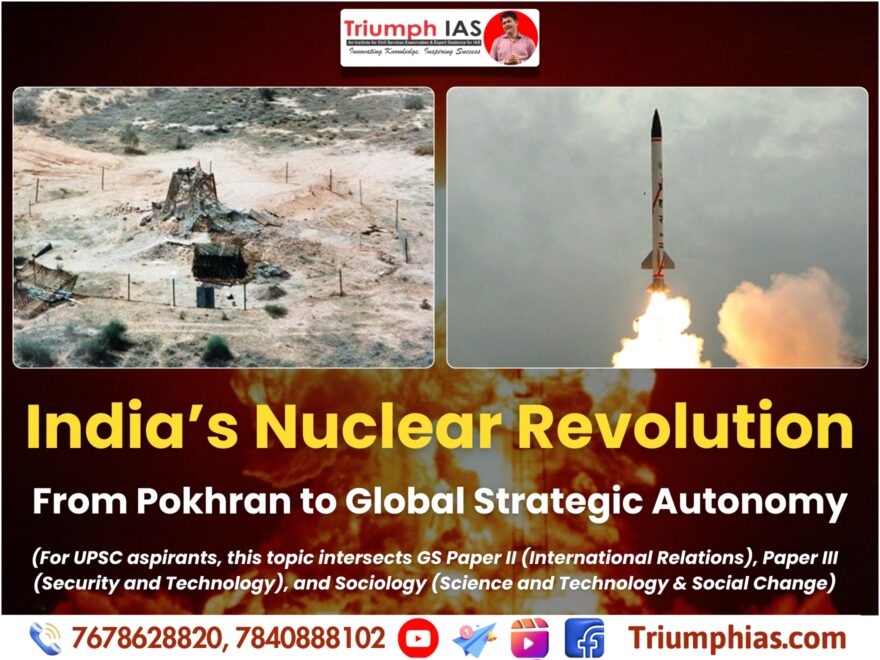
India’s Nuclear Revolution
From Pokhran to Global Strategic Autonomy
(For UPSC aspirants, this topic intersects GS Paper II (International Relations), Paper III (Security and Technology), and Sociology (Science and Technology & Social Change)
Introduction:India’s nuclear revolution is not just about warheads or uranium—it is the story of a nation’s transformation through science, security, and self-reliance. Born out of the vision of pioneers like Homi Bhabha and institutionalized through bold leadership, India’s nuclear evolution reflects its deeper quest for strategic autonomy, technological advancement, and energy security. Historical Timeline of India’s Nuclear Evolution
Key Features of India’s Nuclear Doctrine
Civilian Use of Nuclear PowerIndia’s nuclear program is not just about bombs:
Impact on Global and Domestic Fronts
Challenges Ahead
Conclusion:India’s nuclear revolution reflects the country’s ability to navigate complex challenges—technical, diplomatic, and ethical. From building reactors to asserting deterrence, from signing global treaties to resisting coercion, India has carved a unique nuclear path—rooted in peace, powered by science, and driven by strategic foresight. As India moves toward becoming a global power, its nuclear journey will remain central to its identity as a modern, responsible, and sovereign republic. |

To Read more topics like Artificial Intelligence and Human Development in HDR 2025 in Public Posts, visit: www.triumphias.com/blogs
Read more Blogs:
Code of Conduct for Civil Servants | Ethics for UPSC Civil Services Examination | Triumph IAS
One comment