
Preserving Roots, Empowering Futures: The Tribal Renaissance
(Relevant for GS paper-2, Tribal Development)
The Tribal RenaissanceIndia is a land of rich cultural diversity, and among its most vibrant and resilient communities are its tribal populations. With deep-rooted traditions, a harmonious relationship with nature, and a growing voice in national development, India’s tribal communities are no longer confined to the margins. Today, they represent a blend of ancient wisdom and modern aspiration, emerging as key contributors to sustainable development, environmental conservation, and socio-political reform. The journey of tribal communities—from rooted cultural identities to rising strength—is not only a story of revival but of rightful recognition and inclusion. Understanding India’s Tribal LandscapeIndia is home to the second-largest tribal population in the world, after Africa. As per the Census 2011, Scheduled Tribes (STs) constitute 8.6% of India’s population, amounting to over 104 million people across 705 officially recognized tribes. These communities are primarily concentrated in states like Madhya Pradesh, Chhattisgarh, Odisha, Jharkhand, Maharashtra, Rajasthan, and the North-Eastern states. While the majority reside in forested or hilly terrains, their cultural practices, languages, and belief systems vary significantly—ranging from the Santhal dances of Jharkhand to the Apatani agricultural methods of Arunachal Pradesh. Rooted in Culture: Preserving Indigenous HeritageTribal communities in India have preserved oral traditions, folklore, indigenous medicines, and ecological knowledge for centuries. Their art forms like Warli (Maharashtra), Pithora (Madhya Pradesh and Gujarat), and Dokra metal craft (Chhattisgarh and Odisha) are gaining global recognition. Tribal festivals such as:
celebrate not just religious or seasonal events, but also collective identity and ecological gratitude. Languages spoken by tribes, however, are under threat. According to the UNESCO Atlas of the World’s Languages in Danger, many tribal languages in India are endangered due to lack of formal recognition and intergenerational transmission. Reviving and preserving these languages through tribal schools and digital documentation is now a key focus area for the Ministry of Tribal Affairs. Rising in Strength: Tribal Empowerment Initiatives
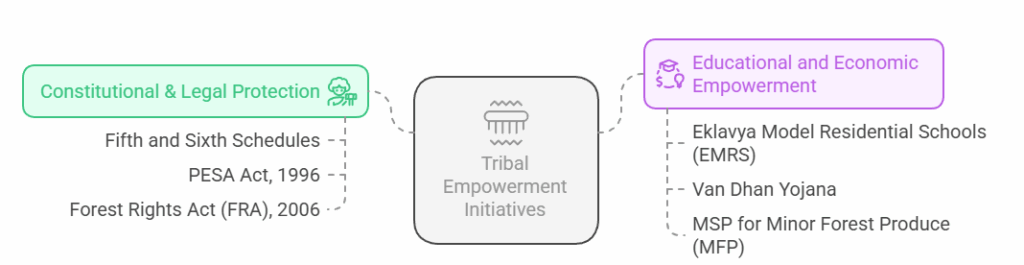
Despite their socio-economic challenges, India’s tribal communities are gradually becoming active participants in the national growth narrative. Government policies, constitutional safeguards, and grassroots movements are playing pivotal roles in this transformation.
As of 2024, over 49 lakh claims under FRA have been accepted, covering nearly 1.8 crore acres, though implementation varies across states.
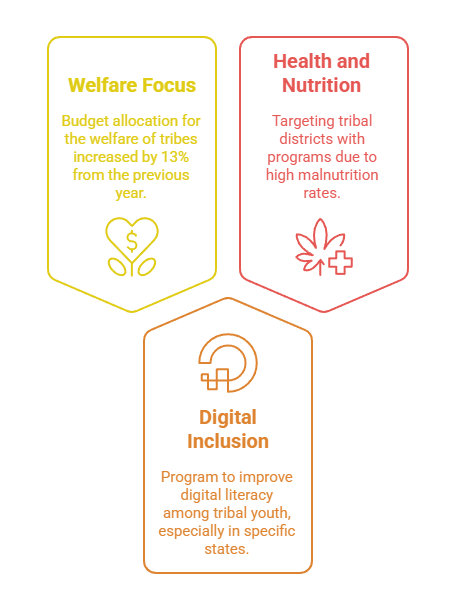
Current Developments: 2024–25 Highlights
The Union Budget 2024–25 allocated ₹1.26 lakh crore for the welfare of SCs, STs, and OBCs. The Ministry of Tribal Affairs alone received ₹13,000+ crore, marking an increase of 13% from the previous year.
Tribes in Political RepresentationFrom Birsa Munda, who led tribal uprisings in the colonial era, to Droupadi Murmu, the first tribal President of India, tribal communities are gradually finding their space in leadership and governance. In the Lok Sabha, there are 47 reserved seats for STs, ensuring legislative participation. Tribal leaders like Hemant Soren (Jharkhand) and Arjun Munda (Union Tribal Affairs Minister) have also played significant roles in shaping tribal policy at state and central levels. Challenges That Persist
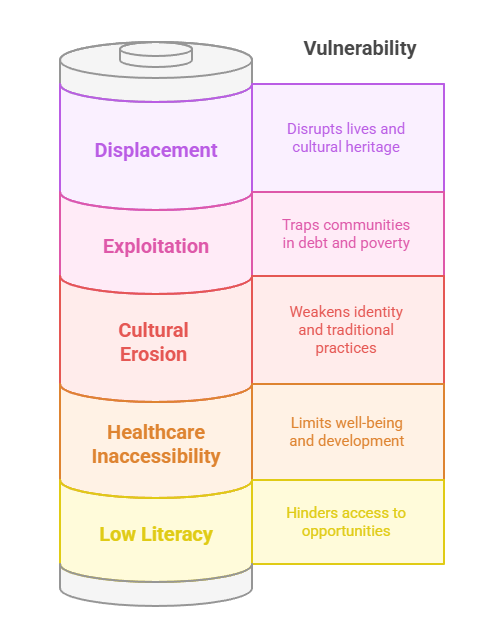
Despite progress, several challenges continue to hinder holistic tribal development:
Conclusion: A Balanced Path AheadThe tribal communities of India represent the living soul of the nation’s cultural diversity. While historically marginalised, they are now asserting their voice—demanding inclusion, rights, and respect. The path ahead requires a balanced approach: one that ensures economic empowerment without cultural erosion, development without displacement, and representation without tokenism. Efforts must be people-centric, participatory, and locally contextualised. Only then can we truly ensure that India’s tribes not only remain rooted in their unique heritage but also rise in strength as equal stakeholders in the nation’s destiny. |
To Read more topics, visit: www.triumphias.com/blogs
One comment