
Dominant Caste in India
(Relevant for Sociology Paper I: Stratification and Mobility and Sociology Paper II: Caste System)
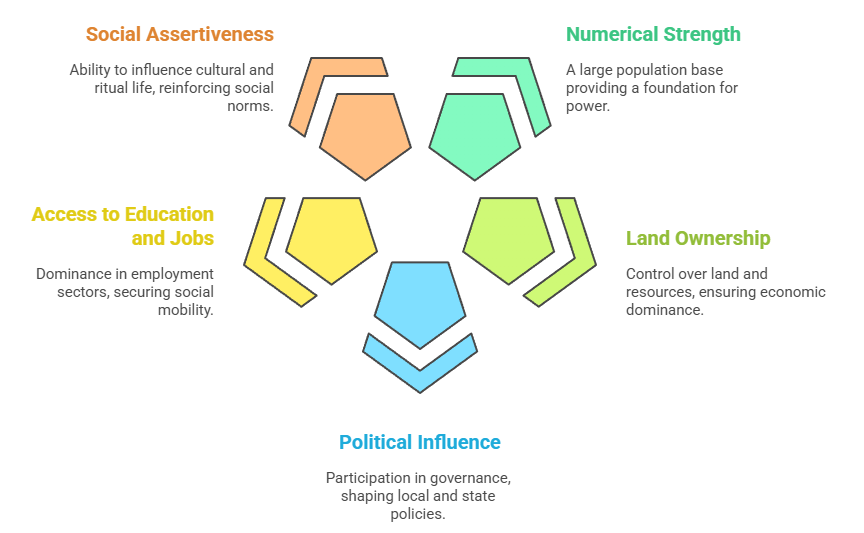
IntroductionIn the sociological study of Indian society, the concept of the “dominant caste” plays a critical role in understanding power dynamics, caste relations, and rural social structures. Coined by renowned Indian sociologist M.N. Srinivas, the term bridges the gap between classical caste hierarchies and evolving socio-political realities. Despite being historically placed lower in ritual status, many castes have emerged as dominant due to factors like land ownership, political influence, and numerical strength. Who is a Dominant Caste?The concept of “dominant caste” was first introduced by M.N. Srinivas in his ethnographic work on the village of Rampura in Karnataka. According to him, a caste group becomes dominant when it wields significant power in local affairs, irrespective of its ritual status in the traditional caste hierarchy. Key Characteristics of a Dominant Caste:
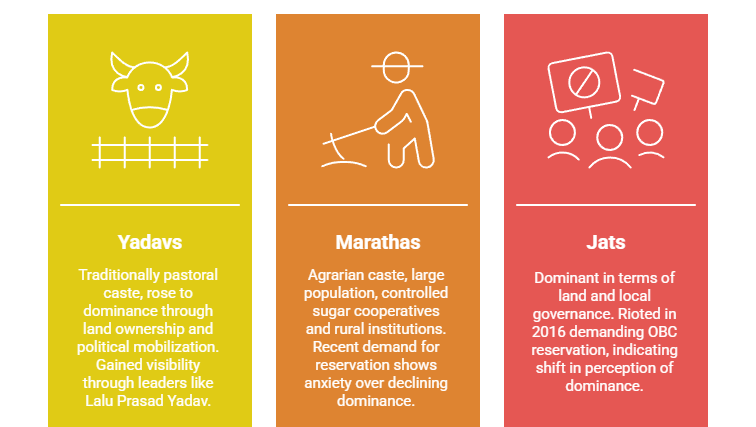
Examples of Dominant Caste in India
These castes may not rank high in ritual purity but dominate economically, numerically, and politically. Sociological Analysis:
M.N. Srinivas’s theory broke from traditional notions of caste as purely ritualistic. His idea of dominant caste emphasized real power in everyday rural life. He argued that despite Brahmins being at the top ritually, it was the dominant castes like Vokkaligas or Lingayats who held sway over land, labor, and law in villages. He also linked this concept with his other theories:
Béteille emphasized that dominance is not just about caste but interplay of caste, class, and power. He highlighted that a dominant caste may lose influence over time if it fails to retain control over economic and political resources. Dominant Caste and Political MobilizationThe post-independence democratic setup has seen dominant castes using caste-based identity to consolidate power. The emergence of regional caste-based political parties—like the RJD (Yadav-based) in Bihar or DMK (Non-Brahmin movement) in Tamil Nadu—are examples of how dominant castes utilize political platforms to secure benefits. Political Implications:
The Mandal Commission implementation further heightened the importance of dominant backward castes in political bargaining. Dominant Caste vs Upper Caste:It is essential to note that dominant caste ≠ upper caste. Upper castes like Brahmins may have ritual status, but in many villages they do not hold actual economic or political power. In contrast, dominant castes may belong to the OBC category but exercise tangible power on the ground. Dominant Castes and Social Justice:Despite enjoying economic and political dominance, many dominant castes continue to seek affirmative action under OBC quotas, often arguing that urbanization and neoliberal policies have eroded their economic base. This has led to major agitations:
These movements show the paradox where dominant castes feel relative deprivation compared to upper castes in elite jobs and Dalits in reservation benefits. Case Studies:
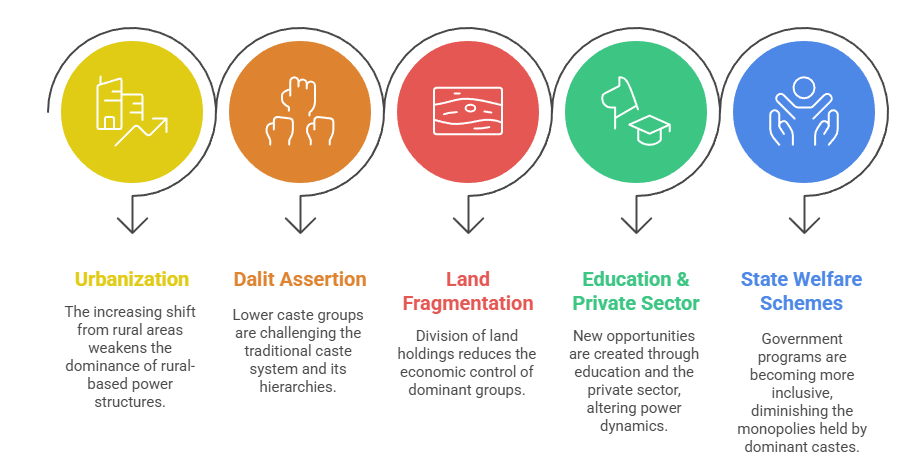
Challenges to Dominant Caste Today
ConclusionThe concept of dominant caste reveals the fluidity of caste power in Indian society. It dismantles the ritualistic understanding of caste and brings in a realist, ground-level approach to how caste operates in terms of economy, politics, and identity. Understanding dominant caste helps in framing nuanced answers, where caste is a recurring theme. It also provides insight into the changing rural power structure and the complexities of reservation politics in contemporary India. Previous Year QuestionsPaper II:
|
To Read more topics, visit: www.triumphias.com/blogs
Read more Blogs:
One in Four Indians below Minimum Standard of Living: World Bank’s Recent Report
One comment