Introduction
In a historic ruling, Britain’s highest court declared that only biological women qualify under the legal definition of “woman” in equality laws, thereby excluding trans women from specific single-sex services. This verdict, while praised by some as a move towards legal clarity, has sparked deep concerns among LGBTQIA+ activists and scholars. For sociology students, this incident presents an opportunity to understand the intersection of law, gender identity, and social justice.
Legal Ruling and Its Immediate Implications
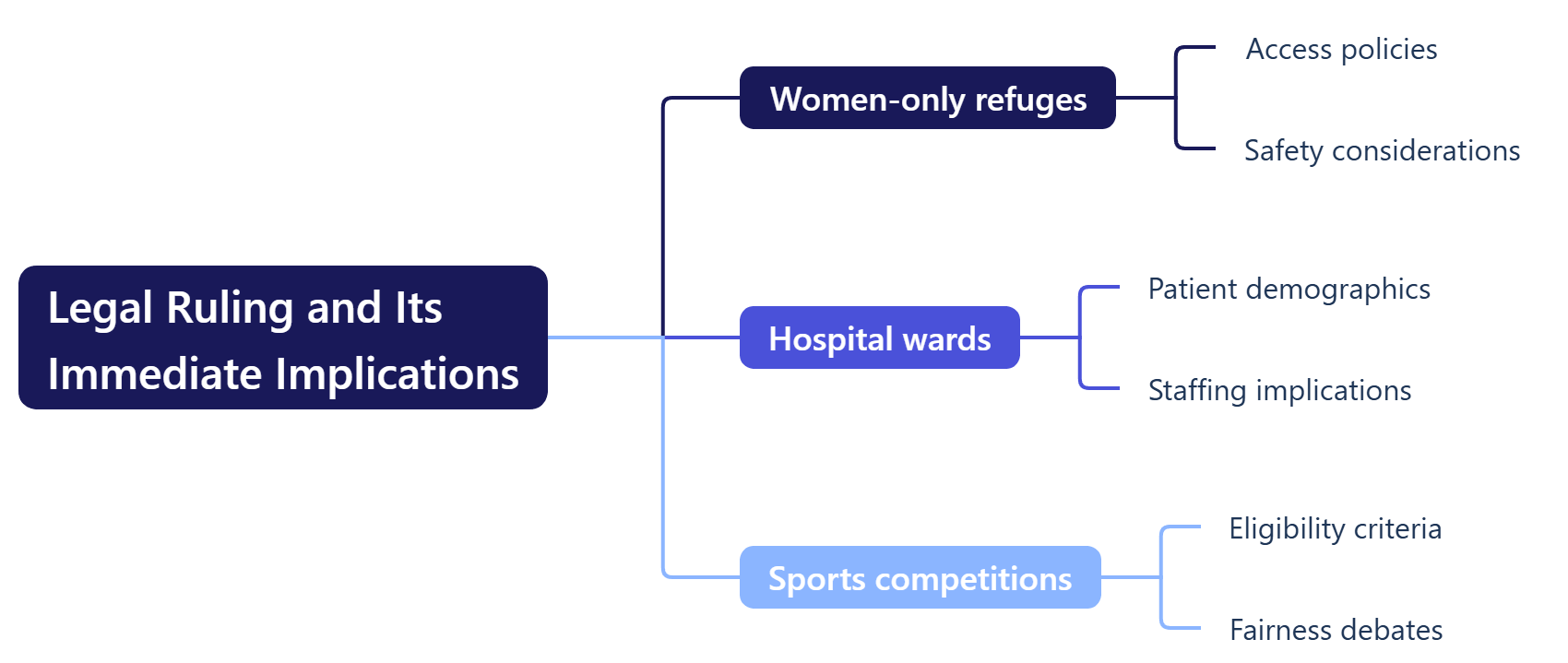
The ruling effectively empowers institutions to exclude Trans women from certain spaces like:
- Women-only refuges,
- Hospital wards,
- Sports competitions.
This decision, while framed as legal clarification, raises crucial sociological questions about inclusion, identity, and the state’s role in defining gender.
Sociological Analysis
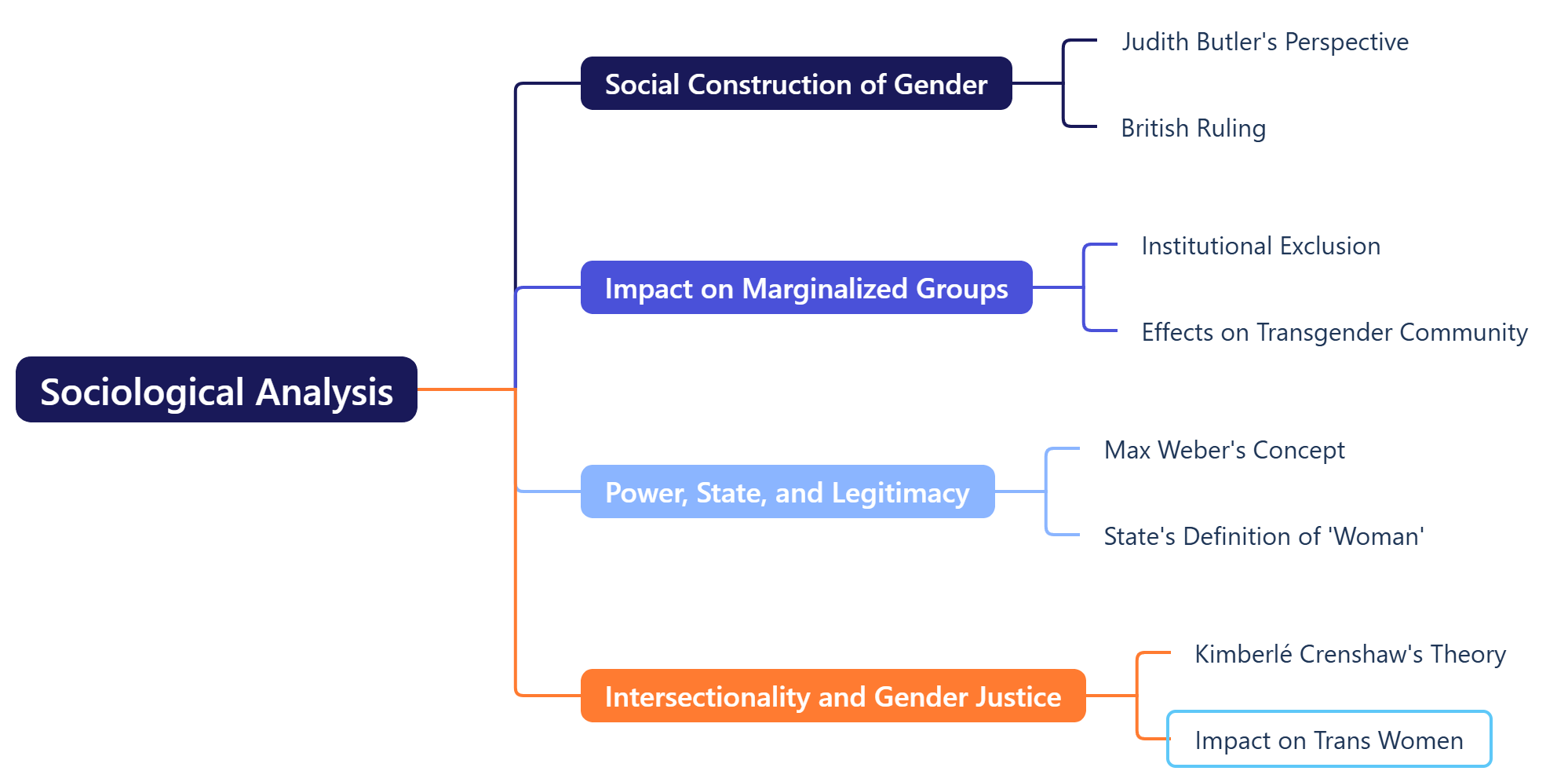
- Social Construction of Gender: Sociologists like Judith Butler have emphasized that gender is not biologically determined but socially constructed. The British ruling reasserts a biologically essentialist view, contradicting progressive theories which argue that gender identity is shaped by personal experience, cultural norms, and societal interactions—not anatomy alone.
- Impact on Marginalized Groups: This case is a classic example of institutional exclusion, where legal structures may marginalize vulnerable identities. For the transgender community, which already faces systemic discrimination in employment, healthcare, and education, this verdict could reinforce barriers and validate prejudices.
- Power, State, and Legitimacy: Max Weber’s concept of legitimate authority becomes relevant here. The state, as the legitimate source of law, exercises symbolic power by defining social categories. When the state defines ‘woman’ strictly as ‘biological’, it sets a precedent that may be used to delegitimize lived experiences and alternate identities, affecting real lives.
- Intersectionality and Gender Justice: Kimberlé Crenshaw’s theory of intersectionality suggests that identities like gender, race, and sexuality do not exist in silos. Trans women, particularly trans women of color or from lower socio-economic backgrounds, face layered forms of discrimination. This ruling may worsen their social location, highlighting the need for more inclusive gender justice frameworks.
Comparative Perspective: Lessons for India
While the Indian Supreme Court’s NALSA v. Union of India (2014) judgment recognized the rights of Trans individuals and allowed self-identification, implementation remains inconsistent. The British verdict underlines how legal definitions can either empower or marginalize. For India, it is a cautionary tale against reverting to biological essentialism in the name of legal clarity.
Conclusion
The British ruling serves as a pivotal moment in the ongoing global debate around gender identity, law, and social justice. For sociology students, it exemplifies how institutional structures interact with evolving social norms and the risks involved in rigid legal definitions of fluid identities. It calls for a deeper examination of policies that respect diversity while ensuring protection and equity for all.
PYQs
Paper I
- Distinguish between sex and gender. Discuss how patriarchy shapes gender roles in society. (2023)
- What is the relationship between social stratification and social mobility? How does gender influence it? (2022)
- Examine Judith Butler’s notion of gender performativity. (2021)
- Discuss how gender is a social construct. Explain using the contributions of any two sociological theorists. (2020)
- Examine the role of law as an instrument of social change with suitable examples. (2018)
- Explain the concept of ‘social exclusion’. How does it affect marginalized communities? (2017)
- Discuss the role of ideology in maintaining gender inequality. (2016)
- Write a note on the social construction of sexuality. (2015)
- How do modern legal systems contribute to both inclusion and exclusion in society? (2013)
Paper II
- Evaluate the role of social reform movements in transforming gender relations in India. (2023)
- Examine the impact of state policies on the empowerment of women and gender minorities. (2022)
- Critically examine the role of the state in recognizing gender diversity in India. (2021)
- Write a note on the status of LGBTQIA+ rights movement in India post-Section 377 verdict. (2020)
- Discuss the status of transgender persons in India. What legal and social measures have been taken for their empowerment? (2019)
- How has the process of globalization affected gender relations in India? (2017)
- How have Indian laws addressed issues of social justice for marginalized communities? (2015)
- Analyze the intersectionality of caste, class, and gender in Indian society. (2021)
- Discuss the challenges faced by the transgender community in accessing public services. (2018)
|



One comment