

Walking the Fine Line between India and China
(Relevant for GS paper-2, IR)
|
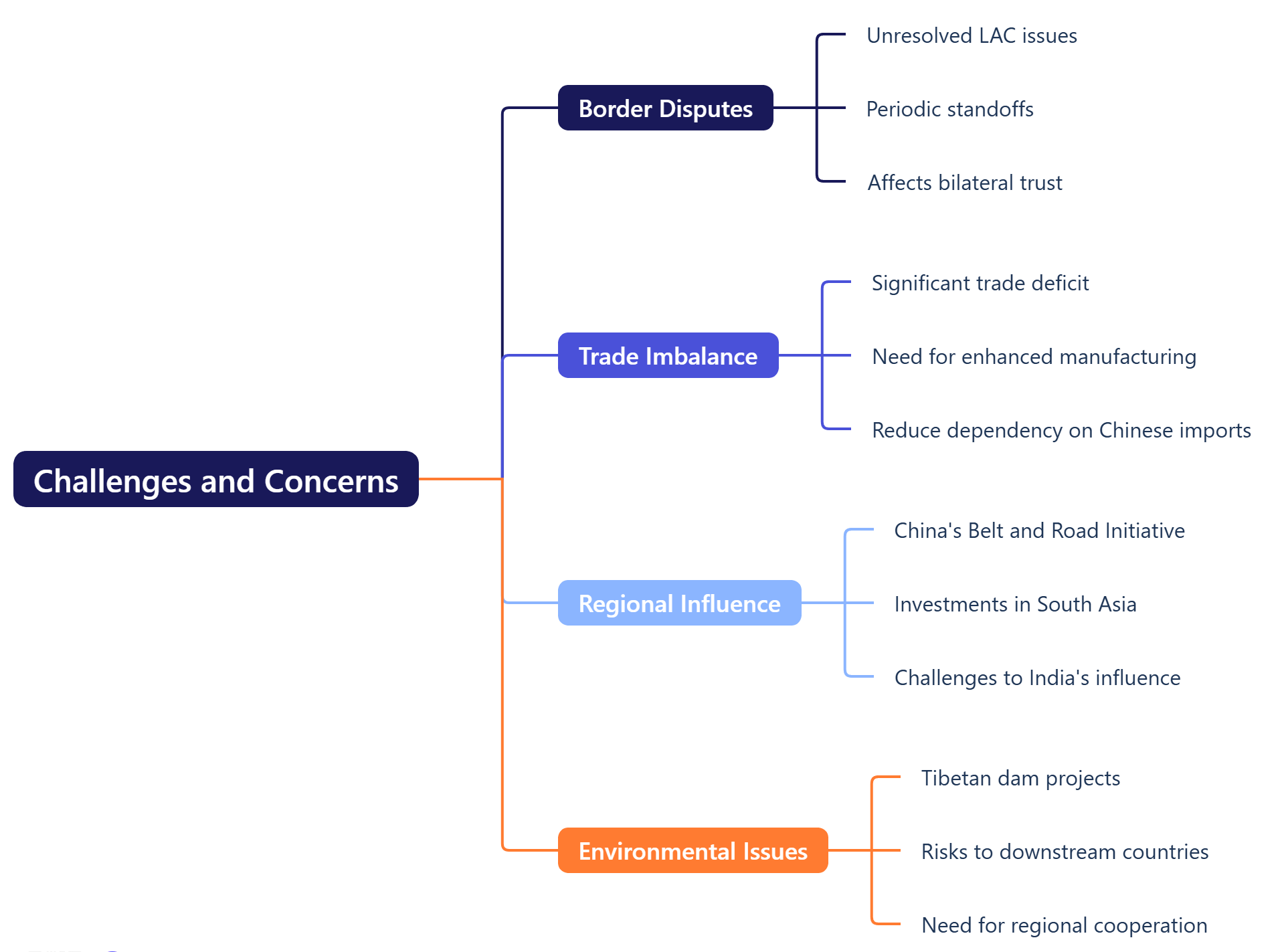
As India and China commemorate 75 years of diplomatic relations in 2025, their bilateral ties remain complex, marked by cooperation and contention. While trade and diplomatic engagements continue, underlying strategic tensions, especially along the disputed border regions, persist. This intricate relationship necessitates a nuanced approach, balancing economic interests with national security concerns. Historical ContextThe India-China relationship has been historically influenced by border disputes, particularly the Line of Actual Control (LAC). The 1962 war and subsequent skirmishes, including the 2020 Galwan Valley clash, have left a legacy of mistrust. Despite multiple rounds of diplomatic talks, a comprehensive resolution remains elusive, with both nations maintaining a cautious stance. Economic InterdependenceTrade between India and China has grown significantly, with bilateral trade reaching $127.7 billion in the fiscal year 2024-25. However, this growth is accompanied by a widening trade deficit, which stood at a record $99.2 billion during the same period . India’s imports from China, including electronics and solar cells, surged, while exports to China declined. In response to concerns over dumping and to protect domestic industries, India imposed a 12% temporary safeguard tariff on certain steel imports, primarily from China . This move aims to support local manufacturers facing competition from cheaper Chinese imports. Strategic and Geopolitical DynamicsBeyond economics, strategic considerations shape India-China relations. China’s increasing presence in the Indian Ocean and its infrastructural projects in neighboring countries raise security concerns for India. Additionally, China’s plans to construct a massive hydroelectric dam in Tibet on the Yarlung Tsangpo river have alarmed India and Bangladesh due to potential environmental and geopolitical implications . India’s growing ties with the United States further complicate its relationship with China. Recent high-level visits and discussions on enhancing trade and strategic cooperation indicate India’s intent to diversify its partnerships and counterbalance China’s regional influence . Challenges and Concerns
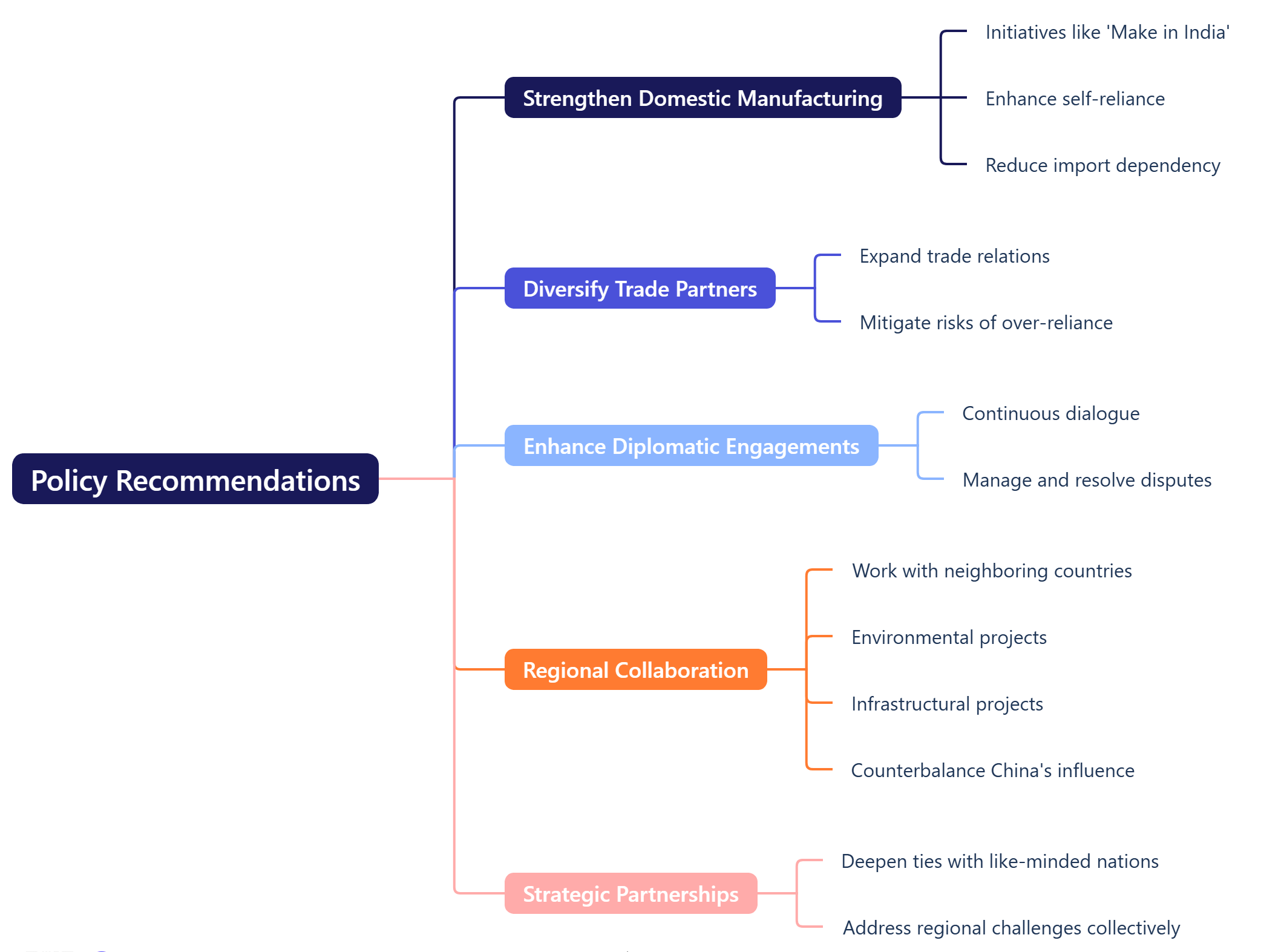
Policy Recommendations
ConclusionNavigating the India-China relationship requires a delicate balance of assertiveness and diplomacy. While economic ties offer opportunities, strategic and geopolitical challenges necessitate a cautious approach. By strengthening domestic capabilities, diversifying partnerships, and engaging in proactive diplomacy, India can effectively manage its relationship with China, ensuring national interests are safeguarded while contributing to regional stability. |

One comment