Urban Caste and The New Untouchability
Introduction
Caste in India has often been associated with villages, traditional occupations, and rigid social hierarchies. However, the assumption that urbanization automatically dissolves caste boundaries is misleading. Cities, once imagined as spaces of modernity and equality, are now witnessing new forms of caste discrimination. This phenomenon is often described as the “new untouchability” in urban contexts. Understanding the transformation of caste in urban settings is crucial. Concepts like social stratification, social mobility, identity politics, and caste-class nexus directly intersect with this issue. Moreover, contemporary developments such as housing discrimination, digital untouchability, and workplace exclusion provide strong linkages to sociology syllabus topics.
Historical Context of Untouchability
Traditionally, untouchability was rooted in ritual purity and pollution, as explained by G.S. Ghurye and Louis Dumont. In villages, Dalits were excluded from temples, wells, and even common spaces. With urbanization and constitutional safeguards like Article 17 (Abolition of Untouchability), many believed caste-based discrimination would fade away. M.N. Srinivas noted through the concept of “Sanskritization”, caste adapts to new settings rather than disappearing. Today’s cities reveal how caste discrimination has transformed rather than vanished.
Forms of New Untouchability in Urban India

- Housing Discrimination
- Dalits and lower castes often face exclusion in metropolitan rental markets.
- Landlords explicitly deny houses to people based on caste or surnames.
- Segregated urban colonies mirror village-level caste segregation.
- Workplace Untouchability
- Dalits in corporate settings encounter glass ceilings and stereotypes about competence.
- Caste-based surnames on résumés continue to influence hiring practices.
- Dalit entrepreneurs struggle to access business networks, reflecting R. Ambedkar’s idea of caste as an economic system.
- Digital Untouchability
- On matrimonial sites, caste filters are widely used.
- Social media communities often replicate caste boundaries.
- Online abuse against Dalits reflects the extension of caste prejudice into virtual spaces.
- Educational Spaces
- Urban schools and universities sometimes reproduce subtle caste hierarchies.
- Cases of discrimination against Dalit students in premier institutes highlight exclusion despite merit.
- Student suicides in IITs and AIIMS have reignited debates on caste discrimination in higher education.
- Everyday Interactions
- Refusal to share meals, stereotyping food habits, or avoidance of social closeness show how untouchability takes symbolic forms in urban contexts.
- Dalit women, in particular, face intersectional discrimination (caste + gender).
Sociological Analysis
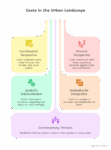
- Functionalist Perspective
Functionalist thinkers argue that caste historically maintained social order by dividing roles and responsibilities. In urban areas, caste continues to serve a “functional” role, but in a different way. It operates as a form of social capital, where caste-based networks determine access to jobs, housing, and marriage alliances. Even in modern cities, people rely on caste connections for upward mobility.
- Conflict Perspective (Marxist View)
Marxist scholars like A.R. Desai emphasize that caste and class are closely intertwined. Urban untouchability shows how caste continues to regulate economic opportunities. Dalits are often excluded from lucrative jobs, denied housing, and kept at the margins of the capitalist economy. This reflects how caste works as a system of exploitation and control, benefiting dominant groups.
- Symbolic Interactionism
Symbolic interactionists focus on everyday practices and interactions. In cities, untouchability often appears in subtle acts—like reluctance to share meals, caste jokes, or avoidance of social closeness. These everyday interactions reproduce inequality and stigma. Erving Goffman’s idea of “stigma” is useful here: caste-based labels mark individuals as inferior, even in supposedly merit-based urban spaces.
- Ambedkarite Perspective
B.R. Ambedkar saw caste not just as a hierarchy but as a system of exclusion and humiliation. His insights remain central for analyzing new untouchability. Despite constitutional safeguards, Dalits still face social and psychological exclusion in cities. Ambedkar’s argument that caste is a “division of laborers” rather than division of labor explains why Dalits continue to be confined to degrading jobs even in modern urban economies.
- Contemporary Thinkers
Modern scholars highlight new patterns of caste in urban India. Anand Teltumbde explains how neoliberal reforms have produced a “market caste system”, where access to capital, credit, and entrepreneurship is caste-mediated. Surinder S. Jodhka shows that caste identity remains central to urban housing, employment, and even politics. Together, these studies prove that caste is not disappearing—it is reshaping itself in new urban forms.
Case Studies and Examples
- Mumbai: Dalit families often excluded from cooperative housing societies.
- Delhi: A study by JNU scholars showed job applicants with Dalit surnames received fewer interview calls.
- Hyderabad University (2016): Rohith Vemula’s institutional discrimination case became a symbol of urban untouchability in education.
- Bengaluru IT Sector: Despite being a “modern” industry, caste networking determines hiring and promotions.
Constitutional and Legal Safeguards
- Article 17: Abolishes untouchability.
- SC/ST (Prevention of Atrocities) Act, 1989: Protects Dalits from discrimination and violence.
- Reservation Policies: Provide access to education and jobs but face backlash in urban middle-class spaces.
- Despite these, implementation gaps remain, especially in private sector and urban housing.
The New Untouchability and Indian Society
The urban caste issue highlights paradoxical social change in India:
- On one hand, mobility and education allow Dalits to enter new spaces.
- On the other, structural discrimination adapts itself into subtle and modernized forms.
This reflects M.N. Srinivas’s idea of “dominant caste”—urban elites continue to control resources while excluding marginalized groups.
Way Forward
- Stricter Enforcement of Anti-Discrimination Laws in housing and employment.
- Private Sector Reservations or diversity quotas to ensure inclusion.
- Awareness Campaigns against digital and symbolic untouchability.
- Intersectional Policies addressing caste, class, and gender together.
- Sociological Research to continuously map urban caste dynamics.
Conclusion
The belief that cities are “casteless” is a myth. Urbanization has not erased caste but restructured it into new forms of exclusion. The new untouchability is visible in housing, workplaces, education, and even digital spaces. This theme connects directly with topics like caste system, social change, modernization, urbanization, social exclusion, and inequality. Understanding it not only strengthens academic preparation but also offers insights into the lived realities of contemporary Indian society.
Here’s a compiled list of UPSC Sociology Paper 1 and Paper 2 questions from the last 10 years (2014–2024) that are directly or indirectly related to Urban Caste and New Untouchability. These are questions where caste, urbanization, discrimination, and social change overlap. I’ve arranged them under Paper 1 and 2 separately, with the year mentioned at the end.
PYQs
Paper 1:
- Discuss the persistence of caste in modern urban India. How far has urbanization succeeded in weakening caste? (2014)
- Examine the changing nature of untouchability in the context of social mobility and urbanization. (2016)
- Is caste system disintegrating in India? Discuss with reference to urbanization and education. (2017)
- How do everyday interactions in cities reproduce caste prejudices? Explain with reference to symbolic interactionism. (2018)
- Critically analyze the concept of “new casteism” in Indian society. (2020)
- Discuss the role of caste in shaping social mobility in urban India. (2021)
- Examine the persistence of caste in digital spaces and its impact on urban social relations. (2023)
- Discuss the relevance of Ambedkar’s perspective on caste in understanding contemporary urban untouchability. (2024)
Paper 2:
- Explain the impact of urbanization on the caste system in India. (2015)
- Has urbanization led to the decline of caste? Give sociological reasons for your answer. (2016)
- Critically examine the phenomenon of housing discrimination in Indian cities. (2017)
- Discuss the role of caste in electoral politics in urban areas. (2018)
- Evaluate the statement: “Caste is invisible in cities but decisive in opportunities.” (2019)
- Examine the issue of caste-based discrimination in Indian universities with reference to recent incidents. (2020)
- Discuss how neoliberal reforms have reshaped caste-based inequalities in urban India. (2021)
- Explain the concept of “digital untouchability” with reference to caste in urban India. (2022)
- Caste in urban India is not disappearing but transforming. Discuss with examples. (2023)
- Analyze how caste continues to mediate access to housing, jobs, and education in urban India despite constitutional safeguards. (2024)
|

One comment