Introduction
Trade tensions between the United States and its partners have resurfaced with Donald Trump’s return to office. His policy of imposing steep tariffs on imports to protect American manufacturers has sent shockwaves across the global economy. For India, which counts the US as one of its largest export destinations, these tariffs represent a direct threat to its export competitiveness, foreign exchange earnings, and employment. The issue is not just about numbers on a trade balance sheet. It has deeper implications for India’s economy, its external sector, and livelihoods dependent on export-driven growth.
India’s Export Dependence on the US
- Share of Exports: The US accounts for nearly 17% of India’s total exports.
- Key Sectors Impacted:
- Textiles & Apparel – one of the largest employment-generating sectors.
- Pharmaceuticals – India is the world’s largest supplier of generics to the US.
- Gems & Jewellery – diamonds and gold jewellery are major export items.
- Agriculture – basmati rice, spices, and marine products.
- IT & Services – though less tariff-sensitive, outsourcing and visa restrictions affect the sector.
Any disruption in this trade relationship creates ripple effects across India’s economy.
Why Trump Tariffs Are a Problem
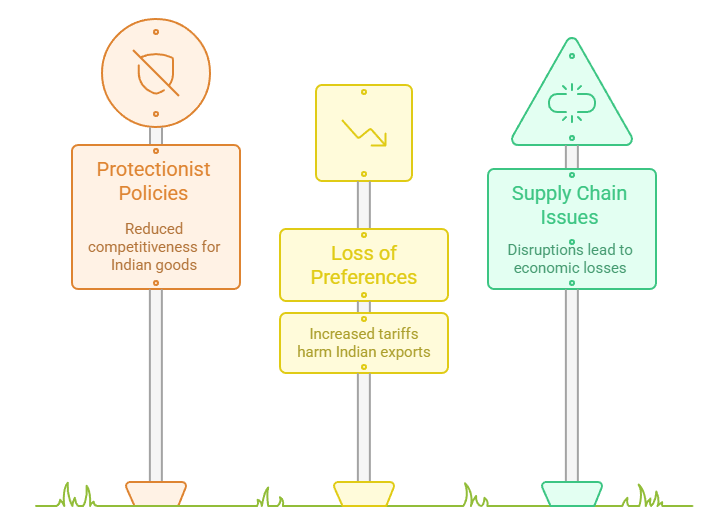
- Protectionism and “America First”: Trump’s economic philosophy is centered on protecting domestic industries and reducing US trade deficits. Higher tariffs make Indian goods more expensive, eroding their competitiveness.
- Erosion of Preferential Access: Earlier, India benefited from schemes like the Generalized System of Preferences (GSP). Under Trump, such benefits were withdrawn and further tariff hikes will add to India’s woes.
- Global Value Chains Disruption: Many Indian industries are part of US-led supply chains. Tariffs disrupt these chains, leading to losses not just in exports but also in backward linkages within India’s domestic economy.
Impact on India Export Sectors
- Textiles and Apparel: The US is the largest buyer of Indian textiles and garments. Tariffs will make Indian products more expensive, reducing their competitiveness compared to cheaper options from countries like Bangladesh and Vietnam. This will directly hit foreign exchange earnings and lead to job losses in labor-intensive industries.
- Pharmaceuticals: India is a leading supplier of generic drugs to the US. With tariffs, Indian medicines will become costlier, reducing demand in one of India’s most profitable export markets. This will affect revenues of pharma companies and slow down their expansion and R&D efforts.
- IT and Services: Although tariffs usually apply to goods, Trump’s protectionist policies have also included stricter visa rules. Restrictions on H-1B visas and outsourcing raise costs for Indian IT companies, undermining their competitiveness in the US market.
- Agriculture and Allied Products: Exports such as basmati rice, spices, seafood, and organic produce will face price disadvantages due to tariffs. This is likely to shrink demand in the US, affecting farmers and small agri-export businesses that rely on global markets.
- Gems and Jewellery: The gems and jewellery sector is heavily dependent on the US market. Higher tariffs will reduce demand for diamonds and gold jewellery, leading to losses in one of India’s high-value export industries.
Broader Economic Consequences
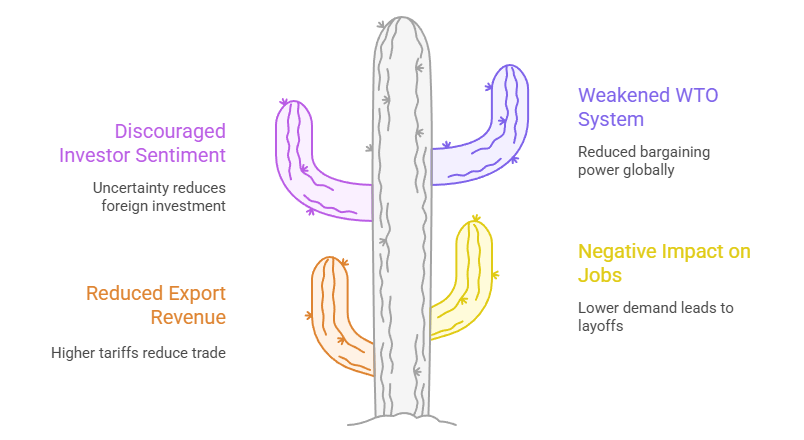
- Fall in Export Revenues: Higher tariffs will reduce India’s export volumes and earnings. A fall in foreign exchange inflows will widen the trade deficit, putting pressure on the rupee.
- Impact on Employment: Export-oriented industries like textiles, agriculture, and gems employ millions of workers. Lower demand will lead to layoffs and worsen unemployment in both urban and rural areas.
- Investor Sentiment: Tariff wars create uncertainty in global trade. This discourages foreign investors and may prevent India from fully capitalizing on supply chains moving out of China.
- Pressure on WTO System: Trump’s unilateral tariff policies weaken the role of the World Trade Organization. India’s ability to defend its interests through multilateral mechanisms will be reduced, limiting its bargaining power in global trade.
India’s Policy Options
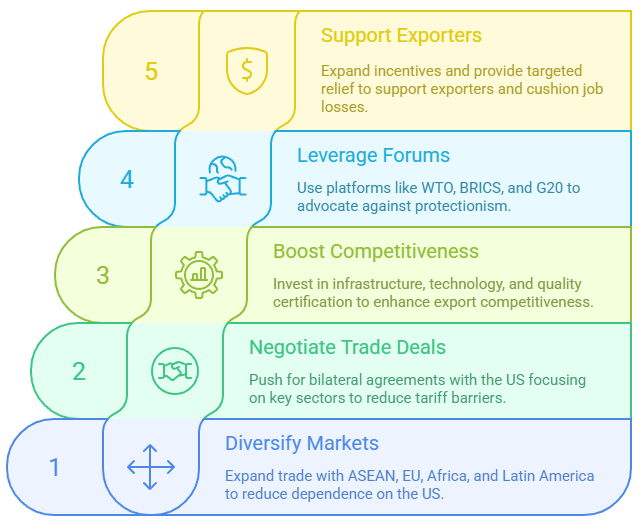
- Diversification of Export Markets: India must reduce its heavy dependence on the US by expanding trade with ASEAN, the European Union, Africa, and Latin America. This will spread risk and create new opportunities for exporters.
- Bilateral Trade Negotiations: India can push for a limited trade deal with the US that focuses on key sectors like textiles, pharma, and IT. Bilateral agreements can help reduce tariff barriers and improve market access.
- Boost Domestic Competitiveness: Investing in infrastructure, logistics, technology, and quality certification is essential to make Indian exports more cost-competitive. Support for MSMEs will help them survive in a more challenging trade environment.
- Leverage Multilateral Forums: India should use platforms like the WTO, BRICS, and G20 to highlight the negative effects of protectionism. Building alliances with other affected economies will strengthen its bargaining power.
- Support Exporters at Home: The government can expand incentives such as the Remission of Duties and Taxes on Exported Products (RoDTEP) scheme and strengthen Production Linked Incentive (PLI) Targeted relief for labor-intensive sectors will cushion job losses.
Conclusion
Trump’s tariffs are more than just an economic measure; they represent a larger shift toward protectionism in global trade. For India, the impact is twofold—loss of export competitiveness and the threat to millions of livelihoods dependent on these exports.
India must respond with a multi-pronged strategy—diversifying its export markets, negotiating better trade terms, boosting domestic competitiveness, and ensuring safety nets for its exporters. This issue highlights the intersection of trade policy, international relations, and economic growth, making it an important case study for 2025 and beyond.
|

One comment