Introduction
In India’s quest for social justice and inclusive development, the Tribal Sub-Plan (TSP) and Scheduled Caste Sub-Plan (SCSP) have emerged as essential policy instruments. These sub-plans are aimed at ensuring equity-based budgeting for historically marginalized communities — Scheduled Tribes (STs) and Scheduled Castes (SCs) — by earmarking a proportion of plan funds for their welfare.
What are Tribal Sub-Plans (TSP) and Scheduled Caste Sub-Plans (SCSP)?
- Tribal Sub-Plan (TSP) was introduced in 1974-75 during the Fifth Five-Year Plan, aiming to ensure direct benefits for the tribal population through proportionate fund allocation in all Central and State plans.
- Scheduled Caste Sub-Plan (SCSP), introduced in 1979-80, functions similarly for Scheduled Castes, ensuring budgetary outlays match their population percentage.
Core Objectives and Features (TSP vs SCSP)
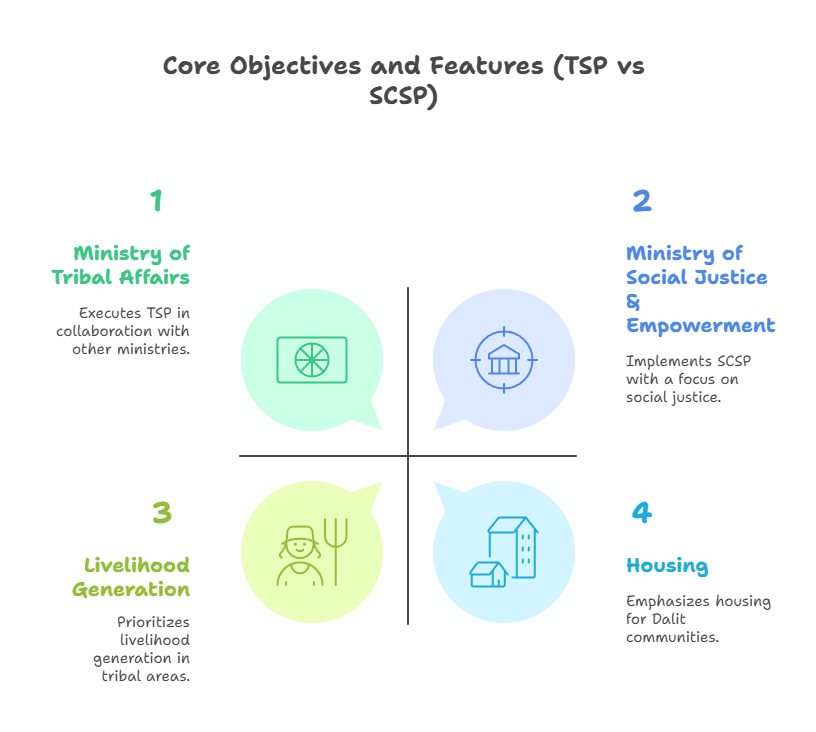
- Target Group: The Tribal Sub-Plan (TSP) targets Scheduled Tribes, while the Scheduled Caste Sub-Plan (SCSP) is designed for the welfare of Scheduled Castes. These communities have historically faced exclusion, and the plans aim to address their specific developmental needs.
- Budget Allocation: Both TSP and SCSP mandate that a percentage of the overall plan funds should be allocated in proportion to the ST or SC population in the state or country. This ensures equitable distribution of resources.
- Focus Areas: TSP primarily focuses on livelihood generation, healthcare, education, and infrastructure development in tribal areas. SCSP, on the other hand, emphasizes housing, education, employment generation, and social justice for Dalit communities.
- Implementing Ministries: TSP is executed under the Ministry of Tribal Affairs in collaboration with other sectoral ministries. SCSP is implemented under the Ministry of Social Justice & Empowerment, along with relevant line departments.
Implementation Strategy
Both sub-plans are embedded within broader mainstream sectoral plans, not as separate schemes. Several states, such as Madhya Pradesh, Odisha, and Maharashtra, have set up dedicated nodal agencies to coordinate and oversee the effective implementation of these plans.
Challenges
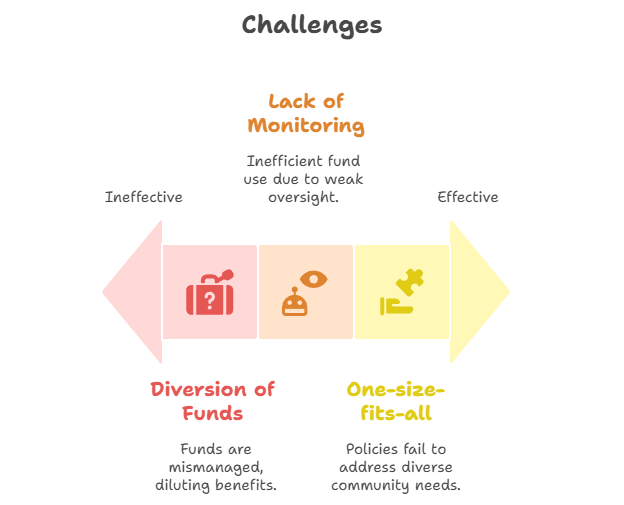
- Diversion of Funds: A major concern is the misutilization or diversion of funds allocated under TSP and SCSP to general schemes, which dilutes the targeted benefit meant for SC/ST communities.
- Lack of Monitoring: These sub-plans often suffer from poor monitoring and weak accountability mechanisms, leading to inefficiency and underperformance in fund utilization.
- One-size-fits-all Model: The top-down implementation approach often neglects local socio-cultural differences, leading to policies that do not effectively address the diverse needs of tribal and Dalit communities.
Sociological Analysis
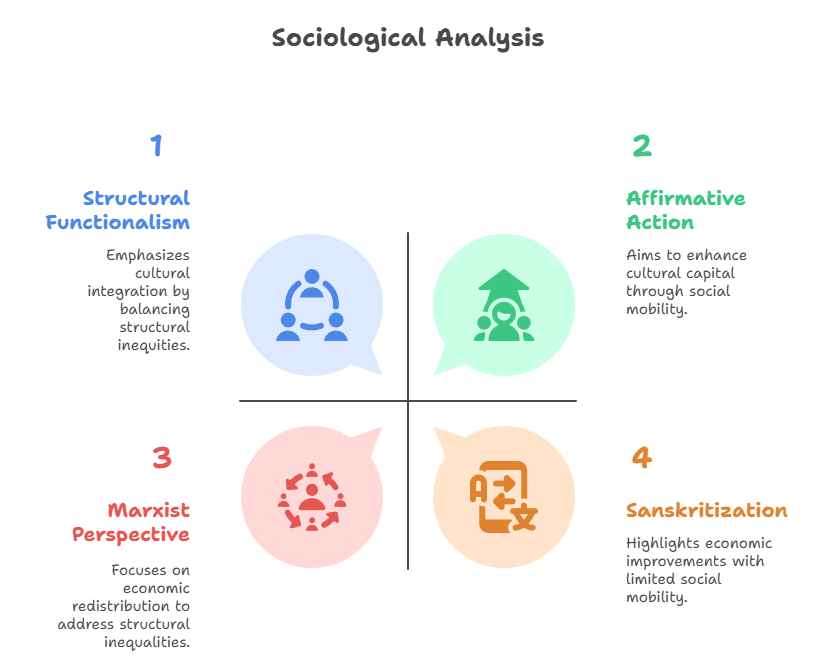
- Structural Functionalism (Talcott Parsons): From a functionalist lens, TSP and SCSP are system-maintaining tools that help integrate marginalized groups into the mainstream by balancing the structural inequities in society.
- Marxist Perspective (A.R. Desai): Marxists argue that these plans are counter-hegemonic instruments that redistribute resources from dominant groups to oppressed classes, reflecting the class struggle embedded in the Indian social structure.
- M.N. Srinivas: Sanskritization vs Real Change: While sub-plans have improved access to services, social mobility remains limited. The deep-rooted stigma and discrimination against SCs and STs cannot be overcome merely through economic interventions.
- Affirmative Action & Social Capital (Pierre Bourdieu): Sub-Plans act as affirmative action strategies, aiming to transform economic support into social capital. They help marginalized communities gain cultural and symbolic capital such as education, self-respect, and employment opportunities.
Recent Developments and Digital Monitoring
- e-FMS and PFMS Platforms: Ensure real-time fund tracking.
- Dalit Indian Chamber of Commerce and Industry (DICCI): Advocates for entrepreneurial inclusion via SCSP.
- Digital India Initiatives: Bridge digital divides in tribal belts using TSP funds.
Way Forward
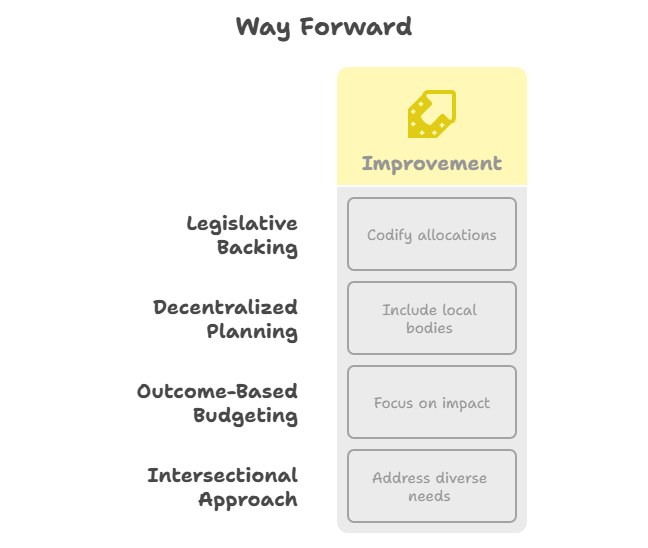
- Legislative Backing: Codify SCSP/TSP allocations through legislation (similar to Nirbhaya Fund).
- Decentralized Planning: Include Gram Sabhas and tribal councils in fund utilization decisions.
- Outcome-Based Budgeting: Shift focus from allocation to impact and long-term outcomes.
- Intersectional Approach: Address issues faced by women, elderly, and disabled within SC/ST groups.
Conclusion
The Tribal Sub-Plan and Scheduled Caste Sub-Plan are not just budgetary mechanisms but symbols of India’s commitment to constitutional values of equality and social justice. However, without strong institutional accountability and sociological sensitivity, these plans risk becoming tokenistic. A rights-based, community-driven approach is essential for meaningful empowerment.
PYQs
Paper I
- How does the concept of social justice relate to affirmative action in Indian society? (2020)
- Examine the role of the state in promoting equality among various social groups. (2019)
- Discuss the relevance of Talcott Parsons’ functionalism in understanding the integration of marginalized communities. (2018)
- Assess the effectiveness of various policies aimed at eradicating caste-based discrimination in India. (2016)
- Discuss the limitations of using a one-size-fits-all policy approach in addressing social inequality. (2013)
Paper II
- Discuss the implementation and impact of the Scheduled Caste Sub-Plan (SCSP) and Tribal Sub-Plan (TSP) in achieving inclusive development. (2021)
- Critically examine the challenges in the implementation of affirmative action policies for Scheduled Castes and Scheduled Tribes in India. (2020)
- What role do development policies play in the transformation of tribal society in India? (2019)
- Explain the impact of welfare policies on the socio-economic status of Scheduled Castes in rural India. (2018)
- Examine the effectiveness of the Tribal Sub-Plan in addressing issues of displacement and underdevelopment among tribal communities. (2017)
- How successful has the Indian State been in integrating marginalized communities into the mainstream? (2016)
- Discuss the role of the State in empowering the Scheduled Tribes in the context of economic liberalization. (2015)
- Critically analyze the role of the Dalit movement in shaping State policies in post-independence India. (2014)
|


One comment