Introduction
The transformation of intimacy is a central theme in sociology of family and kinship, a critical part of Sociology syllabus. As traditional structures of relationships like marriage, kinship, and gender roles evolve, the dynamics of intimacy have undergone profound changes, especially in modern societies and increasingly in contemporary Indian society. Understanding this topic is essential for aspirants preparing for Sociology optional as it intersects themes like social change, globalization, gender relations, family structure, and emerging social institutions.
What is the Transformation of Intimacy?
The term “transformation of intimacy” was popularized by Anthony Giddens in his book The Transformation of Intimacy: Sexuality, Love and Eroticism in Modern Societies (1992).
According to Giddens Traditional intimacy was structured around arranged marriages, gendered roles, and family obligations. In late modernity, intimacy is increasingly negotiated, based on personal choice, emotional communication, and individual fulfillment.
Major Ideas
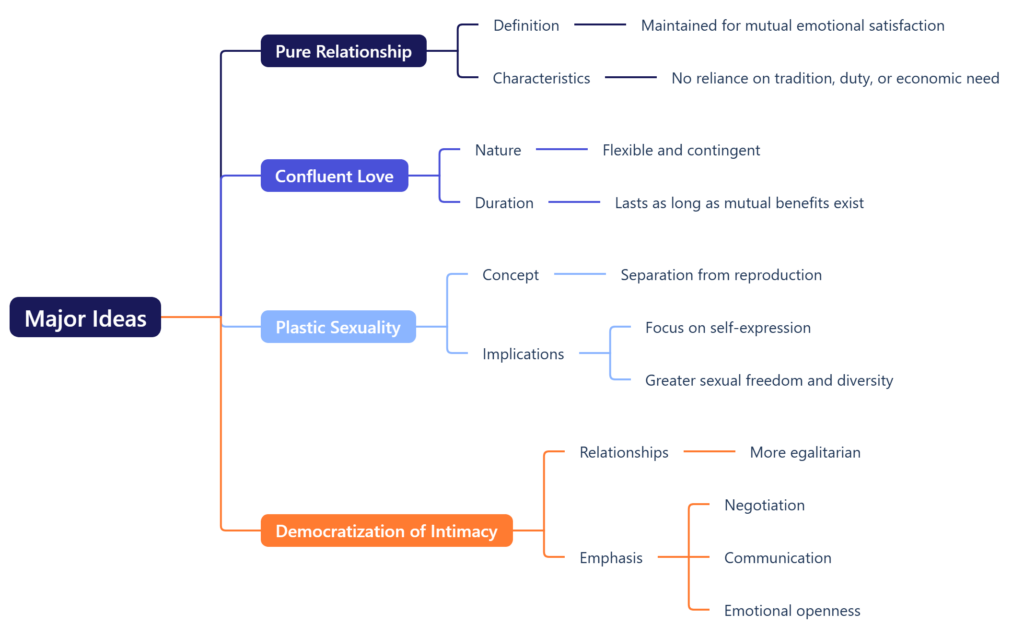
- Pure Relationship: Relationships are maintained purely for mutual emotional satisfaction, not because of tradition, duty, or economic need.
- Confluent Love: Flexible and contingent love that lasts only as long as both partners benefit from it.
- Plastic Sexuality: Sexuality is no longer tied to reproduction but is more about self-expression, leading to greater sexual freedom and diversity.
- Democratization of Intimacy: Relationships become more egalitarian, emphasizing negotiation, communication, and emotional openness.
Sociological Analysis of Transformation of Intimacy
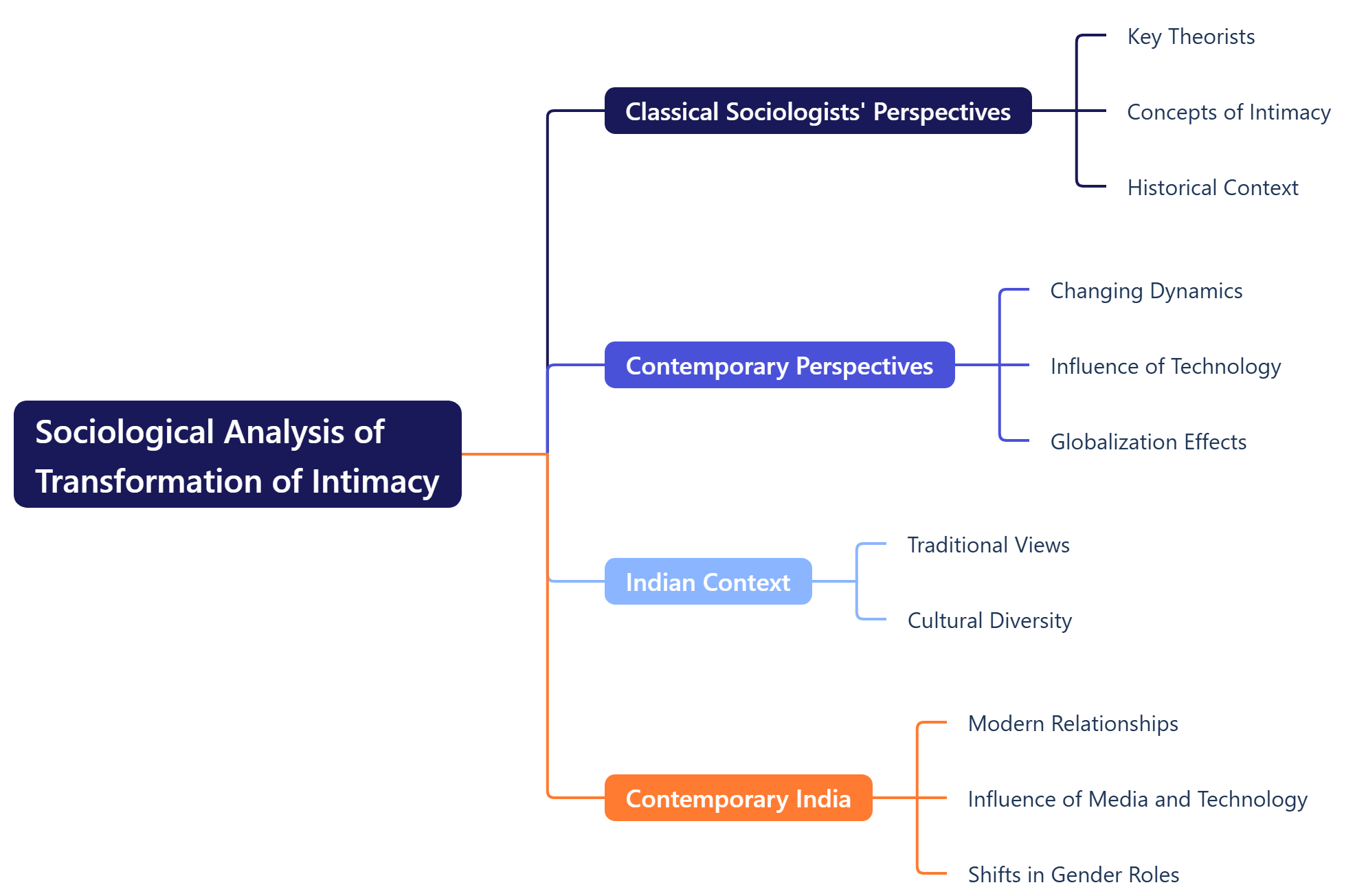
Classical Sociologists’ Perspectives:
- Émile Durkheim: Predicted that modernization would weaken traditional bonds, including those in family and kinship.
- Max Weber: Saw rationalization and individualism as undermining traditional emotional communities like family.
- Karl Marx: Viewed the nuclear family as a unit of capitalist production; changes in intimacy can be seen as part of changing economic relations.
Contemporary Perspectives
- Anthony Giddens: As societies become reflexive (self-aware), relationships too become contingent on ongoing satisfaction.
- Ulrich Beck and Elisabeth Beck-Gernsheim: Discuss the “individualization thesis” where individuals, not society, bear the burden of forming and maintaining intimate ties.
Indian Context
- Traditional India: Family and marriage were collective decisions emphasizing caste, kinship, and lineage.
Contemporary India
- Love marriages and inter-caste marriages are slowly rising.
- Online dating, live-in relationships, and delayed marriages are visible signs of change.
- Yet, caste endogamy, parental authority, and honor-based violence (e.g., khap panchayats) show persistence of traditional controls over intimacy.
Examples
- The Supreme Court of India decriminalizing Section 377 (homosexuality) and upholding the right to privacy reflects legal acceptance of diverse intimacies.
- Urban youth participating in Valentine’s Day celebrations, and usage of apps like Tinder, indicate privatization and democratization of intimate choices.
Conclusion
The transformation of intimacy reflects broader processes of modernization, globalization, and individualization. For sociology aspirants, mastering this topic not only strengthens their understanding of family and kinship but also prepares them to address current affairs topics related to changing social structures in India. Incorporating sociological theories and examples from Indian society can significantly enrich answers and ensure a higher score in the Sociology optional papers.
PYQs
Paper 1
- Discuss the impact of modernization and globalization on family structures. (2023)
- Explain the concept of ‘pure relationship’ as given by Anthony Giddens. (2021)
- How has the institution of marriage changed in the context of modernization? (2019)
- Examine the relationship between individualization and the transformation of family. (2018)
- How has reflexivity influenced modern social relationships? (2016)
- Analyse the concept of confluent love and its sociological significance. (2015)
Paper 2
- Changing trends in marriage and family in contemporary India: Discuss with suitable examples. (2023)
- Examine the impact of globalization on love marriages and inter-caste marriages in India. (2022)
- Discuss the persistence and transformation of caste in regulating marriage alliances in India. (2021)
- How do modern communication technologies affect intimacy and family relations in urban India? (2019)
- Analyse the rising trend of live-in relationships in India and its sociological implications. (2018)
- Evaluate the changing nature of patriarchy in Indian families in the context of increasing education among women. (2016)
|



One comment