Introduction
A young social media content creator recently died by suicide, shaking the digital world and sparking deep conversations about the mental health effects of social media. She was reportedly battling depression tied to a declining follower count and the fear of losing her online identity—an identity shaped and sustained entirely by virtual metrics. This case is not isolated. It mirrors a growing trend where virtual validation is replacing real-world relationships, creating emotional instability and psychological dependence, particularly among youth. The issue demands both public attention and sociological analysis, making it highly relevant to aspirants studying Sociology, especially under themes like youth culture, mental health, mass media, and social change in India.
Sociological Analysis:
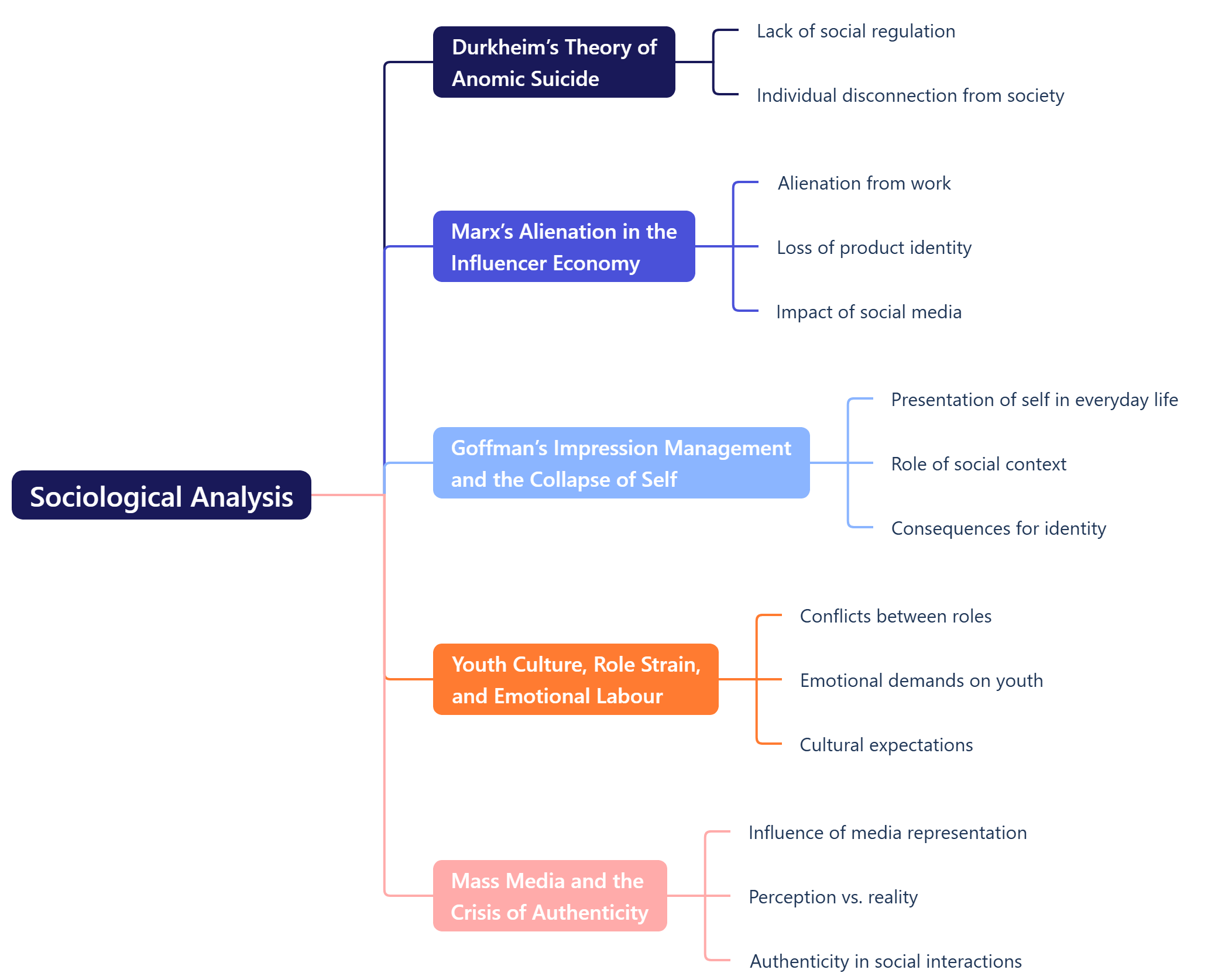
- Durkheim’s Theory of Anomic Suicide: The pressure of digital validation—likes, shares, followers—can create a state of anomie, as described by Émile Durkheim. When societal norms (or virtual norms) become unstable or contradictory, individuals lose their sense of purpose. The obsession with achieving a numerical goal (such as a follower count) leads to anomic suicide, where disconnection from meaningful societal anchors fosters despair.
- Marx’s Alienation in the Influencer Economy: Karl Marx’s theory of alienation can be extended to today’s influencer economy. Content creators often become alienated from their labor, creating content solely to appease algorithms, not out of intrinsic motivation. Their self-worth is measured by audience engagement, leading to identity fragmentation and emotional burnout.
- Goffman’s Impression Management and the Collapse of Self: Erving Goffman’s concept of the “presentation of self in everyday life” is highly applicable in this case. Social media becomes a stage where individuals perform idealized versions of themselves. When the performance fails (e.g., due to unfollows or low engagement), the “backstage” self crumbles, causing emotional crisis.
- Youth Culture, Role Strain, and Emotional Labour: The digital age has created new roles for young individuals—content creator, influencer, micro-celebrity. These roles often clash with traditional familial, educational, or societal expectations, leading to role strain. Moreover, constantly staying relevant demands emotional labour—masking pain to project happiness. This emotional contradiction can be exhausting and dangerous.
- Mass Media and the Crisis of Authenticity: The sociology of mass media highlights how traditional norms are replaced by trends. In such an environment, authenticity loses value to virality. Content creators feel compelled to chase the next trend at the cost of mental health. In a culture of clicks and views, empathy often takes a backseat.
Lessons for Indian Society & Policy-Makers
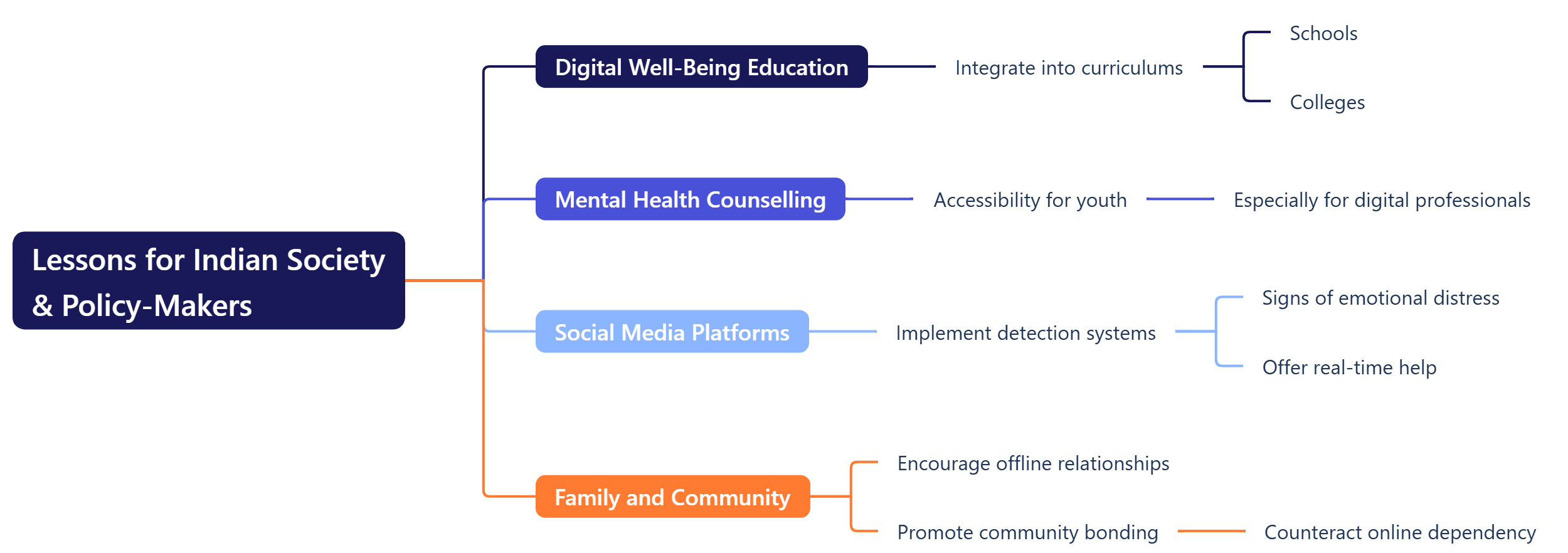
- Digital well-being education should be integrated into school and college curriculums.
- Mental health counselling must be made accessible for youth, especially those involved in digital professions.
- Social media platforms must implement better systems to detect signs of emotional distress and offer real-time help.
- Families should encourage offline relationships and community bonding to counteract online dependency.
Conclusion
The tragic death of a young influencer reveals a larger sociological crisis—the commodification of identity and the emotional hazards of digital dependence. As India modernizes rapidly, we must not overlook the psychological cost of virtual fame. Social media must be viewed critically—not just as a tool for expression, but as a structure capable of shaping, and sometimes dismantling, self-worth.
Let us humanize our digital spaces and remind ourselves—and each other—that followers are not love, and likes are not validation. Real relationships and self-acceptance must take center stage in the world we are building.
PYQs
Paper I –
- How does Goffman’s theory of dramaturgy help us understand social behavior in virtual interactions? (2023)
- Is virtual interaction replacing real-world social relationships? Discuss with sociological perspectives. (2023)
- Examine the impact of the digital revolution on the concept of self and identity in sociology. (2022)
- Examine the relevance of Durkheim’s theory of suicide in the context of contemporary society. (2021)
- Analyze the role of mass media in shaping social values in contemporary Indian society. (2020)
- Discuss how the process of socialization is impacted by modern media and technology. (2019)
- Explain Karl Marx’s concept of alienation. How is it relevant to the modern working class, particularly in digital economies? (2018)
- Discuss the changing nature of youth subcultures in the age of global digital media. (2017)
- Evaluate the impact of new communication technologies on role conflict and role strain among the youth. (2016)
- What is emotional labour? Examine its significance in contemporary service and digital professions. (2015)
Paper II –
- Analyze how mental health issues are emerging as a social problem in contemporary urban India. (2023)
- Discuss the impact of mass media and popular culture on Indian youth. (2021)
- How is cyber space creating new forms of community and identity in urban India? (2020)
- How are traditional family structures being transformed by digital lifestyles in India? (2019)
- Discuss the role of social media in shaping public opinion and youth mobilization in India. (2018)
- Critically evaluate the influence of Western media content on Indian youth and social behavior. (2017)
- Discuss the impact of consumer culture and digital aspirations on middle-class Indian youth. (2016)
- How has the rise of social networking sites affected interpersonal relationships and social cohesion in Indian society? (2015)
- Examine how the digitization of entertainment and news has altered cultural consumption in Indian society. (2014)
|


One comment