|
The recent reactor blast at Sigachi Industries in Telangana is not an isolated incident. It is a stark, tragic symptom of a deeper systemic malaise afflicting India’s industrial landscape. This event, alongside a spate of other industrial accidents in 2025, has violently reignited a critical debate on the state of industrial safety and the steady erosion of labour protections in the country. This blog delves into the sociological underpinnings of this crisis, moving beyond the immediate headlines to analyse the structural reasons, the challenges in legal enforcement, and the path forward for securing the dignity and safety of the Indian worker.
The Anatomy of an Accident: Why Do Disasters Keep Happening?
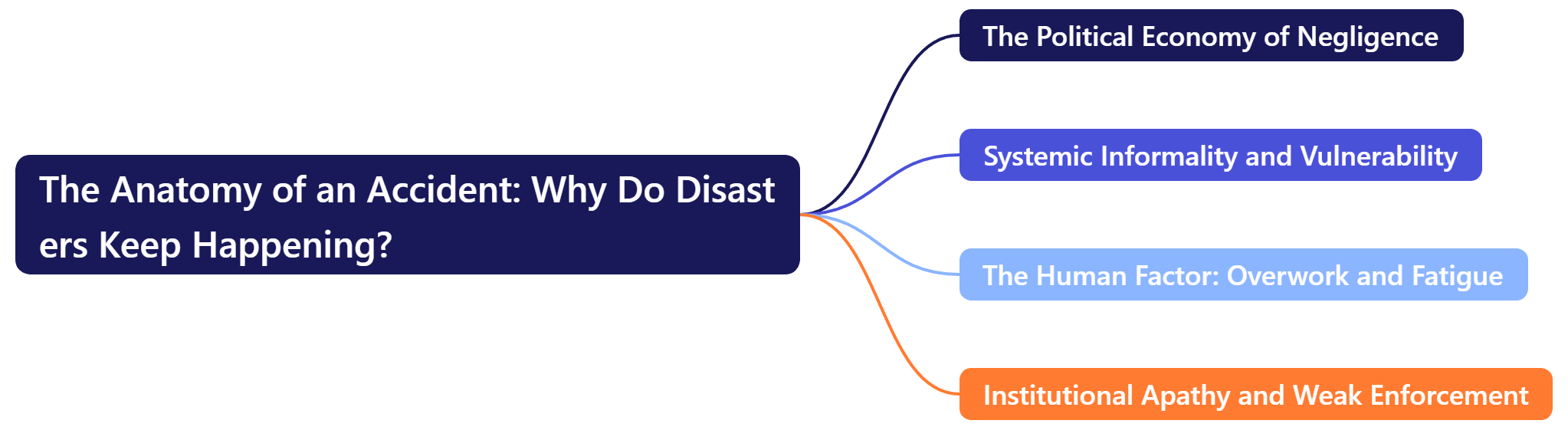
From a sociological perspective, industrial accidents are rarely random “acts of God.” They are, as the International Labour Organization (ILO) asserts, social facts resulting from a complex interplay of economic pressures, institutional failures, and power imbalances.
- The Political Economy of Negligence:The primary drivers are often rooted in a cost-cutting culture where worker safety is the first casualty. Employers, in a bid to maximise profit, ignore maintenance, use outdated machinery, and bypass essential safety checks. This creates a production system where risk is externalised onto the most vulnerable—the workers.
- Systemic Informality and Vulnerability:A significant portion of India’s workforce is informal, unregistered, and thus invisible to the formal protective apparatus. These workers, often hired through contractors, lack legal identity, job security, and access to compensation. As seen in Sivakasi’s fireworks factories, the absence of formal records makes accident compensation irregular and delayed, perpetuating a cycle of poverty and vulnerability.
- The Human Factor: Overwork and Fatigue:The sociology of work emphasises that long hours and high-pressure environments in hazardous settings exponentially increase the likelihood of human error. Fatigue-induced mistakes in environments with toxic chemicals or heavy machinery are not individual failures but consequences of exploitative work regimes.
- Institutional Apathy and Weak Enforcement:The state’s role as a regulator has been systematically weakened. Irregular inspections, corruption, and the recent trend of “self-certification” (as pioneered by Maharashtra in 2015) have allowed unsafe practices to continue with impunity. The Sigachi case, where the reactor reportedly ran at twice the permissible temperature without any alarm, is a damning indictment of this enforcement vacuum.
The Legal Scaffolding: A Fortress with Cracks
India does not lack laws to protect workers. The Factories Act, 1948, is a comprehensive legislation governing working conditions, safety, and health. The Workmen’s Compensation Act, 1923, and the Employees’ State Insurance (ESI) Act, 1948, were designed to provide a social security net. The Industrial Disputes Act, 1947, aimed to protect against arbitrary termination.
The most significant recent development is the Occupational Safety, Health and Working Conditions (OSHWC) Code, 2020, which consolidates 13 older laws. In theory, it promises a streamlined, modern framework. However, its full implementation remains pending, and sociologists argue that consolidation can sometimes lead to a dilution of specific protections for different sectors in the name of standardization.
The Core Challenges: A Sociological Diagnosis
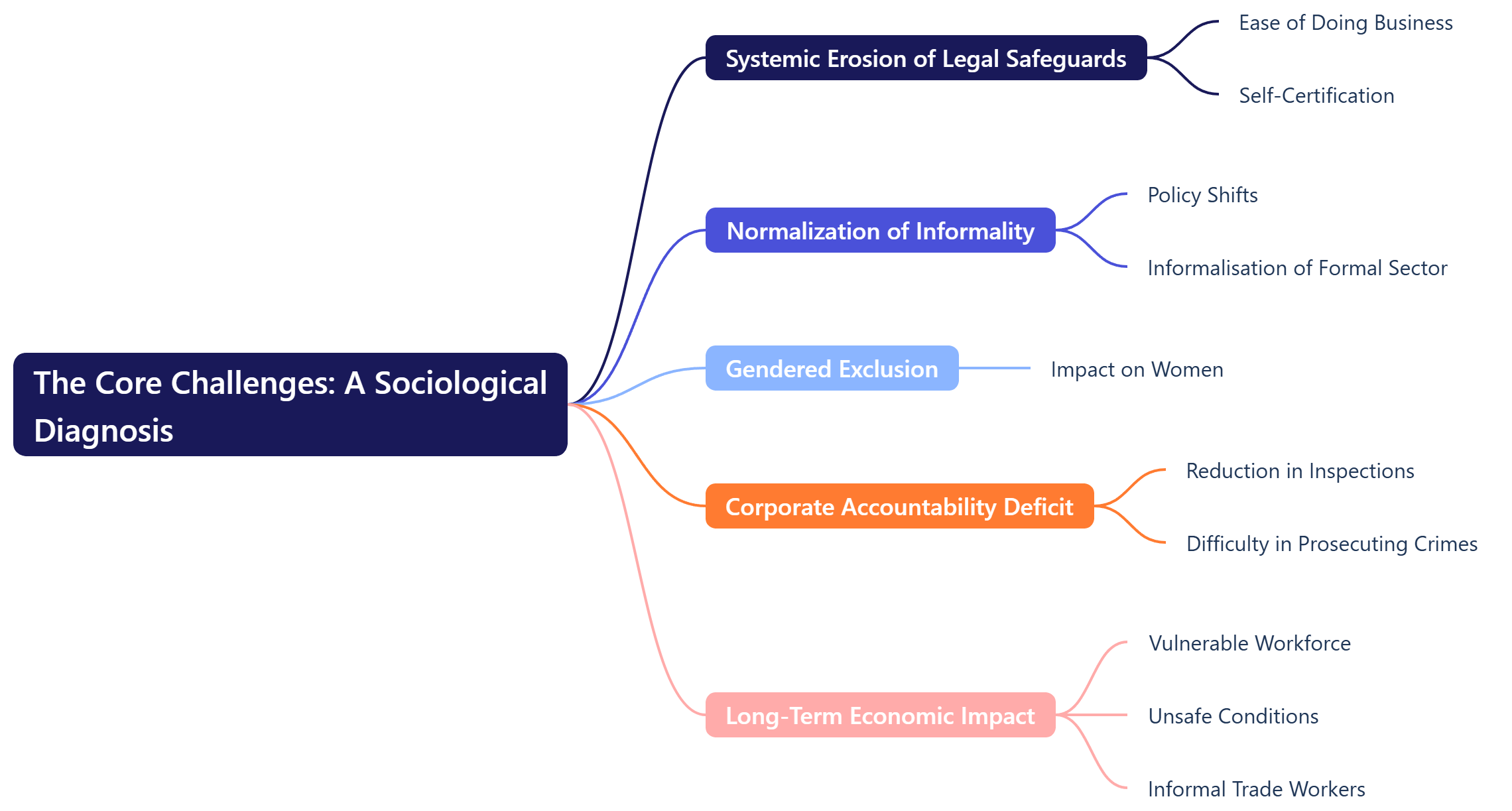
The existence of laws is one thing; their efficacy is another. The challenges are deeply embedded in the socio-political fabric.
- Systemic Erosion of Legal Safeguards:Under the guise of “ease of doing business” and providing “flexibility” to employers, labour protections have been systematically diluted. The shift from independent, surprise inspections to self-certification represents a fundamental transfer of responsibility from the state to the corporation, creating a clear conflict of interest.
- Normalization of Informality:Policy shifts that favour employer discretion in hiring and firing have entrenched informal employment. This “informalisation of the formal sector” means that even in large factories, a majority of workers may be on contract, without legal or social protection. This segmentation of the workforce weakens collective bargaining and makes unionization difficult.
- Gendered Exclusion:The weakening of workplace rights disproportionately impacts women. Poor enforcement of the Maternity Benefit Act, 1961, lack of childcare facilities (crèches), and gendered occupational roles constrain female labour force participation, perpetuating economic exclusion and reinforcing patriarchal structures.
- Corporate Accountability Deficit:The reduction in inspections and the difficulty in prosecuting white-collar crime have created a culture of impunity. Disasters like the Ennore coal-handling collapse often see minimal legal consequences for the corporate entities responsible for structural failures, sending a message that negligence is a calculable risk, not a punishable offence.
- Long-Term Economic Impact:From a functionalist perspective, a vulnerable, unsafe workforce is detrimental to the system’s stability and growth. Unsafe conditions lower productivity and innovation. With informal trade workers earning nearly half the national average, this undermines the human capital foundation required for ambitious national goals like Viksit Bharat 2047.
A Way Forward: Towards a New Sociology of Work and Safety
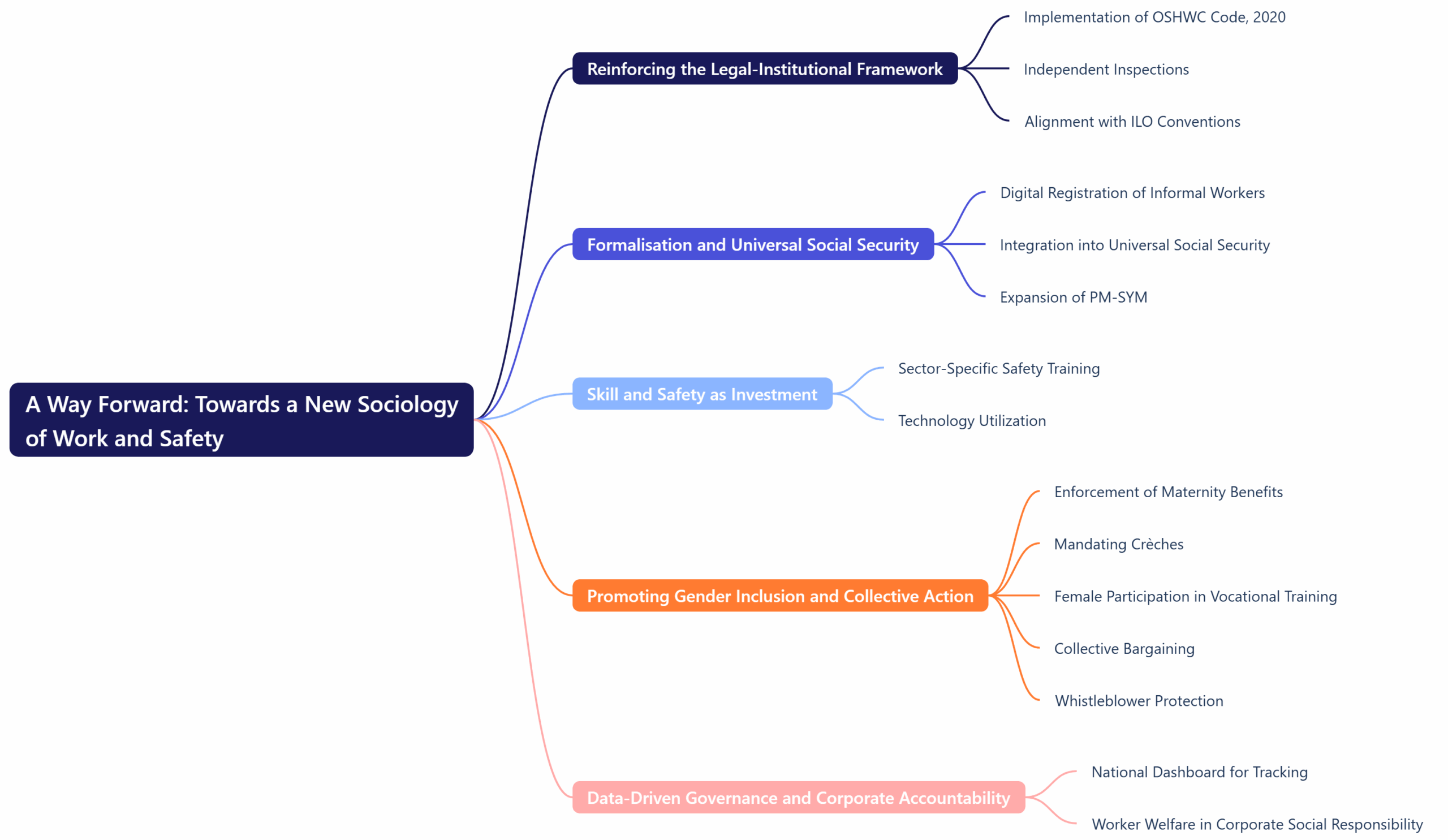
Addressing this crisis requires a multi-pronged approach that goes beyond mere legislative tinkering to a fundamental re-evaluation of the worker’s place in the political economy.
- Reinforcing the Legal-Institutional Framework:The immediate priority is the full and effective implementation of the OSHWC Code, 2020, with a strong emphasis on independent inspections. Aligning India’s labour policies with core ILO conventions on safety and decent work is crucial.
- Formalisation and Universal Social Security:The state must leverage technology to digitally register all informal workers through portals like e-Shram and integrate them into universal social security coverage, including pensions, health insurance, and paid leave. Schemes like Pradhan Mantri Shram Yogi Maan-dhan (PM-SYM) need to be expanded and made more accessible.
- Skill and Safety as Investment:Sector-specific safety training programs under the Skill India Mission are essential. Furthermore, leveraging technology like AI-enabled monitoring and predictive analytics can help identify compliance gaps and potential hazards in real-time, moving from a reactive to a proactive safety regime.
- Promoting Gender Inclusion and Collective Action:Strengthening the enforcement of maternity benefits, mandating crèches, and promoting female participation in vocational training are vital. Encouraging collective bargaining and protecting whistleblowers can help rebalance the power equation between capital and labour.
- Data-Driven Governance and Corporate Accountability:Establishing a national dashboard to publicly track accident rates, inspection reports, and social security coverage can foster transparency and accountability. Integrating worker welfare firmly into Corporate Social Responsibility (ESG criteria) can nudge corporate behaviour towards a “safety-first” culture.
Conclusion
The Sigachi blast is a somber reminder that the path to development cannot be paved with the corpses of workers. It illustrates the dynamic interplay between law, economy, and society. Protecting worker rights is not an impediment to growth but its very prerequisite. It requires strong laws, robust social security, continuous skilling, gender-inclusive policies, and an unwavering commitment to corporate accountability. By addressing these systemic issues, India can not only prevent future tragedies but also build a more productive, just, and equitable society, truly aligning with the vision of a developed Viksit Bharat 2047.
|

2 comments