
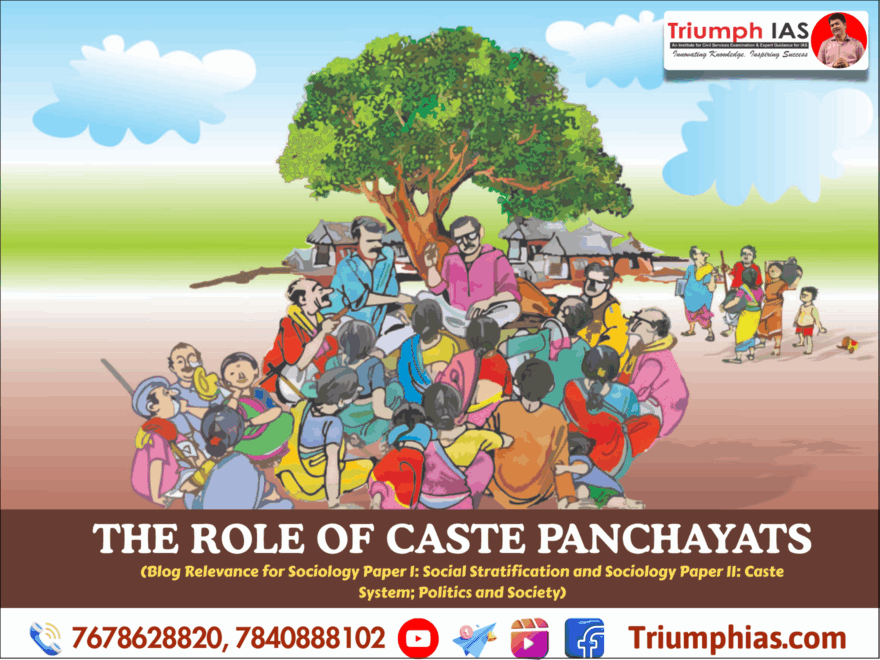
The Role of Caste Panchayats
(Relevance for Sociology Paper I: Social Stratification and Sociology Paper II: Caste System; Politics and Society)
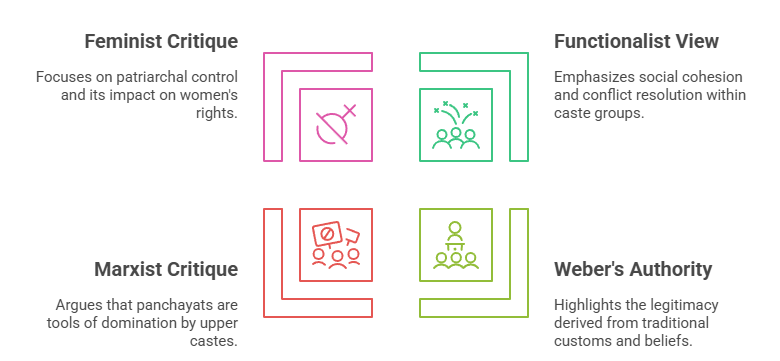
IntroductionCaste panchayats, or jati panchayats, are traditional institutions of social governance that have persisted despite the modern democratic state and legal systems. Their presence in rural and even semi-urban India reflects the deep entrenchment of caste-based authority in regulating everyday life. Although informal and extra-constitutional, they wield significant sociopolitical power in matters like marriage, land disputes, social sanctions, and honour-related issues. What Are Caste Panchayats?
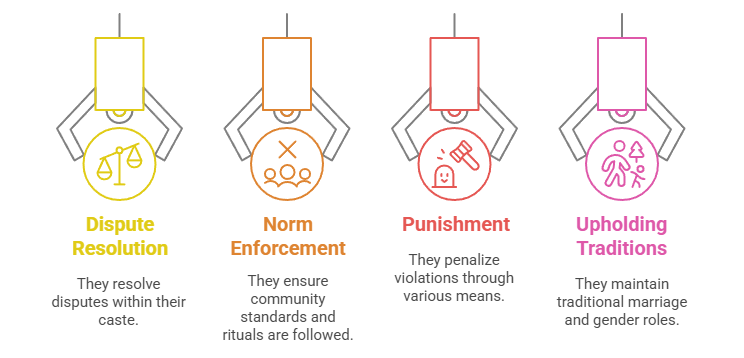
Caste panchayats are non-state, traditional adjudicatory bodies based on caste affiliation. They:
Example:The Khap Panchayats of Haryana and Western Uttar Pradesh are infamous for issuing diktats against inter-caste and same-gotra marriages, often invoking notions of “honour” (izzat). Sociological Analysis
Contemporary Issues Involving Caste Panchayats
Legal vs Traditional TensionAlthough Article 14 (Right to Equality) and Article 21 (Right to Life and Personal Liberty) are constitutional guarantees, caste panchayats frequently operate in contradiction to these rights. Judiciary Response:
Modern-Day Relevance and TransformationDespite modernization, digital and economic mobility has not completely dismantled caste panchayat influence. However, in some regions, they are transforming into community welfare bodies, engaging in education, dispute resolution, and charity—reflecting a paradoxical blend of tradition and modernity. ConclusionCaste panchayats remain a powerful example of how traditional institutions coexist with the modern state, often in conflict but sometimes in complementarity. While they offer insight into grassroots governance, their patriarchal and hierarchical biases must be addressed through legal reform, social awareness, and education. Previous Year QuestionsPaper II
|
To Read more topics, visit: www.triumphias.com/blogs
Read more Blogs:
Code of Conduct for Civil Servants | Ethics for UPSC Civil Services Examination | Triumph IAS