
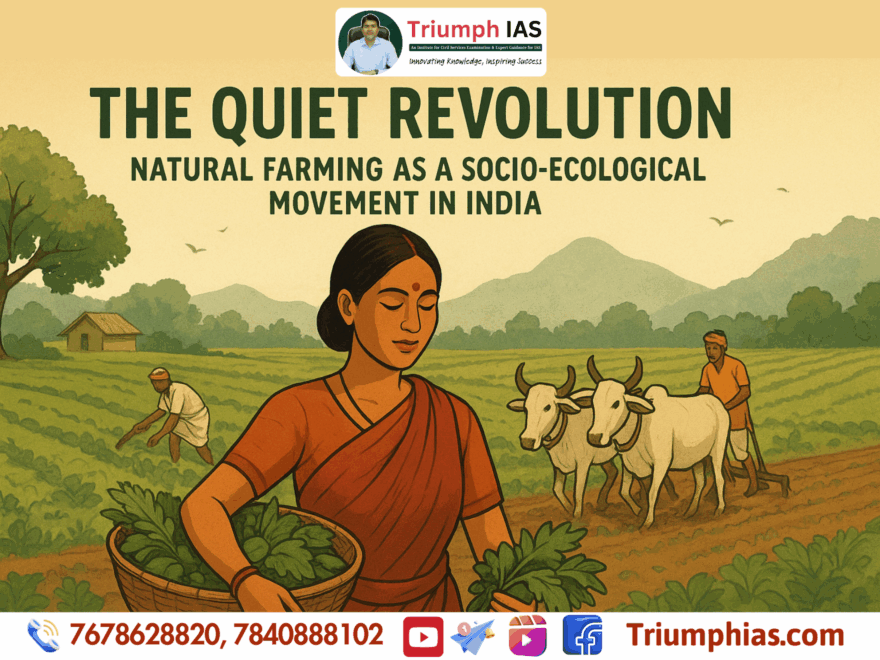
The Quiet Revolution: Natural Farming as a Socio-Ecological Movement in India
(Relevant for Sociology Paper 2: Rural and Agrarian transformation in India)
|
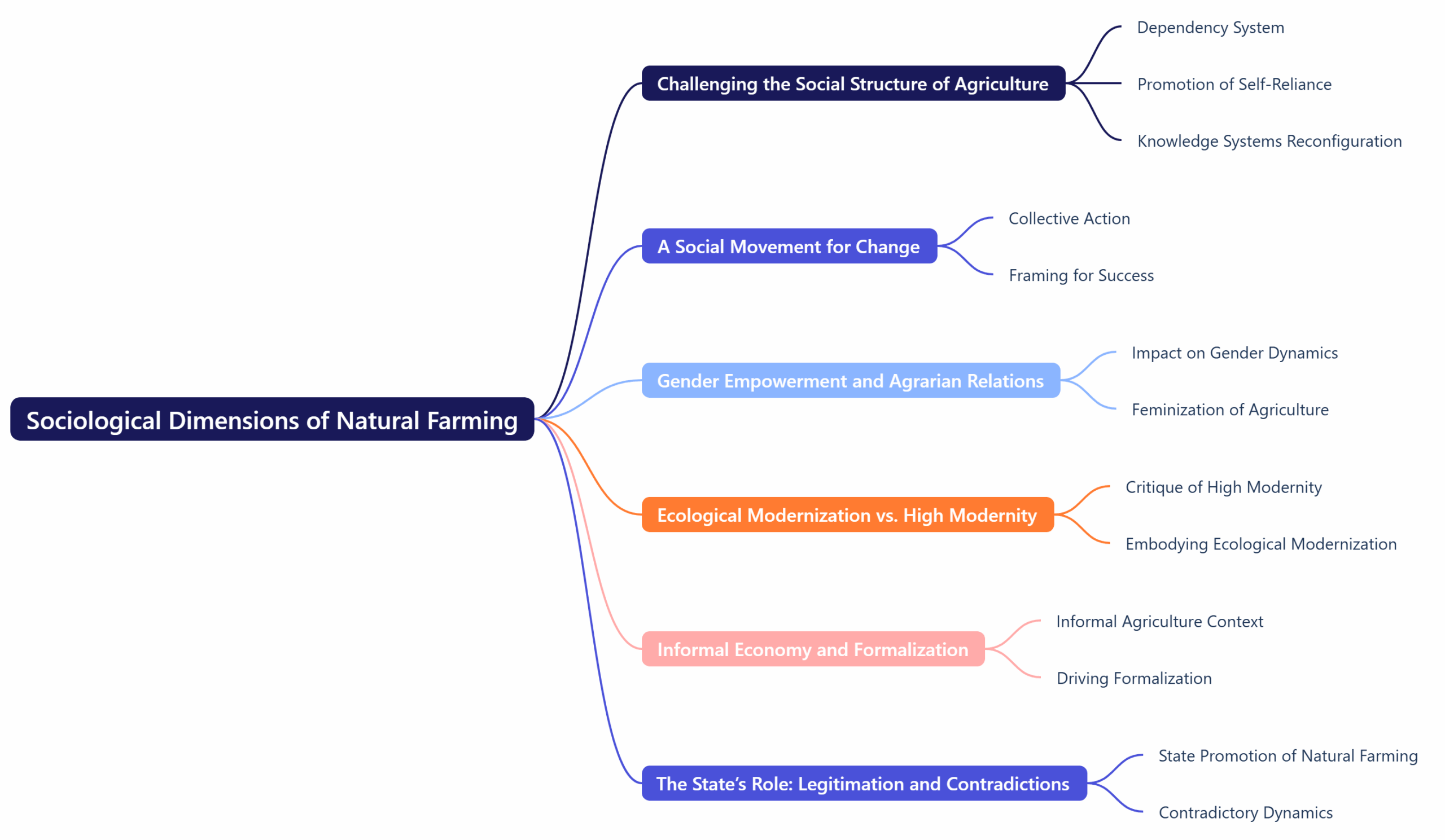
In the verdant hills of Himachal Pradesh and the fertile plains of Andhra Pradesh, a silent transformation is reshaping Indian agriculture. The rise of Natural Farming is not merely a shift in cultivation techniques; it is a profound socio-ecological movement with far-reaching implications for rural livelihoods, gender dynamics, and India’s relationship with its environment. This movement offers a rich lens to examine the interplay of economy, ecology, and social structure. This blog explores the sociological dimensions of Natural Farming, drawing on theoretical frameworks and real-world implications to highlight its transformative potential. What is Natural Farming? A Philosophy of AutonomyNatural Farming, as defined by NITI Aayog, is a chemical-free, agroecological farming method that integrates crops, trees, and livestock into a self-sustaining ecosystem. Unlike the Green Revolution’s reliance on synthetic inputs, Natural Farming emphasizes on-farm resources like Jeevamrit (a microbial culture) and Beejamrit (for seed treatment), made from cow dung, urine, and local materials. It promotes diversified cropping and livestock integration, reviving traditional mixed-farming practices. Beyond its environmental benefits—enhanced soil health, biodiversity, and climate resilience—Natural Farming is a social movement challenging the status quo of Indian agriculture. Sociological Dimensions of Natural Farming
From a functionalist perspective, the Green Revolution created a dependency system, embedding farmers in a web of reliance on multinational corporations for seeds, fertilizers, and pesticides. This eroded local autonomy, shifting power to global agribusiness. Natural Farming disrupts this structure by promoting self-reliance through on-farm inputs, aligning with conflict theory’s view of resistance against exploitative systems. It challenges the capitalist control over agriculture, redefining the farmer’s role from a passive consumer to an active producer of resources. Moreover, Natural Farming reconfigures status and knowledge systems. The Green Revolution valorized the “progressive farmer” who could afford external inputs. In contrast, Natural Farming elevates farmers with indigenous knowledge of local ecology and bio-input preparation. This shift aligns with Pierre Bourdieu’s concept of cultural capital, as traditional knowledge becomes a valued asset, empowering farmers and reducing dependence on formal agricultural science.
Natural Farming can be analyzed as a social movement, characterized by collective action and grassroots mobilization. Mobilizing structures like Farmer Producer Organizations (FPOs) and women’s self-help groups (SHGs) form the backbone of this movement, enabling resource sharing and knowledge dissemination. Krishi Sakhis, community-based women trainers, act as agents of social change, embodying new roles and statuses that inspire others. The movement’s success lies in its framing: it positions Natural Farming as a path to “liberation from debt,” “food sovereignty,” and “harmony with nature.” These resonate deeply in the context of agrarian distress, transforming farming into an ethical and moral choice. This framing draws on sociological theories of collective behavior, where shared grievances and aspirations galvanize action.
One of the most significant sociological dimensions is the movement’s impact on gender dynamics. Natural Farming is labor-intensive, involving tasks like preparing bio-inputs and mulching, often performed by women. This enhances women’s visibility in the farm economy, granting them greater agency in household and community decision-making. Their involvement in FPOs and marketing of natural produce further fosters economic independence, challenging patriarchal norms that traditionally control agricultural income. The broader trend of feminization of agriculture—where men migrate, leaving women to manage farms—is often linked to distress. Natural Farming reframes this, transforming women from laborers into skilled managers and knowledge-holders. This aligns with feminist sociology, which emphasizes how shifts in labor roles can disrupt gendered power structures.
Natural Farming critiques the high modernity of the Green Revolution, which prioritized human domination over nature through technology. Its ecological and social costs—soil degradation, debt, and health issues—are now evident. Natural Farming embodies ecological modernization, a theory suggesting that economic progress and environmental sustainability can coexist through institutional restructuring. By promoting profitable, eco-friendly agriculture, it challenges the productivist paradigm, prioritizing farmer well-being and ecological balance.
Indian agriculture is largely informal, relying on non-monetized exchanges. Natural Farming operates within this framework but also drives formalization. Certification systems like the Participatory Guarantee System (PGS) and government incentives require registration, integrating farmers into the formal economy. This enhances access to state benefits and legal protections, a process sociologists study as a transition from informal to formal economic systems.
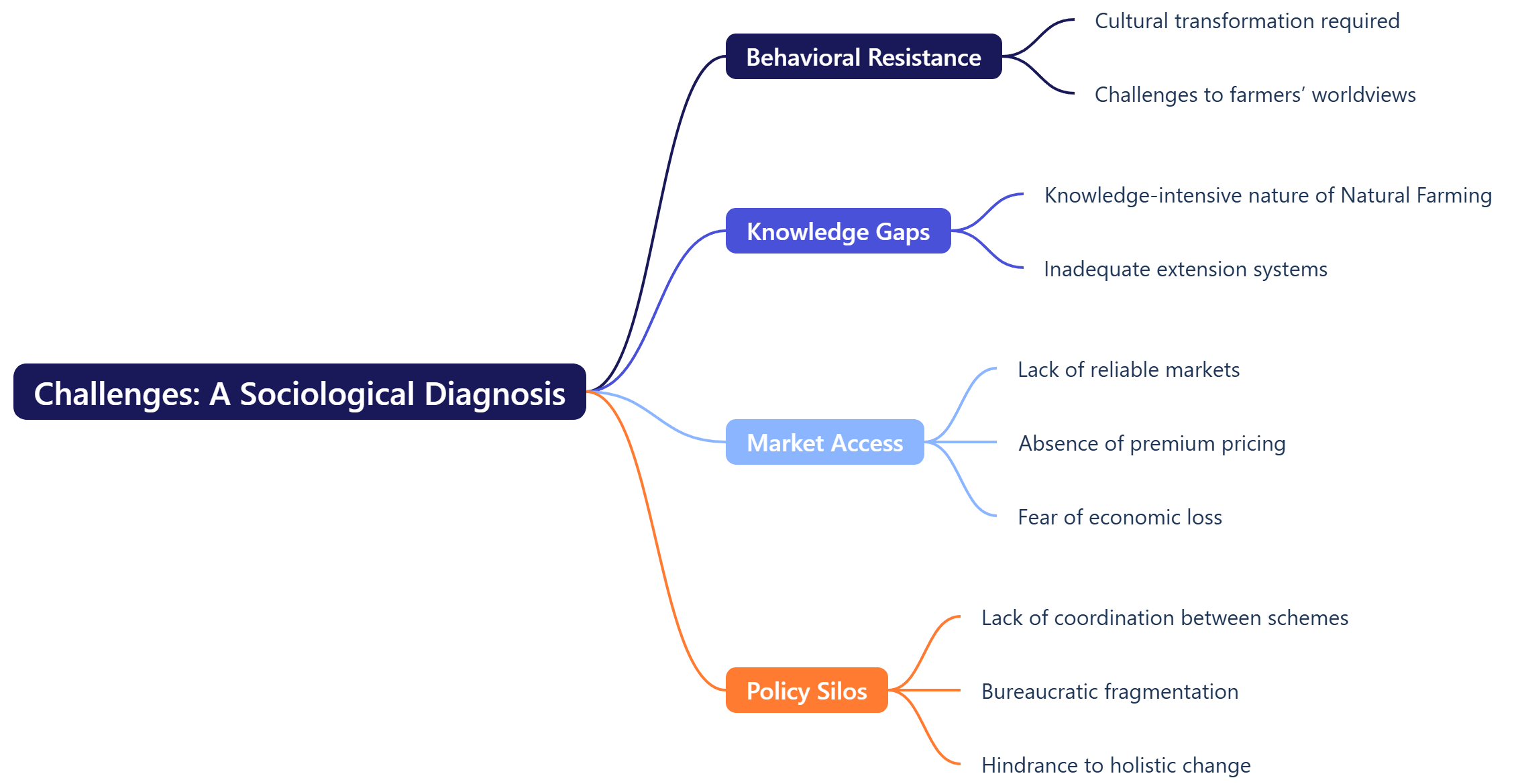
The state’s promotion of Natural Farming through initiatives like the National Mission on Natural Farming (NMNF) serves a legitimation function, addressing agrarian distress and signaling responsiveness to farmers’ plights. However, contradictions persist: the state simultaneously subsidizes chemical fertilizers, reflecting a balancing act between agribusiness interests and farmer welfare. This tension is a classic subject of political sociology, highlighting the state’s role in mediating conflicting social interests. Challenges: A Sociological Diagnosis
Despite its promise, Natural Farming faces sociological hurdles:
The Way ForwardScaling Natural Farming requires a multi-actor approach:
Conclusion: A Socio-Ecological ParadigmNatural Farming is more than a return to tradition; it is a forward-looking movement aligning with Sustainable Development Goals like Zero Hunger (SDG 2) and Responsible Consumption (SDG 12). By reducing costs, empowering women, and fostering ecological sustainability, it redefines rural social structures. It is a living case study of how changes in production modes can trigger broader social transformations, offering a blueprint for a sustainable, equitable Viksit Bharat. |
To Read more topics, visit: www.triumphias.com/blogs
Read more Blogs:
The Sigachi Blast and the Crisis of Labour: A Sociological Examination of Industrial Safety in India
The link between ecology, economy, and social structures is so important when discussing Natural Farming. It’s not just about what’s grown, but how it impacts communities at multiple levels. Great insights!