Introduction:
In contemporary studies, the “glass cliff” has emerged as a powerful concept that reveals the hidden gendered structures of the workplace. While much has been discussed about women breaking the glass ceiling—the invisible barrier preventing them from reaching the top—the glass cliff is a more insidious problem.
The glass cliff refers to a situation where women are more likely to be promoted into leadership roles during times of crisis or organizational failure, where the likelihood of success is limited. Thus, instead of being supported to succeed, these women are positioned for failure. Once they do fail (due to systemic factors), it reaffirms stereotypes questioning women’s competence in leadership.
This blog explores the glass cliff through a sociological lens, drawing on theories of gender, power, and organizational behavior.
Sociological Analysis
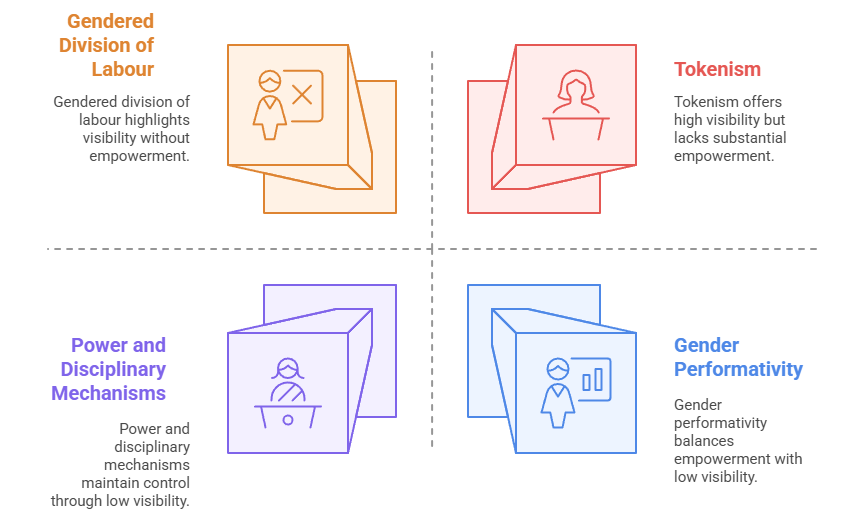
- Gendered Division of Labour: Ann Oakley emphasized how the patriarchal system allocates roles based on gender stereotypes, relegating women to supportive or caring roles. The glass cliff uses this stereotype to position women as “fixers” or nurturers during crises, but without real authority or support.
- Tokenism and Visibility: Rosabeth Moss Kanter introduced the idea of tokenism, where women and minorities are promoted symbolically but not empowered substantively. In glass cliff scenarios, women are often hyper-visible yet structurally powerless, leading to double standards in performance expectations.
- Gender Performativity: Judith Butler’s idea of gender as performance suggests that leadership is culturally coded as “masculine.” Women in leadership face a “double bind”: if they behave like men, they are criticized for being cold or aggressive; if they act nurturing, they are dismissed as weak.
- Power and Disciplinary Mechanisms: Michel Foucault would interpret the glass cliff as a subtle form of disciplinary control—organizations project an image of inclusivity by appointing women during crises but maintain hegemonic male control through strategic failure and public blame.
Causes of the Glass Cliff
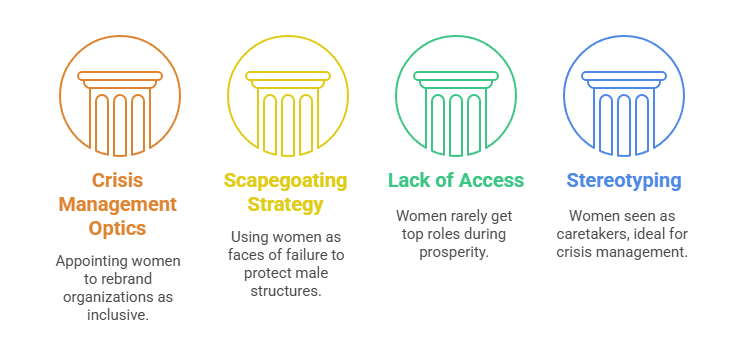
- Crisis Management Optics: Appointing a woman leader during crises helps rebrand the organization as inclusive and progressive.
- Scapegoating Strategy: Women are made the face of failure, insulating the male-dominated structure from criticism.
- Lack of Access to Stable Leadership: Women are rarely given top roles during prosperity, being considered a “risk” themselves.
- Stereotyping and Gendered Expectations: Women are seen as good “caretakers” or “empathetic negotiators,” making them ideal (but unsupported) crisis managers.
The Glass Cliff in the Indian Context
While research on the glass cliff in India is limited, its symptoms are visible across sectors—from politics to corporate boardrooms:
- Politics: Women leaders are often elevated to power during electoral crises or when male leadership fails.
Example: Rabri Devi (Bihar) was made Chief Minister during Lalu Prasad Yadav’s legal troubles—not for her political merit but as a stop-gap leader.
- Corporate Sector: India mandates one woman director on boards of public companies, but most are symbolic appointees, often from promoter families and without decision-making authority.
- Panchayati Raj Institutions: Due to 33% reservation for women, many are elected but act as proxies for male relatives—especially in challenging rural areas where socio-political conflict is high.
Consequences of the Glass Cliff Phenomenon
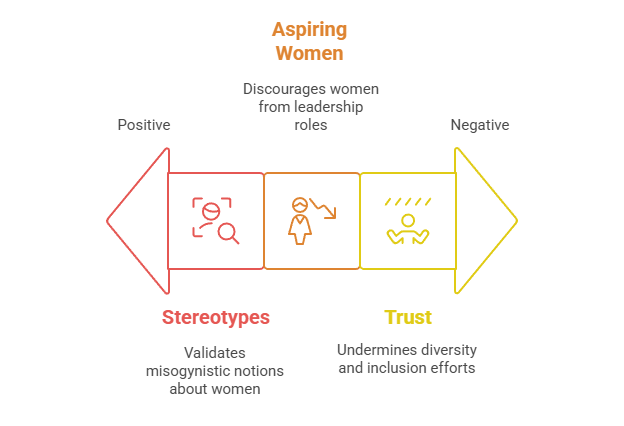
- Reinforcement of Stereotypes: Failure by women in crisis roles is often used to validate misogynistic notions that “women can’t lead.”
- Discouragement of Aspiring Women: Young professionals may see female leadership as a risky career path—less rewarding, more scrutinized.
- Erosion of Trust in Gender Diversity Policies: Token appointments under crisis scenarios delegitimize genuine efforts for diversity and inclusion.
Solutions and Policy Recommendations
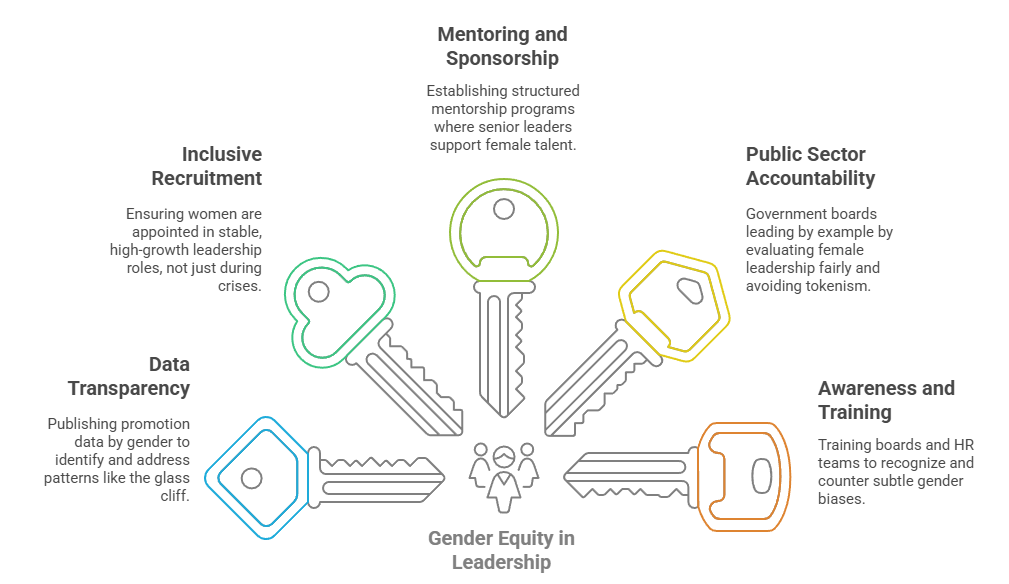
- Data Transparency: Organizations should publish promotion data by gender and context, ensuring patterns like the glass cliff are identified.
- Inclusive Recruitment beyond Crises: Ensure women are appointed in stable, high-growth leadership opportunities, not just during damage control.
- Mentoring and Sponsorship: Establish structured mentorship programs where senior leaders sponsor female talent for decision-making roles.
- Public Sector Accountability: Government boards and public institutions must lead by example—evaluating female leadership fairly and avoiding tokenism.
- Awareness and Training: Train boards, HR teams, and political parties to recognize subtle gender biases and counter them with affirmative strategies.
Conclusion:
The glass cliff is a sophisticated mechanism of exclusion—cloaked in the appearance of inclusion. While it allows women to be “seen” at the top, it ensures they fall quickly or exit quietly. This phenomenon reflects a deeply stratified organizational culture, where power remains centralized and gender equity is performative rather than transformative.
For true change, we need systemic restructuring of opportunity pipelines, evaluation frameworks sensitive to context, and a redefinition of leadership success that acknowledges structural inequality.
In the words of bell hooks, “Feminism is for everybody”—especially when it comes to leadership, power, and justice.
PYQs
Paper 1:
- “Discuss the implications of tokenism in the workplace.” (2019)
- “Explain the gendered division of labor in corporate organizations.” (2020)
- “Critically examine the concept of ‘glass ceiling’ in the context of gender inequality.” (2021)
Paper 2:
- “Do reservations for women in local bodies ensure their empowerment?” (2018)
- “Explain the structural constraints on women’s leadership in Indian society.” (2017)
- “Analyze the role of state and private sector in ensuring women’s participation in decision-making.” (2020)
|


This post brings much-needed attention to the glass cliff, a concept that’s often overshadowed by discussions on the glass ceiling. What struck me most is how organizations unintentionally reinforce gender bias by appointing women to precarious leadership roles during crises—setting them up for criticism if things go wrong. It would be interesting to explore how this plays out not just in corporate settings, but also in political and bureaucratic leadership in India.