Terrorism and India's Security Landscape: Challenges and Strategic Responses

Terrorism and India’s Security Landscape: Challenges and Strategic Responses

Terrorism and India’s Security Landscape: Challenges and Strategic Responses

(Relevant for GS paper-3, Internal security, Terrorism)

Terrorism remains a significant threat to India’s national security, with recent events underscoring the persistent challenges faced by the nation. The complex security environment necessitates a comprehensive understanding of the evolving nature of terrorism, its impact on India’s internal stability, and the strategic measures required to counteract these threats.​

Recent Developments in Terrorism

In April 2025, a devastating terrorist attack occurred in Pahalgam, Jammu and Kashmir, resulting in the deaths of 26 individuals, including 25 Indian nationals and one from Nepal, and injuring 17 others. The attack, claimed by the militant group Kashmir Resistance, is considered the deadliest since the 2008 Mumbai attacks. The incident has heightened tensions between India and Pakistan, with India accusing Pakistan-based groups like Lashkar-e-Taiba of orchestrating the attack In response, India has taken several measures, including downgrading diplomatic ties with Pakistan, suspending the Indus Waters Treaty, and closing its main border crossing. These actions reflect India’s firm stance against cross-border terrorism and its commitment to safeguarding national security. ​

Statistical Overview

According to the Global Terrorism Index 2024, India has shown improvement in its rankings, with a decline in terrorism-related deaths. However, South Asia remains the region most impacted by terrorism globally. ​

The South Asia Terrorism Portal reports that in 2023, India experienced a total of 119 terrorist incidents, resulting in 9 civilian deaths and 33 injuries. These figures highlight the ongoing threat posed by terrorism and the need for continued vigilance

Challenges in Counter-Terrorism

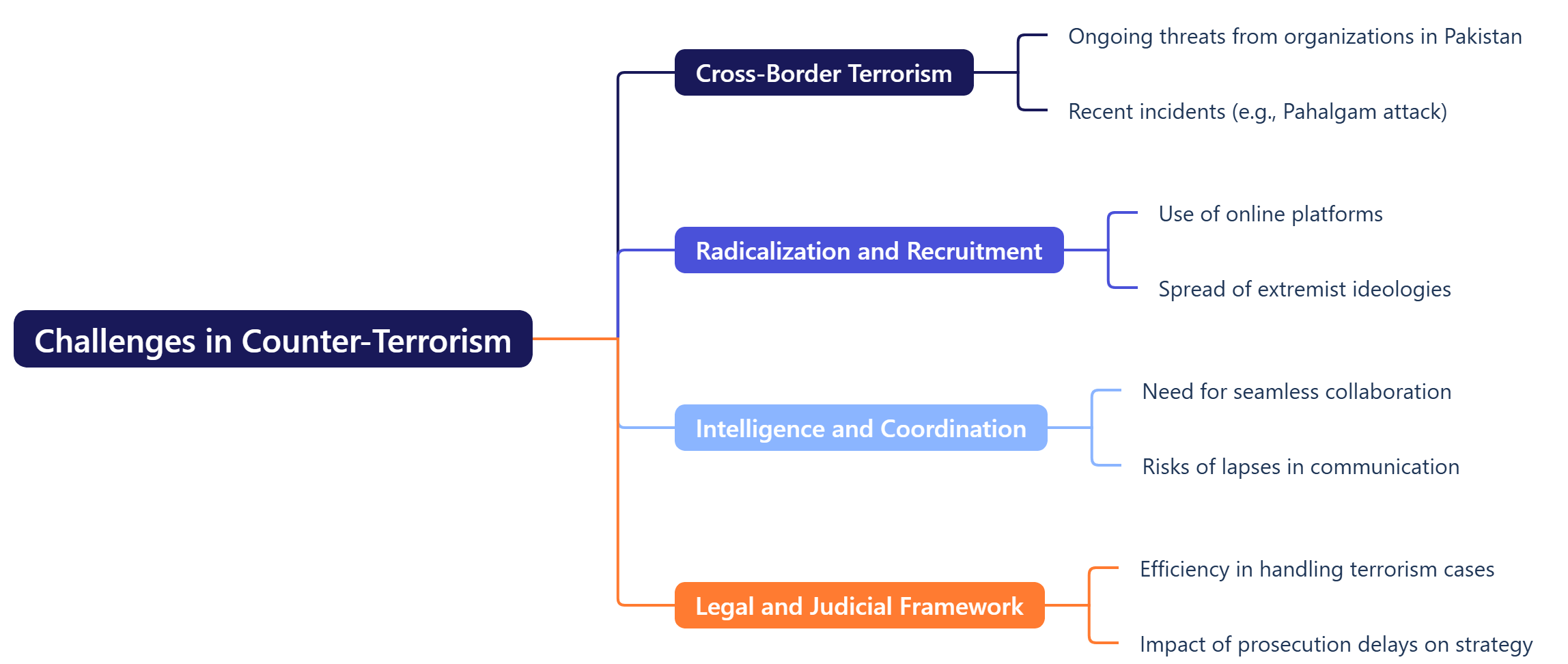
Challenges in Counter-Terrorism

  1. Cross-Border Terrorism: India continues to face challenges from cross-border terrorism, particularly from groups operating in Pakistan. The recent Pahalgam attack underscores the persistent threat posed by such organizations.​
  2. Radicalization and Recruitment: The spread of extremist ideologies through online platforms has facilitated the radicalization and recruitment of individuals, posing a significant challenge to counter-terrorism efforts.​
  3. Intelligence and Coordination: Effective counter-terrorism requires seamless coordination among various intelligence and law enforcement agencies. Any lapses can lead to missed opportunities in preventing attacks.​
  4. Legal and Judicial Framework: Ensuring that the legal and judicial systems are equipped to handle terrorism-related cases efficiently is crucial. Delays in prosecution can hinder the overall counter-terrorism strategy.​

Strategic Measures and Recommendations

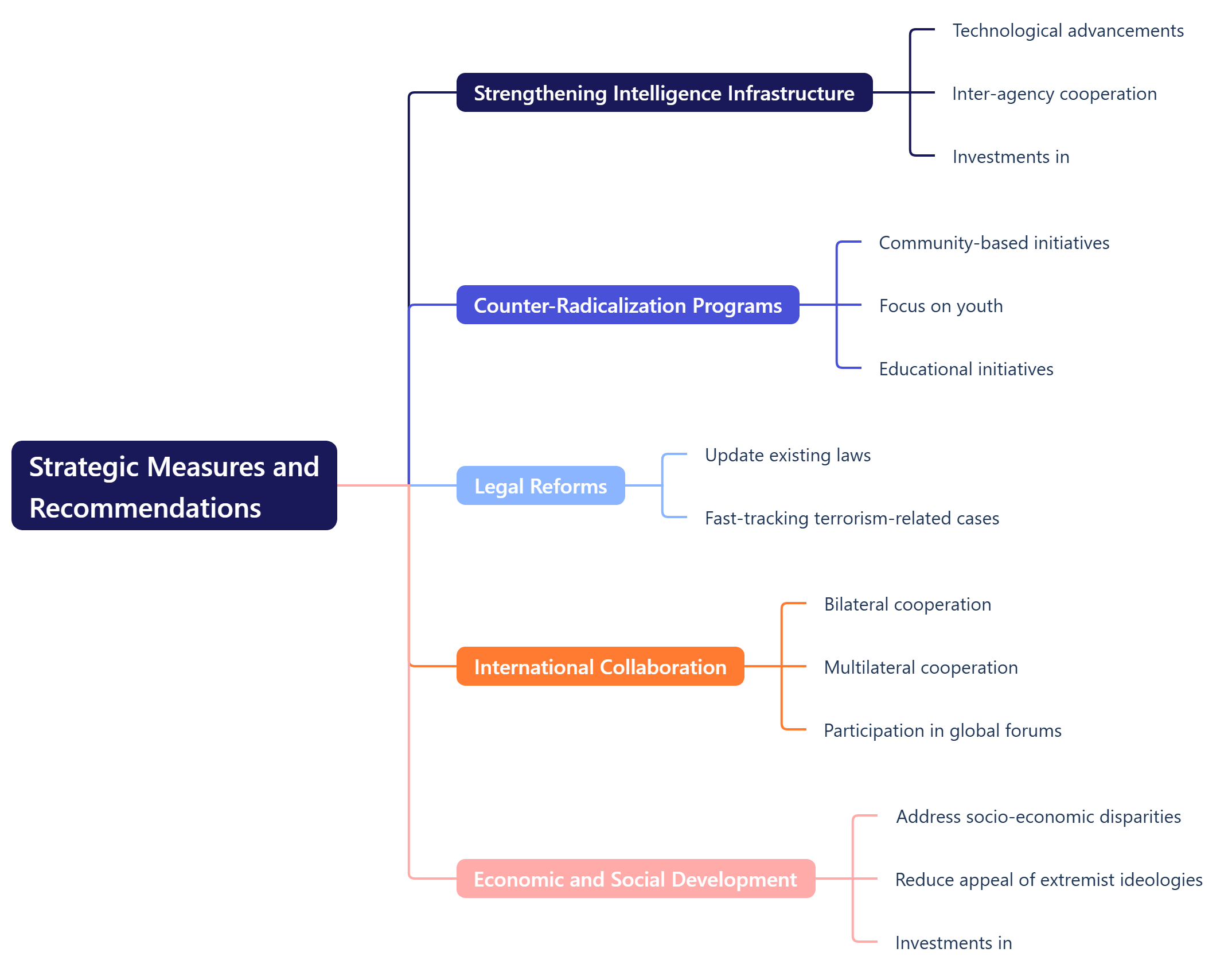
Strategic Measures and Recommendations

  1. Strengthening Intelligence Infrastructure: Enhancing the capabilities of intelligence agencies through technological advancements and inter-agency cooperation is vital. Investments in surveillance, data analysis, and cyber intelligence can bolster preventive measures.​
  2. Counter-Radicalization Programs: Implementing community-based programs aimed at preventing radicalization, especially among youth, can address the root causes of terrorism. Educational initiatives and awareness campaigns can play a pivotal role.​
  3. Legal Reforms: Revisiting and updating existing laws related to terrorism to ensure they are robust and adaptable to emerging threats is essential. Fast-tracking terrorism-related cases can also serve as a deterrent.​
  4. International Collaboration: Engaging in bilateral and multilateral cooperation with other nations can facilitate the sharing of intelligence and best practices. India’s participation in global forums like the United Nations Counter-Terrorism Committee can enhance its counter-terrorism capabilities. ​
  5. Economic and Social Development: Addressing socio-economic disparities, particularly in regions vulnerable to terrorist recruitment, can reduce the appeal of extremist ideologies. Investing in education, employment, and infrastructure can foster resilience against radicalization.​

Conclusion

Terrorism poses a multifaceted threat to India’s security landscape, necessitating a comprehensive and adaptive approach. By addressing the underlying causes, enhancing intelligence capabilities, and fostering international cooperation, India can strengthen its resilience against terrorism. Continued commitment to these strategies will be crucial in safeguarding national security and promoting peace and stability.​

To Read more topics like Terrorism and India’s Security Landscape: Challenges and Strategic Responses in Public Posts, visit: www.triumphias.com/blogs

Read more Blogs:

Working-Class: Structure, Growth, Class Mobilization in India | Sociology Optional Coaching | Vikash Ranjan Classes | Triumph IAS | UPSC Sociology Optional

Growth of Urban Settlements in India | Sociology Optional Coaching | Vikash Ranjan Classes | Triumph IAS | UPSC Sociology Optional

One comment

Leave a Reply

Your email address will not be published. Required fields are marked *