

Strengthening India Cyber Defense: A 2025 Overview
(Relevant for GS paper-3, Cyber Security)
India Cyber DefenseIn an era where digital integration permeates every facet of society, India’s cyber security landscape has become a critical domain of national security. With the nation ranking as the second most targeted country for cyber-attacks after the United States , the urgency to fortify cyber defences has never been more pronounced. This comprehensive analysis delves into the current state of India’s cyber defence mechanisms, highlighting recent initiatives, challenges, and strategic imperatives. Escalating Cyber ThreatsIndia’s rapid digital transformation has inadvertently expanded its vulnerability to cyber threats. The Data Security Council of India’s 2025 report reveals over 369 million distinct malware detections, averaging 702 potential security threats every minute. Notably, 2024 witnessed a surge in hacktivist attacks, with over 4,000 incidents targeting sectors like education, government, and healthcare. These attacks, often politically motivated, underscore the pressing need for robust cyber security measures. Governmental Initiatives and Infrastructure
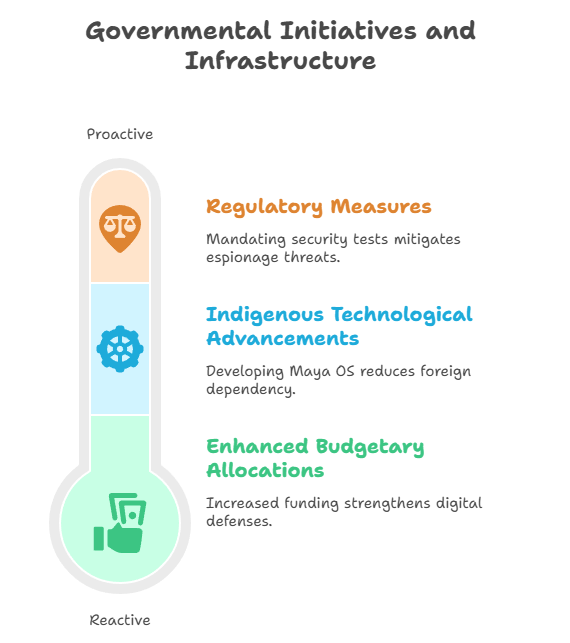
Recognizing the gravity of cyber threats, the Union Budget 2025 allocated over ₹1,900 crore to cyber security initiatives, marking an 18% increase from the previous year . This funding aims to bolster digital infrastructure, enhance threat detection capabilities, and support research and development in cyber security.
To reduce dependency on foreign software and enhance security, the Defence Research and Development Organisation (DRDO), in collaboration with C-DAC and NIC, developed Maya OS. This Linux-based operating system, accompanied by the “Chakravyuh” endpoint detection system, is being deployed across defense networks to safeguard sensitive data
In response to espionage concerns, especially from Chinese surveillance equipment, India mandated that manufacturers of internet-connected CCTV cameras submit their hardware and software for government testing. This move aims to ensure the security of surveillance infrastructure and mitigate potential threats Institutional Framework and Collaborations
The Indian Computer Emergency Response Team (CERT-In) has been pivotal in coordinating responses to cyber security incidents. In 2025, CERT-In formulated a Cyber Crisis Management Plan to counter cyber attacks and cyber terrorism, emphasizing the need for preparedness across all government sectors .
Strengthening global cooperation, India signed a memorandum of understanding with the United States in January 2025 to collaborate on cybercrime investigations. This partnership facilitates information sharing and joint efforts to combat transnational cyber threats
Institutions like the National Digital Crime Resource & Training Centre (NDCRTC) in Hyderabad are instrumental in training law enforcement agencies in cybercrime investigation and digital forensics. Such centres enhance the nation’s capability to address complex cyber threats effectively. Public Awareness and Digital LiteracyRecognizing that cyber security is not solely a governmental responsibility, initiatives like Google’s DigiKavach aim to educate the public about online fraud. Launched in collaboration with the Ministry of Home Affairs, Digi Kavach focuses on preventing online financial fraud and enhancing digital literacy among users . Challenges Ahead
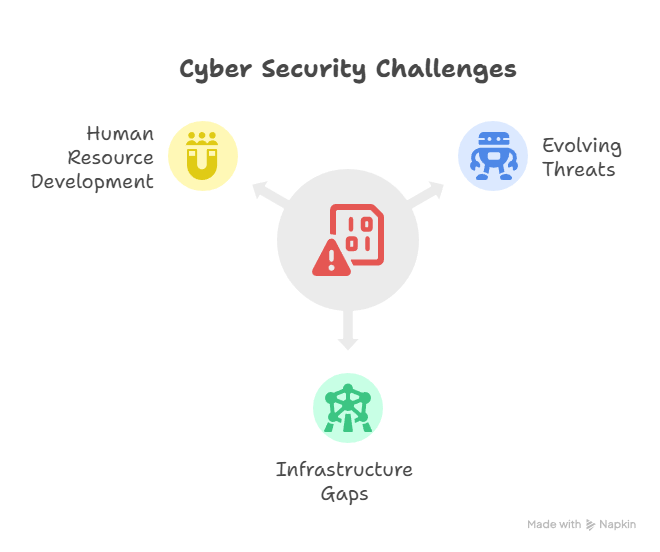
Despite significant strides, India faces several challenges in its quest for robust cyber defense:
ConclusionAs India continues its digital journey, fortifying cyber defences is paramount to safeguarding national interests. Through strategic investments, indigenous technological advancements, and international collaborations, India is laying a robust foundation to counter cyber threats. However, sustained efforts, public-private partnerships, and continuous innovation will be essential to navigate the evolving cyber security landscape effectively. |



To Read more topics, visit: www.triumphias.com/blogs
One comment