
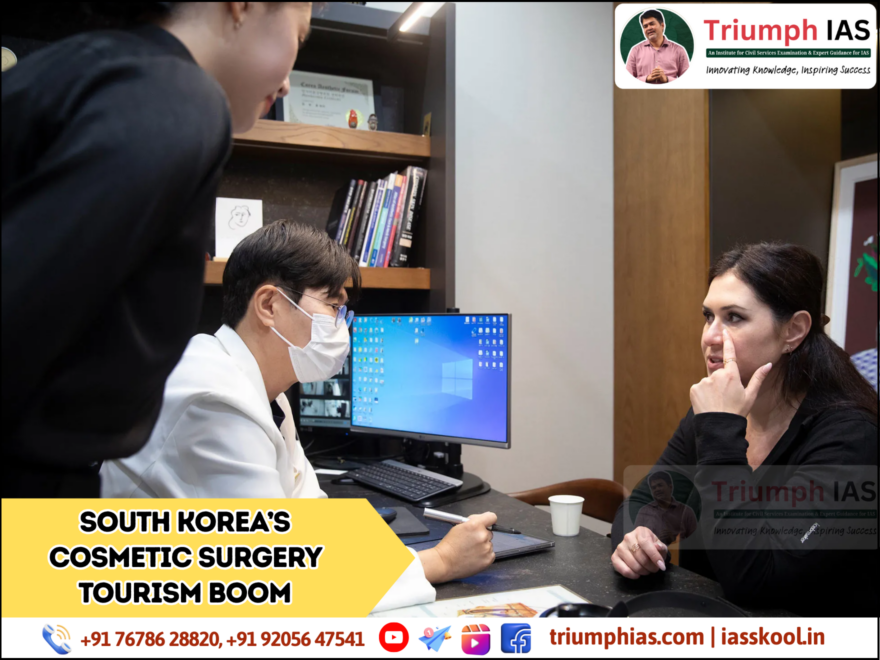
South Korea Cosmetic Surgery Tourism Boom
(Relevant for Sociology Paper I: Sociological thinker- Mead- Self and Identity; Social Change in Modern Society and Paper II: Challenges of Social Transformation)
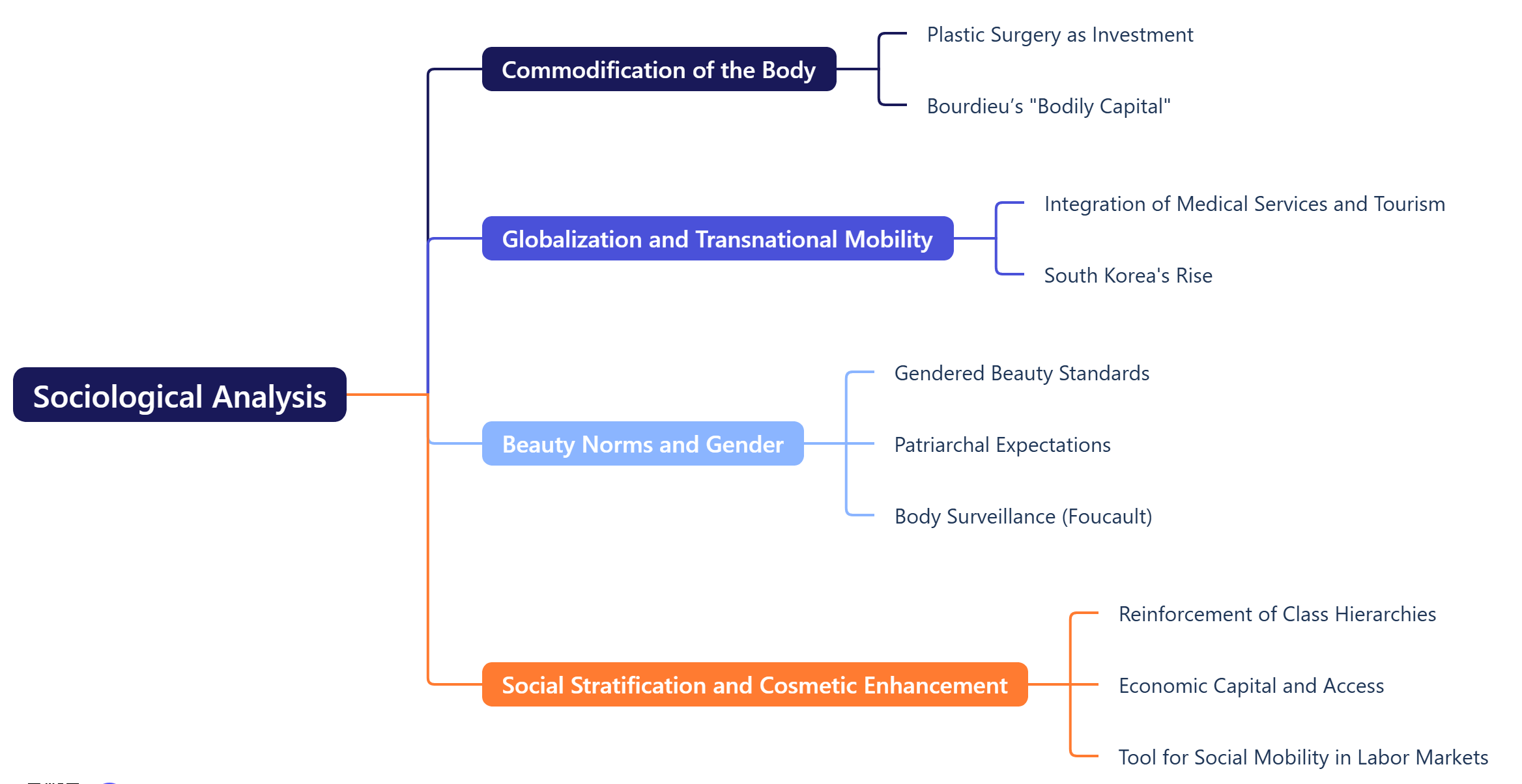
Introduction: South Korea Cosmetic SurgerySouth Korea has emerged as the global hub of cosmetic surgery tourism, drawing thousands of international visitors each year. From plastic surgery clinics in Seoul’s affluent Gangnam district to the strategic partnerships with tour firms and hotel chains, the country is capitalizing on the growing demand for beauty transformation. This phenomenon offers an insightful sociological case study, connecting key themes such as body politics, globalization, commodification of beauty, and medical tourism—all highly relevant to the Sociology syllabus. Understanding the Trend: Why South Korea?South Korea’s dominance in the global plastic surgery industry is not just about advanced technology. It’s deeply rooted in its social structure, cultural ideals of “perfect beauty,” and a highly competitive job market where looks often impact employment. International tourists, particularly from China, Southeast Asia, the Middle East, and even the West, flock to Seoul not only for procedures but also for complete cosmetic tourism packages. Tour firms and hotels now provide translators, transport to clinics, post-op recovery rooms, and even leisure tours post-surgery. Sociological Analysis
Ethical and Cultural ImplicationsWhile South Korea profits from this industry, cultural imperialism and body image anxiety spread globally. Questions arise about informed consent, post-surgery trauma, and the ethical commodification of health. Sociological ReflectionThis phenomenon is not merely about beautification—it is a reflection of power, capital, and cultural dominance operating through the human body. When tourism, healthcare, and media converge to commodify the body, it invites critical analysis of how modern society constructs identity through consumption. ConclusionSouth Korea’s cosmetic tourism boom exemplifies the fusion of global capitalism, cultural norms, and identity politics. This is a real-world application of sociological theories that touch upon globalization, gender, body politics, and social change. Understanding this trend not only sharpens your current affairs preparation but also enriches your ability to apply theoretical frameworks to contemporary issues. PYQsPaper I:
Paper II:
|

To Read more topics like South Korea’s Cosmetic Surgery Tourism Boom in Public Posts, visit: www.triumphias.com/blogs
Read more Blogs:
IAS Aayush Gupta, Rank 74 in UPSC Exam | Justice must reach the poor | Triumph IAS
One comment