Introduction
In a society long steeped in the ideals of monogamous love and marital commitment, solo polyamory is emerging as a bold alternative, particularly among younger generations. This relationship model — characterised by multiple romantic or sexual involvements without exclusive commitment — reflects a significant shift in contemporary social structures and values.
As India’s society modernises rapidly under the impact of globalization, urbanization, and individualization, new forms of intimacy, such as solo polyamory, are gaining traction, reshaping age-old norms around love, marriage, and family.
What is Solo Polyamory?
Solo polyamory refers to a relationship style where individuals maintain multiple romantic and/or sexual relationships simultaneously without entering into committed partnerships. Practitioners often prioritise autonomy, independence, and personal growth over traditional milestones like marriage, cohabitation, or emotional exclusivity.
Unlike polyamorous relationships based on committed groups, solo poly individuals may appear “single” in social contexts, reflecting a detachment from conventional relational obligations.
Why Is Solo Polyamory Rising?
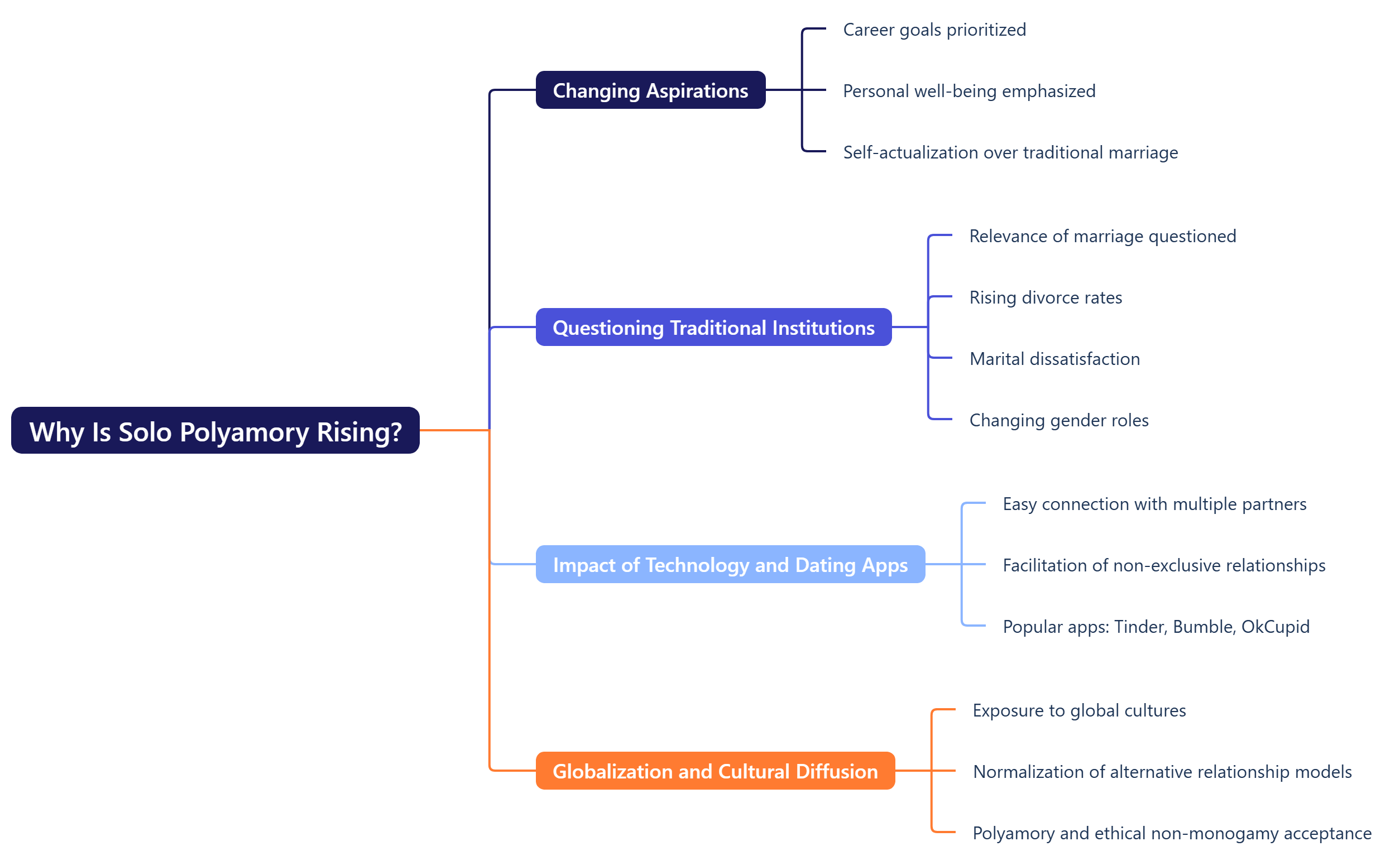
- Changing Aspirations: Younger generations now prioritise career goals, personal well-being, and self-actualization over traditional marriage.
- Questioning Traditional Institutions: The relevance of marriage is increasingly questioned, especially given rising divorce rates, marital dissatisfaction, and changing gender roles.
- Impact of Technology and Dating Apps: Apps like Tinder, Bumble, and OkCupid enable individuals to connect with multiple partners more easily, facilitating non-exclusive relationship models.
- Globalization and Cultural Diffusion: Exposure to global cultures through media has normalised alternative relationship models like polyamory and ethical non-monogamy.
Sociological Analysis
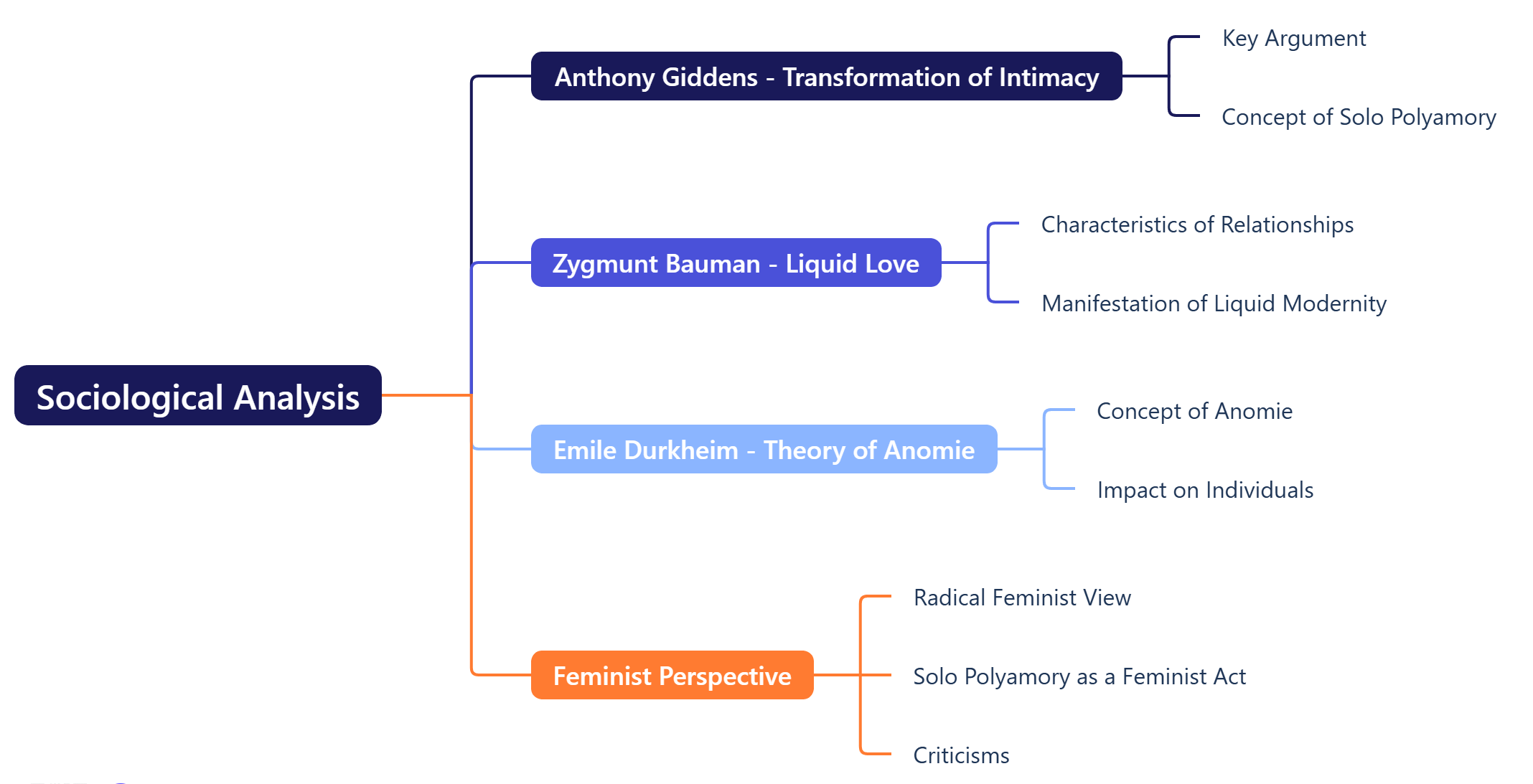
- Anthony Giddens’ ‘Transformation of Intimacy’: Giddens argues that late modernity has transformed intimate relationships from being bound by duty and tradition to being based on confluent love — relationships that are conditional and contingent on personal satisfaction.Solo polyamory epitomises this trend: relationships exist only as long as they are mutually fulfilling, without long-term commitment.
- Zygmunt Bauman’s ‘Liquid Love’: Bauman describes modern relationships as “liquid,” unstable, and easily dissolvable. Solo polyamory is a clear manifestation of liquid modernity, where flexibility and personal choice trump permanence.
- Emile Durkheim’s Theory of Anomie: Durkheim warned that rapid social change leads to a state of normlessness (anomie). As traditional structures like marriage lose significance, individuals may face isolation, anxiety, and emotional insecurity — as seen in criticisms of solo polyamory causing loneliness.
- Feminist Perspective: Radical feminists argue that marriage historically has been an institution of female oppression. In contrast, solo polyamory can be seen as a feminist act of reclaiming autonomy, though critics point out that it may disproportionately favour male sexual freedom.
Risks and Criticisms
- Emotional Isolation: Lack of deep bonds can cause loneliness.
- Mental Health Risks: Higher risk of anxiety and depression due to lack of emotional security.
- Health Risks: Higher chances of STIs due to multiple partners.
- Reinforcing Patriarchy: Some critics argue that without emotional commitment, women may still face exploitation in casual relationships.
Broader Implications for Indian Society
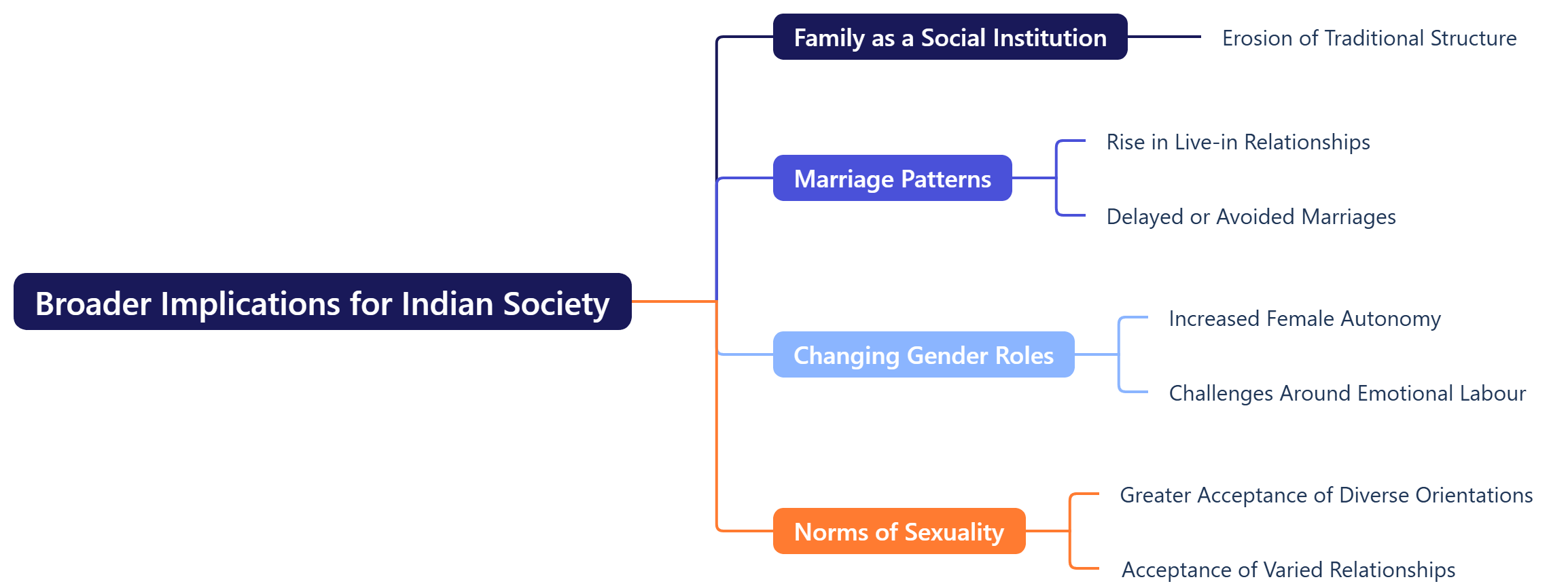
- Family as a Social Institution: Erosion of the traditional family structure may accelerate.
- Marriage Patterns: Rise in live-in relationships, delayed or avoided marriages.
- Changing Gender Roles: Increased female autonomy but possible challenges around emotional labour.
- Norms of Sexuality: Greater acceptance of diverse sexual orientations and relationships.
Conclusion
Solo polyamory is challenging the traditional definitions of love, marriage, and family. While it promotes personal independence and choice, it also raises concerns about mental health, social fragmentation, and future societal cohesion. Whether it remains a niche subculture or grows into a widespread societal pattern depends on how societies balance individual freedom with collective social needs.
Previous Year Questions
Paper 1:
- Discuss the impact of globalization on marriage and family in India. (2015)
- Examine Anthony Giddens’ views on the transformation of intimacy in late modern society. (2018)
- How has feminist theory contributed to our understanding of family and marriage as social institutions? (2020)
Paper 2:
- Explain how globalization is influencing marriage and family patterns in contemporary India. (2017)
- Discuss the emerging trends in urban youth culture with reference to new forms of relationships. (2019)
- Analyze the impact of urbanization on family relationships in India. (2020)
- How is the institution of marriage transforming in Indian metropolitan cities? (2022)
- Examine the relationship between social media and changes in personal relationships among Indian youth. (2023)
|


One comment