|
India stands at a pivotal juncture where its demographic dividend offers immense potential to drive economic growth. However, to harness this advantage, the nation must address the pressing challenge of equipping its workforce with future-ready skills. As the global economy evolves, driven by technological advancements and changing job paradigms, India’s focus on skill development becomes paramount.
Current Landscape of Skill Development in India
Despite various initiatives, a significant portion of India’s youth remains inadequately skilled. According to the Ministry for Skill Development and Entrepreneurship (MSDE), only about 2% of individuals aged 15-29 have received formal vocational training, and 8% have received non-formal vocational training . This gap underscores the urgent need for comprehensive skill development strategies.
The Economic Survey 2024-25 highlights that over 50% of graduates and 44% of postgraduates are employed in low-skill jobs, indicating a mismatch between education and industry requirements .
Key Government Initiatives
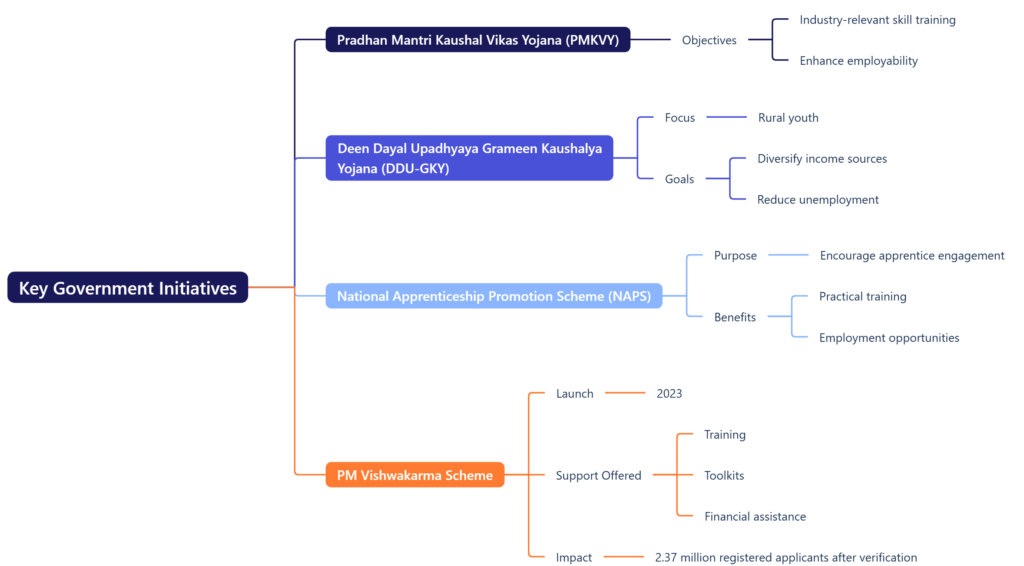
- Pradhan Mantri Kaushal Vikas Yojana (PMKVY): A flagship scheme aimed at providing industry-relevant skill training to youth, enhancing their employability.
- Deen Dayal Upadhyaya Grameen Kaushalya Yojana (DDU-GKY): Focused on rural youth, this program seeks to diversify income sources and reduce unemployment.
- National Apprenticeship Promotion Scheme (NAPS): Encourages establishments to engage apprentices, providing them with practical training and employment opportunities.
- PM Vishwakarma Scheme: Launched in 2023, this initiative supports artisans and craftspeople by offering training, toolkits, and financial assistance. As of now, over 2.37 million applicants have successfully registered after undergoing the required verification process .
Emerging Collaborations and Regional Efforts
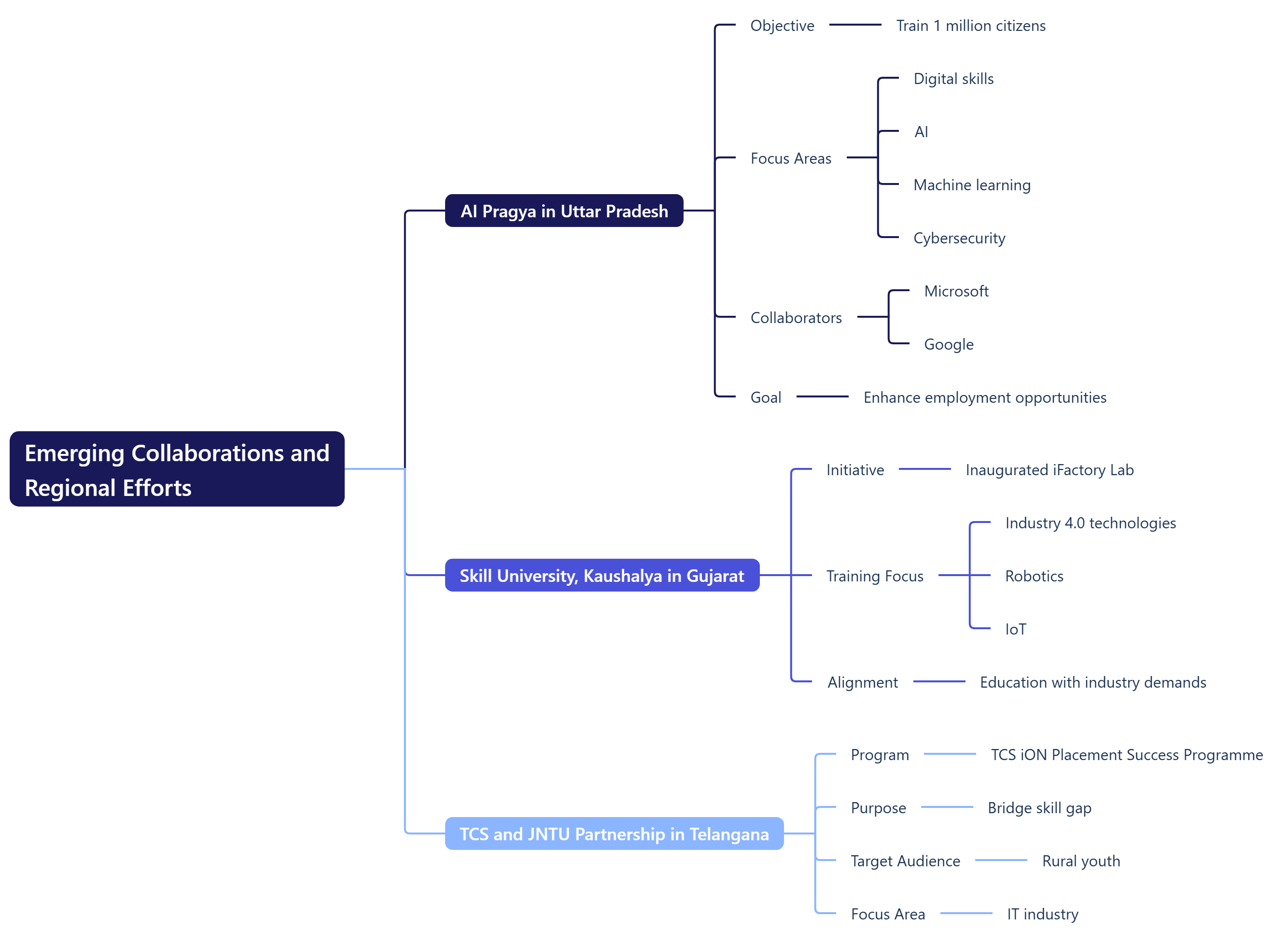
- AI Pragya in Uttar Pradesh: Aiming to train 1 million citizens in digital skills like AI, machine learning, and cybersecurity, this initiative collaborates with tech giants such as Microsoft and Google to enhance employment opportunities .
- Skill University, Kaushalya in Gujarat: Inaugurated the iFactory Lab to provide training in Industry 4.0 technologies, including robotics and IoT, aligning education with industry demands
- TCS and JNTU Partnership in Telangana: Launched the TCS iON Placement Success Programme to bridge the skill gap between academia and the IT industry, targeting rural youth .
Challenges in Skill Development
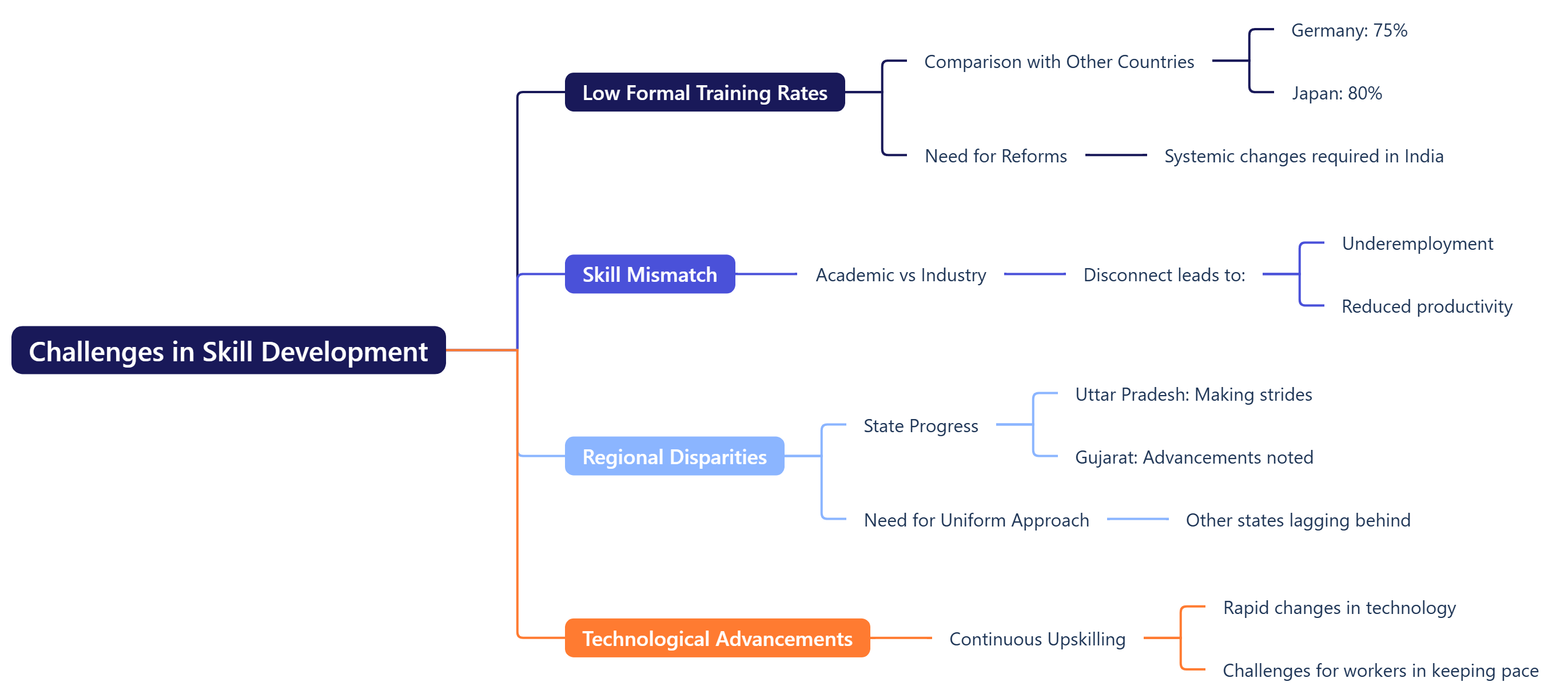
- Low Formal Training Rates: Compared to countries like Germany (75%) and Japan (80%), India’s formal vocational training rates are significantly lower, highlighting the need for systemic reforms .
- Skill Mismatch: The disconnect between academic curricula and industry requirements leads to underemployment and reduced productivity.
- Regional Disparities: While states like Uttar Pradesh and Gujarat are making strides in skill development, others lag, necessitating a more uniform approach.
- Technological Advancements: Rapid technological changes demand continuous upskilling, which remains a challenge for many workers.
Way Forward
- Integration of Technology in Training: Leveraging digital platforms can make skill training more accessible, especially in remote areas.
- Public-Private Partnerships: Collaborations between the government and private sector can ensure that training programs are aligned with current industry needs.
- Focus on Soft Skills: Beyond technical skills, emphasis on communication, problem-solving, and adaptability is crucial.
- Continuous Monitoring and Evaluation: Regular assessment of training programs can help in refining strategies and ensuring effectiveness.
Conclusion
India’s journey towards becoming a global economic powerhouse hinges on its ability to equip its workforce with future-ready competencies. While challenges persist, concerted efforts from the government, industry, and educational institutions can bridge the skill gap, ensuring inclusive and sustainable growth.
|


It’s encouraging to see emphasis on future-oriented competencies, especially as automation and AI reshape job roles. Perhaps integrating digital literacy into school curricula could be a crucial early step in preparing the next generation for these changes?