Introduction
In an era defined by rapid modernization, globalization, and digital transformation, the concept of self-identity has evolved dramatically. Unlike in traditional societies, where identity was largely ascribed, modern societies offer individuals the freedom—but also the burden—of choice, leading to complex identity negotiations.
Modernity and the Making of the Self
Modernity, as a sociological phase, brought about by industrialization, urbanization, secularization, and capitalism, has shifted the focus from collectivism to individualism. The modern individual is no longer just a product of birth and tradition but a reflexive project that must continuously construct and reconstruct their identity.
Key Features:
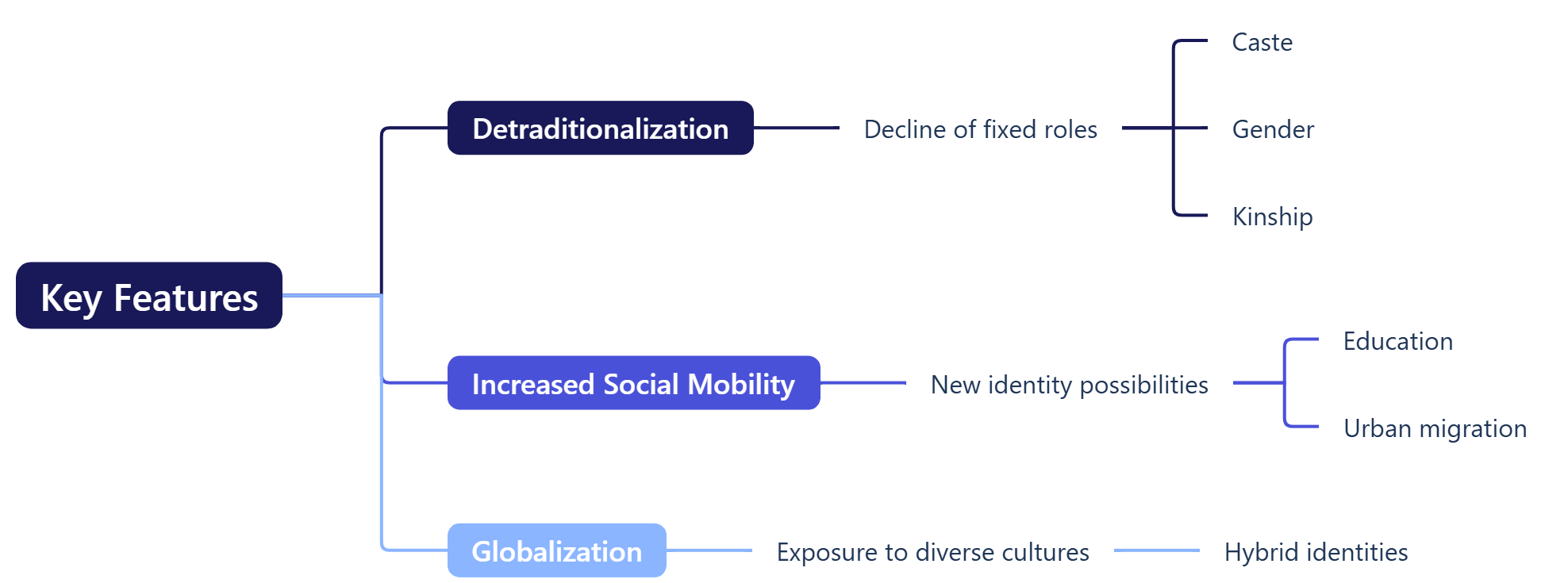
- Detraditionalization: Decline of fixed roles based on caste, gender, or kinship.
- Increased social mobility: New identity possibilities through education and urban migration.
- Globalization: Exposure to diverse cultures shapes hybrid identities.
Sociological Theories on Self-Identity
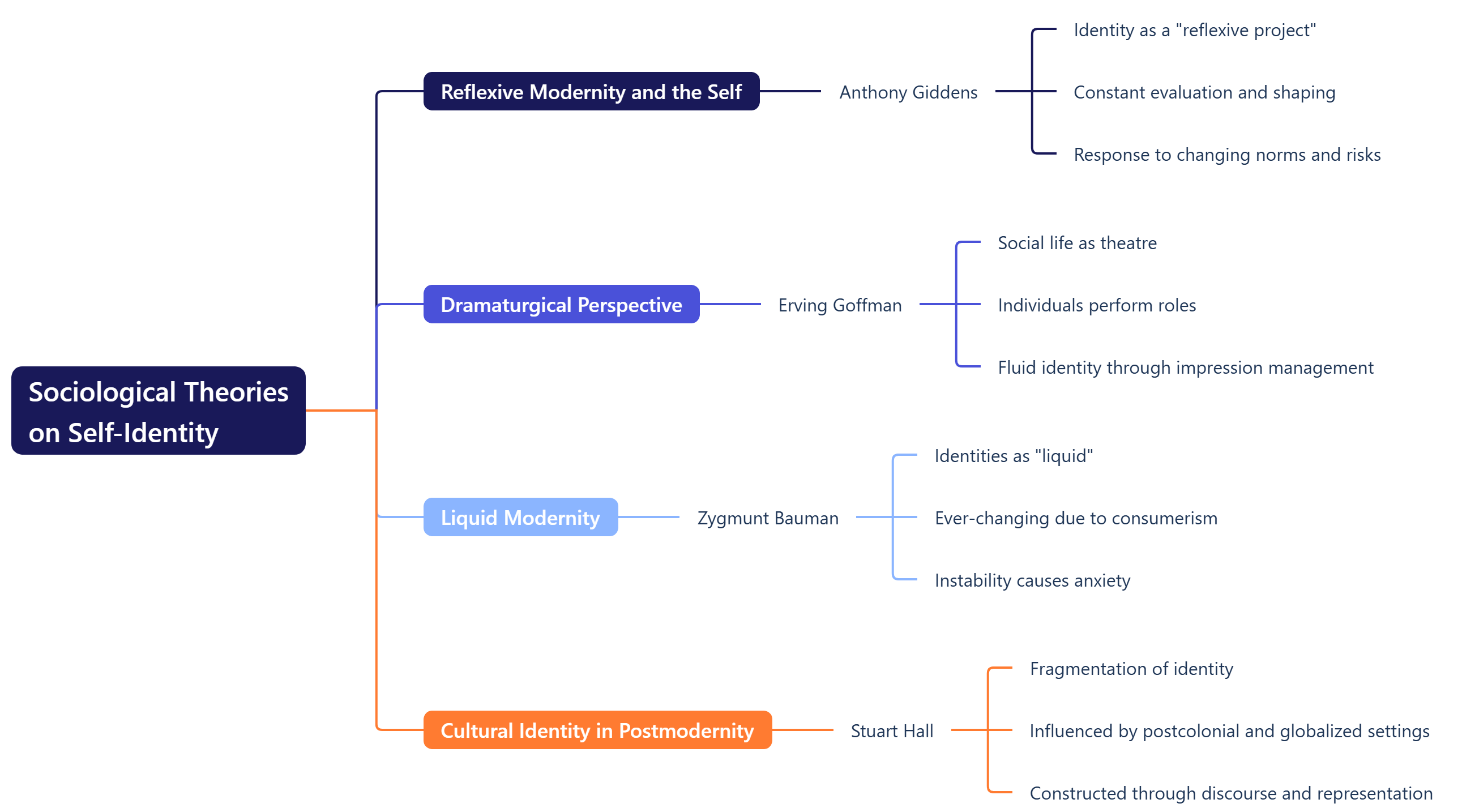
- Reflexive Modernity and the Self: Anthony Giddens argues that in late modernity, identity becomes a “reflexive project”—people must constantly evaluate and shape who they are amid changing norms and risks.
- Dramaturgical Perspective: According to Erving Goffman, social life is like a theatre, where individuals perform roles in front of others. Identity is fluid, negotiated through impression management.
- Liquid Modernity: Zygmunt Bauman views modern identities as “liquid”, ever-changing due to consumerism and fleeting relationships. This instability creates anxiety about “who we are.”
- Cultural Identity in Postmodernity: Stuart Hall emphasized the fragmentation of identity in postcolonial and globalized settings, highlighting how identity is constructed through discourse and representation.
Identity in the Digital Age
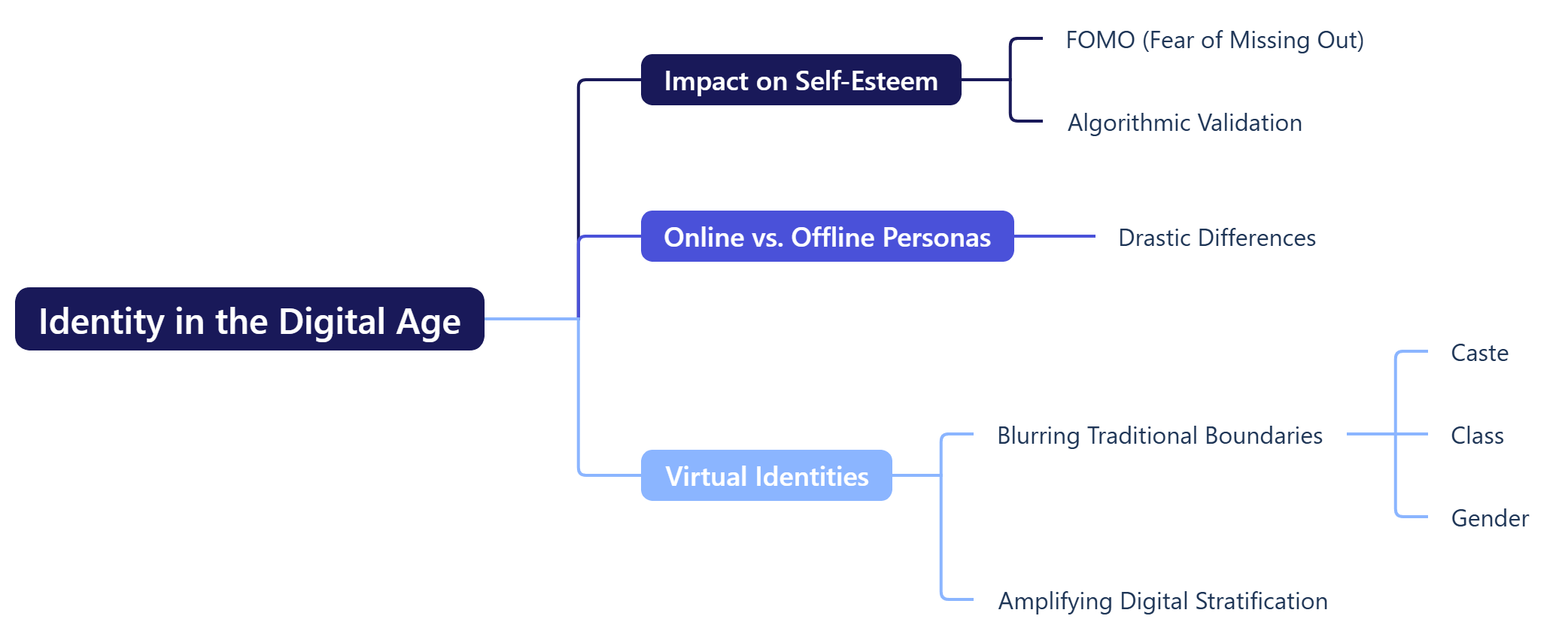
In today’s social media-driven world, identity construction is more performative and curated than ever. Instagram bios, LinkedIn profiles, and Facebook statuses become new platforms of self-representation.
- FOMO (Fear of Missing Out) and algorithmic validation affect self-esteem.
- Online personas may differ drastically from offline selves.
- Virtual identities blur traditional boundaries of caste, class, and gender—but also amplify new forms of digital stratification.
Indian Context: Tradition Meets Modernity
- In India, self-identity is caught between traditional structures like caste, family, and religion, and modern ideals of individual autonomy.
- Urban youth may identify more with professional roles than caste.
- Women’s identity is increasingly shaped by education and employment, though still contested by patriarchy.
- Caste-based digital activism (e.g., Dalit Twitter) is redefining collective identity online.
Current Affairs
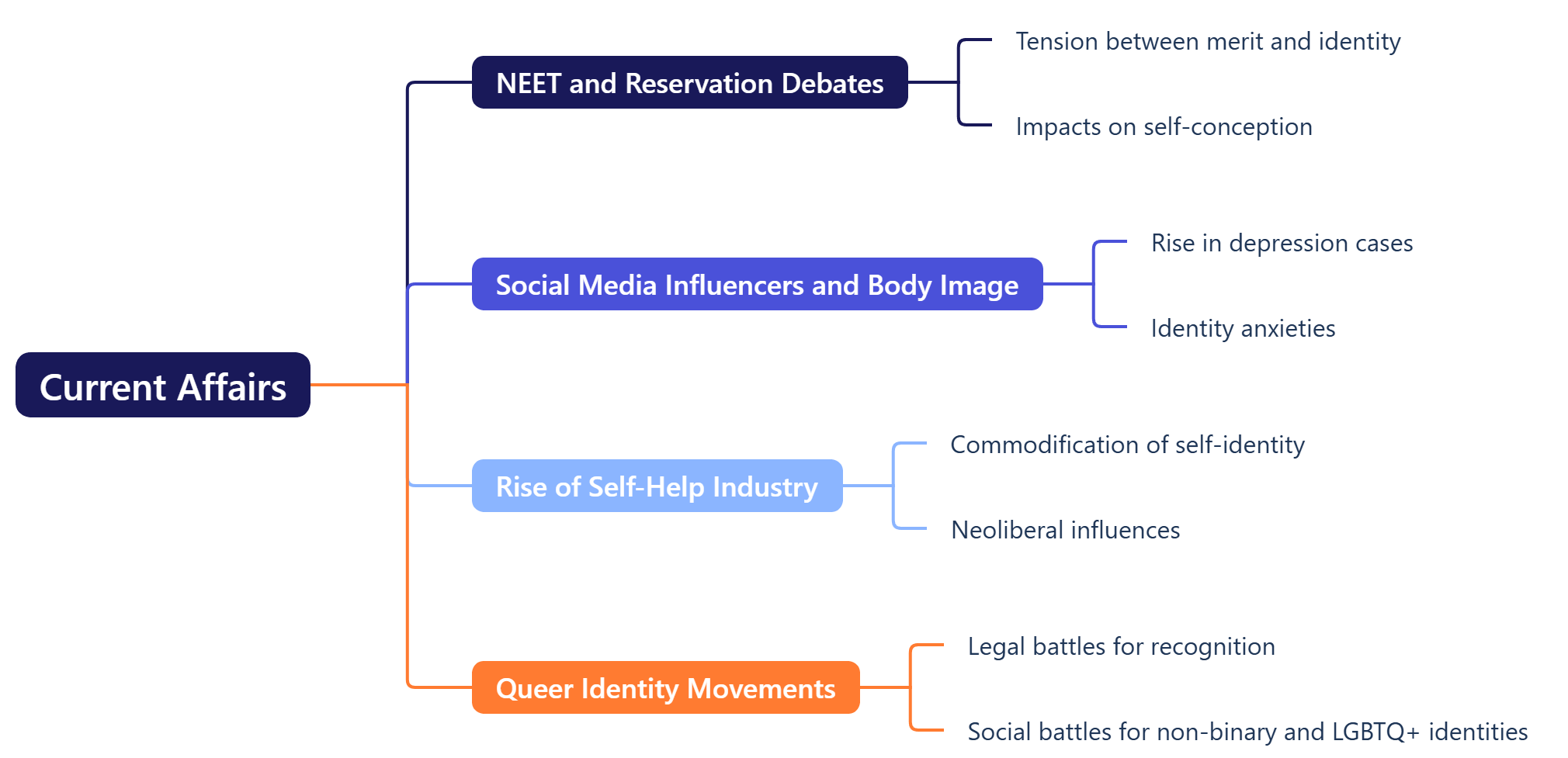
- NEET and reservation debates: Reflect tension between meritocratic vs. identity-based self-conception.
- Social media influencers and body image: Rising cases of depression tied to identity anxieties.
- Rise of self-help industry: Indicates commodification of self-identity in neoliberal times.
- Queer identity movements: Legal and social battles for recognition of non-binary and LGBTQ+ identities.
Conclusion
Self-identity in modern times is no longer static or inherited; it is negotiated, reflexive, and often fragmented. While modernity promises autonomy, it also brings existential uncertainty. Sociological insights help us critically examine how identity is formed, performed, and transformed in this ever-evolving social landscape.
PYQs
Paper I
- “What is the relationship between modernity and self-identity according to Anthony Giddens?” – 2017
- “Discuss Erving Goffman’s notion of dramaturgy and its application in everyday life.” – 2019
- “How does modern society influence the formation of self, as per the symbolic interactionist perspective?” – 2020
- “Discuss how digital media is reshaping the nature of self and identity.” – 2022
Paper II –
- “Discuss how modernization and urbanization are impacting identity formation in Indian youth.” – 2015
- “How is globalization creating hybrid identities in Indian society?” – 2019
- “Examine the intersectionality of caste, gender, and class in shaping identity in modern India.” – 2020
- “In what ways is social media influencing self-perception and identity among Indian women?” – 2021
- “Assess the role of education and migration in redefining social identity in rural India.” – 2023
|