
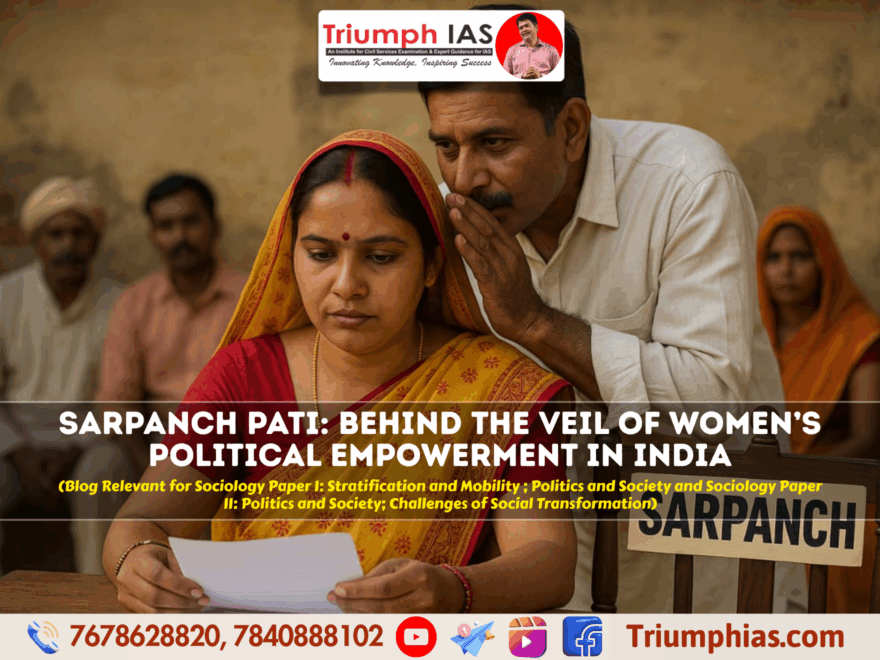
Sarpanch Pati: Behind the Veil of Women’s Political Empowerment in India
(Relevant for Sociology Paper I: Stratification and Mobility ; Politics and Society and Sociology Paper II: Politics and Society; Challenges of Social Transformation)
IntroductionDespite constitutional provisions for the political empowerment of women in India, especially through the 73rd Amendment which mandates one-third reservation for women in Panchayati Raj Institutions (PRIs), a disturbing phenomenon has emerged – the rise of the “Sarpanch Pati.” The term refers to the husbands of elected women sarpanches who wield de facto power, often rendering the woman representative a mere figurehead. This blog explores how the phenomenon of Sarpanch Pati contradicts the vision of women-led local governance, why it persists, and what it reveals about deeper gender inequalities, patriarchal social structures, and the gap between de jure and de facto power in rural India. Who Is a Sarpanch Pati?The phrase Sarpanch Pati literally means “husband of a village head.” But in practice, it refers to a man who exercises the authority of a woman sarpanch, often reducing her to a ceremonial role. Despite constitutional empowerment through reservation, these men:
This informal takeover not only violates legal norms but also reinforces male dominance in grassroots governance, undermining decades of struggle for gender equality and political representation. The Legal and Political Context73rd Constitutional Amendment
Objective
But reality paints a different picture. “Representation without participation is manipulation.” In many states, this manipulation takes the form of male proxies wielding unofficial control under the guise of patriarchy and tradition. Why Does the Practice Persist?
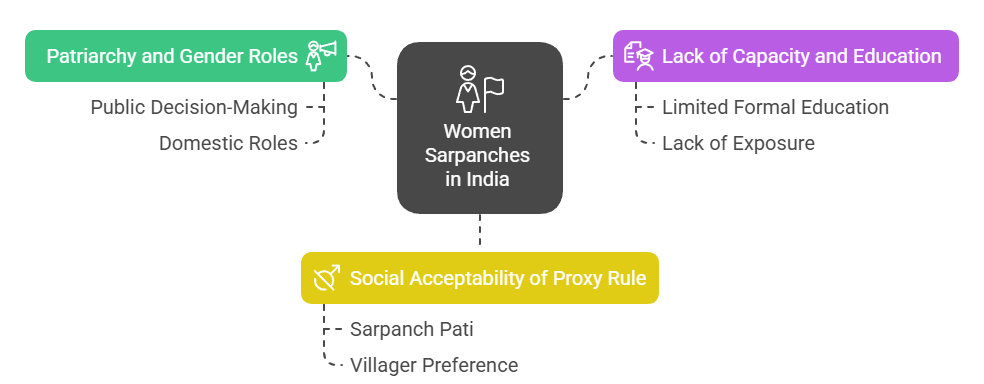
Indian society, particularly in rural areas, is deeply patriarchal. Public decision-making is seen as a “man’s job,” while women are confined to domestic roles. Even if a woman is elected, families feel she’s not “fit” to rule, so her husband steps in. This is classic structural patriarchy, as explained by Sylvia Walby, where both public and private institutions work together to suppress women’s agency.
Many elected women sarpanches:
This makes them dependent on their husbands for interpretation, interaction, and implementation.
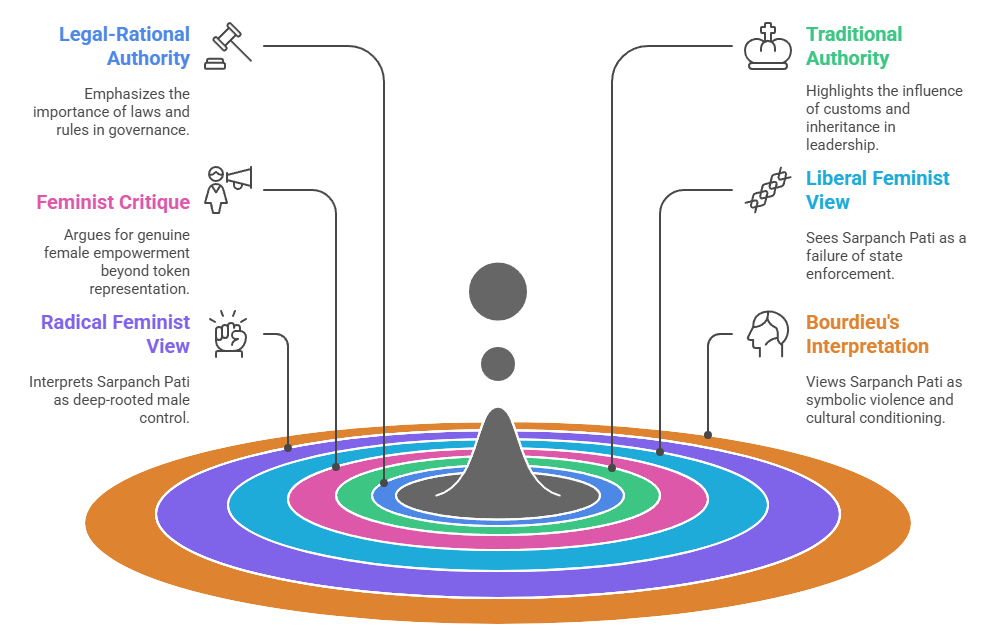
In some regions, a Sarpanch Pati is seen as “helping” his wife rather than violating the law. He may be better educated or more assertive, and villagers often prefer dealing with a man. This normalizes the practice and discourages intervention. Sociological Analysis
Real-Life Examples:
These stories aren’t rare; they are the norm. Consequences of the Sarpanch Pati Culture
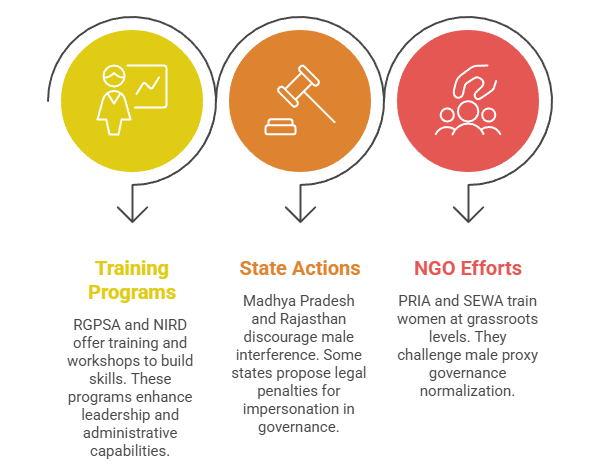
Government and Civil Society Interventions
Training and Capacity-Building
State Initiatives
NGO Action
Conclusion:The phenomenon of Sarpanch Pati stands as a glaring example of how social structures overpower legal reforms. Unless structural patriarchy is dismantled, even the best-intentioned laws will be bent by tradition. What we need is:
The goal should not be just electing women, but empowering women to lead. Until then, Sarpanch Pati will remain a symbolic reminder of India’s unfinished journey toward gender justice in politics. |
To Read more topics, visit: www.triumphias.com/blogs
One comment