
Rural Unrest in Contemporary India: A Sociological Perspective
(Relevant for Sociology Paper 2: Rural and Agrarian Transformation in India)
IntroductionRural India, home to nearly 65–70% of the population, forms the backbone of the country’s socio-economic structure. Beyond providing the bulk of agricultural output and sustaining food security, rural communities are custodians of traditional knowledge systems, cultural practices, and indigenous craftsmanship. Despite its centrality to India’s economy and social fabric, contemporary rural India faces persistent unrest arising from structural inequalities, socio-economic pressures, environmental degradation, and political discontent. Understanding the factors behind rural unrest is crucial for policymakers, sociologists, and civil society, as it provides insights into the broader challenges of development, social justice, and governance in India. Factors Responsible for Rural Unrest
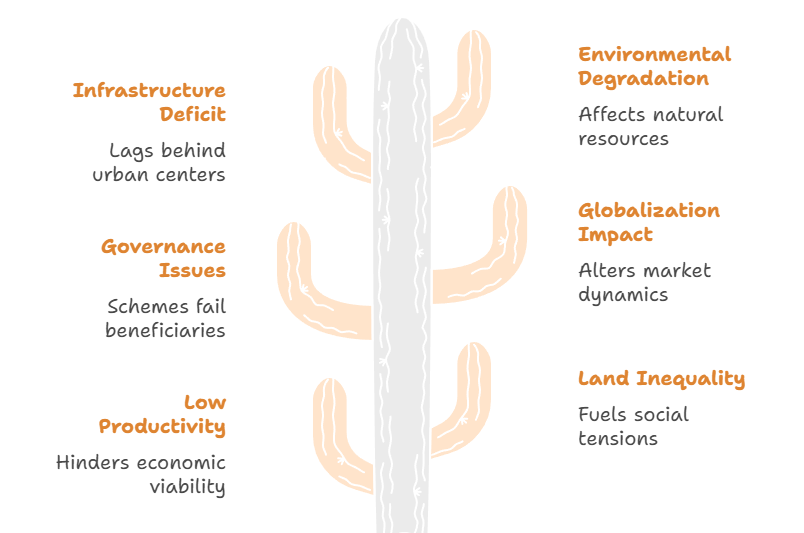
Agriculture remains the primary occupation in rural India, but farmers face low productivity, inadequate irrigation, price volatility, and rising input costs. These economic pressures have led to agrarian distress, manifesting in farmer protests across states like Punjab, Maharashtra, and Karnataka.
Land in rural India remains a central source of wealth, status, and power. Unequal land distribution, concentration of ownership, and disputes over tenancy contribute to social tensions.
Weak governance, corruption, and inadequate implementation of rural development programs exacerbate discontent. Many schemes fail to reach intended beneficiaries due to bureaucratic inefficiency or political interference.
Globalization has significantly impacted rural economies by altering market access, crop pricing, and demand patterns. Traditional farmers face competition from large agribusinesses and import pressures, leading to economic displacement.
Inadequate infrastructure—poor roads, limited healthcare facilities, insufficient schools—fuels rural discontent. Communities feel marginalized when their access to basic services lags behind urban centers.
Environmental challenges such as deforestation, water scarcity, soil degradation, and climate change disproportionately affect rural populations dependent on natural resources. Conflicts often arise over the allocation and management of scarce resources.
Contemporary Challenges for Rural India
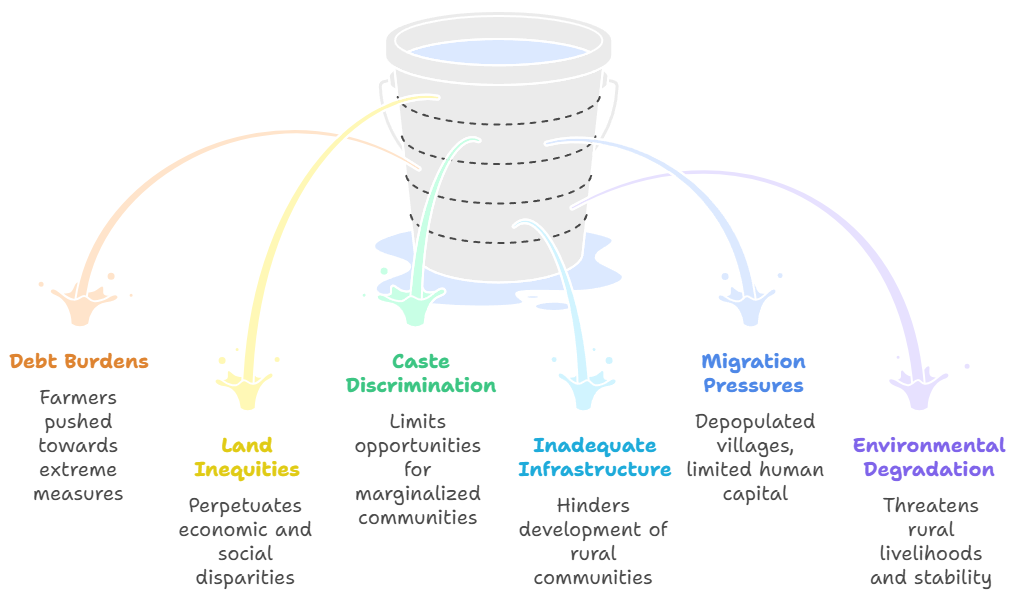
Despite policy interventions, agrarian distress persists, exacerbated by debt burdens, erratic weather, and inadequate crop insurance. These structural challenges continue to push farmers toward extreme measures like suicide, highlighting the urgent need for comprehensive welfare and risk mitigation strategies.
Inequalities in land ownership and insecure tenancy perpetuate economic and social disparities. Historical injustices, combined with inefficient land reform implementation, continue to undermine rural social justice, a concern central to B.R. Ambedkar’s vision.
Caste remains a persistent marker of social stratification, influencing access to land, education, and employment. Caste-based exclusion contributes to social tensions and limits opportunities for marginalized communities, underscoring the interplay of structural inequality and rural unrest.
Limited access to healthcare, education, and markets hinders the development of rural communities. Lack of transport connectivity, poor digital access, and deficient sanitation exacerbate rural marginalization.
Rural-to-urban migration, driven by the search for better opportunities, leaves behind depopulated villages with limited human capital. Urbanization pressures also transform rural social relations, impacting traditional livelihoods and community structures.
Climate variability—erratic rainfall, droughts, and floods—threatens rural livelihoods. Environmental degradation also creates resource-based conflicts, further destabilizing rural communities. Guha’s eco-sociological perspective emphasizes the need for sustainable environmental management to ensure social stability. Sociological Analysis
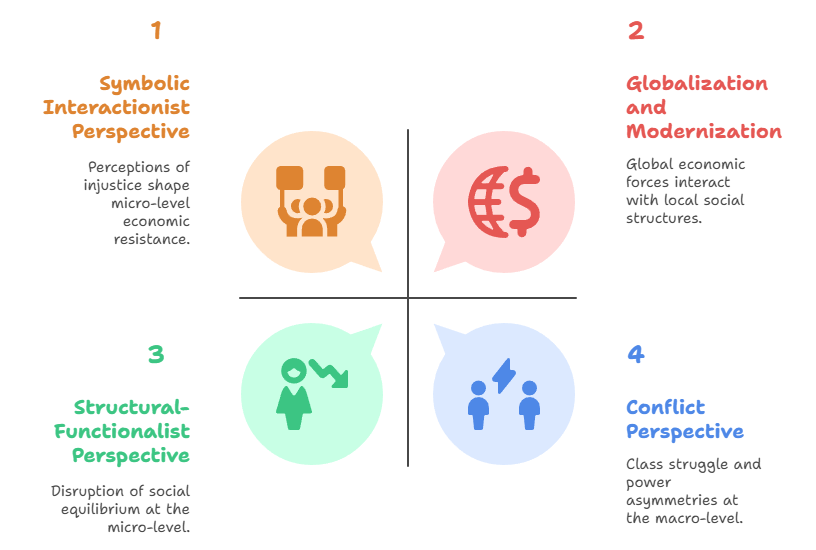
Structural-Functionalist PerspectiveFrom a functionalist lens, rural unrest signals a disruption of social equilibrium. Distress among farmers and marginalized communities threatens the functioning of agricultural production and social cohesion. Programs like MNREGA or public infrastructure development aim to restore equilibrium by integrating rural populations into formal economic and social structures. Conflict PerspectiveConflict theorists, drawing on Marxist sociology, interpret rural unrest as a manifestation of class struggle and power asymmetries.
Symbolic Interactionist PerspectiveAt the micro-level, rural unrest is shaped by perceptions of injustice, dignity, and empowerment.
Globalization and Modernization LensAppadurai’s framework emphasizes how global economic forces interact with local social structures, generating stress in rural livelihoods. Modernization, urban influence, and market liberalization create cultural and economic dissonance, fueling unrest. Policy Implications and Way ForwardAddressing rural unrest requires holistic, multi-dimensional interventions:
ConclusionRural unrest in contemporary India is the outcome of interlinked economic, social, political, and environmental factors. Agrarian distress, land inequality, caste-based discrimination, inadequate infrastructure, globalization pressures, and environmental degradation collectively fuel discontent. From a sociological standpoint, rural unrest reflects structural contradictions, social hierarchies, and power asymmetries. Addressing it requires context-sensitive, integrated policies that combine economic support, social justice, environmental sustainability, and governance reforms. Only by tackling both the structural and experiential dimensions of rural life can India foster equitable development, social stability, and rural empowerment. |
To Read more topics, visit: www.triumphias.com/blogs
Read more Blogs:
Reinventing Vocational Education in India: A Pathway to Employability and Growth
One comment