
Right to Die or Duty to Suffer? A Sociological Critique of Euthanasia in India
(Relevant for Sociology paper 1: Sociological Thinkers)
|
The passage of the Terminally Ill Adults (End of Life) Bill by the UK Parliament has revived an old but unresolved question in Indian society: Do we have a right to die with dignity, or merely a duty to endure suffering in silence? While India legally recognises passive euthanasia under the Supreme Court’s evolving jurisprudence, the real questions lie not in courtrooms but in our hospitals, homes, religions, and collective moral psyche. This blog approaches euthanasia not as a legal or ethical issue but as a deeply sociological phenomenon. Drawing from Durkheim, Foucault, Parsons, and Indian social thinkers, we analyse the social meaning of death, pain, and autonomy in the Indian context. Sociology of Death: Is Dying Ever a Private Matter?
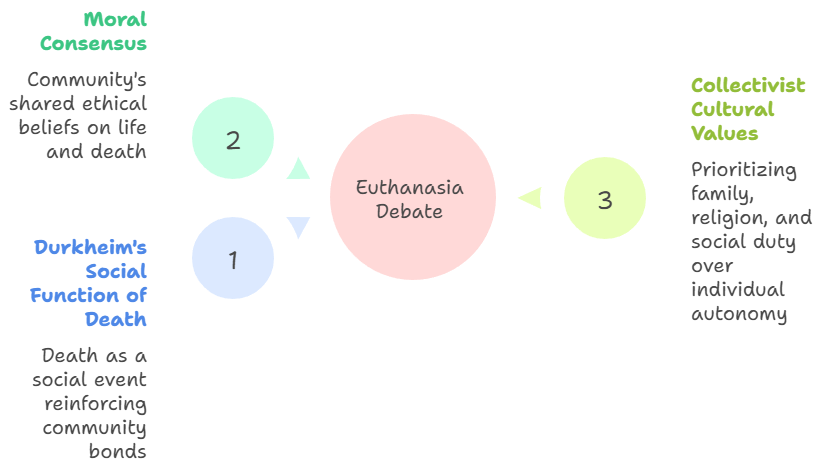
Durkheim and the Social Function of DeathAccording to Émile Durkheim, death is not merely a biological end — it is a social event, structured by rituals, beliefs, and collective mourning. In traditional societies, death reaffirms social cohesion. In this light, euthanasia challenges not just a medical decision, but the moral consensus of the community. India’s reluctance toward euthanasia must be seen in the context of collectivist cultural values, where individual autonomy is secondary to family, religion, and social duty. Medicalization of Death: Foucault’s Biopolitics and Modern ControlFoucault’s Concept of BiopowerIn Michel Foucault’s framework, modern states exert power not through force, but by managing life and death — what he called “biopolitics.”
Passive euthanasia, then, is not just about stopping treatment — it is about reclaiming control over one’s dying from institutional apparatuses. In India, however, where state capacity is weak, and the healthcare system fragmented, this control often remains theoretical, not practical. Autonomy vs. Dharma: The Indian Dissonance
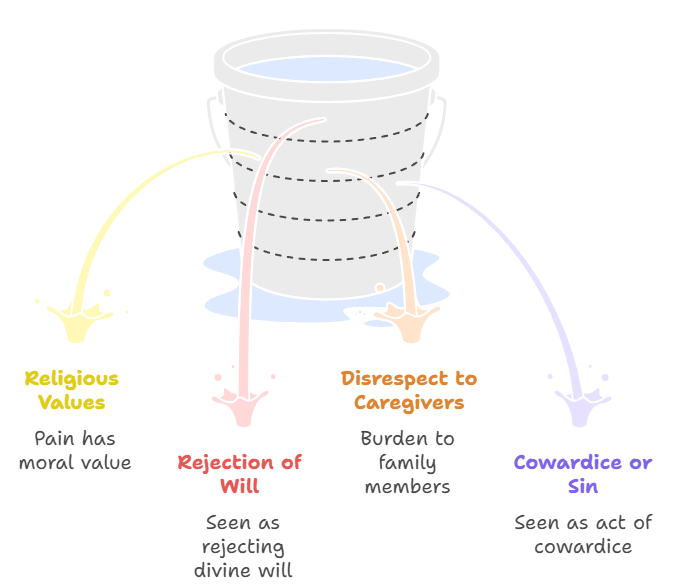
Article 21 vs. Cultural Script of SufferingThe Supreme Court in Common Cause v. Union of India (2018) declared the right to die with dignity as a fundamental right. But sociologically, what does “dignity” mean in India? Indian religious and philosophical traditions — from Sanatana Dharma to Buddhism and Sikhism — value detachment, renunciation, and the transcendence of suffering. Pain, therefore, has moral value. In many Indian households, choosing to die (even passively) is seen as:
This produces a moral tension: While the law permits euthanasia, the social imagination condemns it. Indian Family and the “Good Death”Talcott Parsons and the Sick RoleParsons argued that illness is a form of social deviance, and society creates the “sick role” — the expectation that the ill will seek treatment and desire recovery. In India, terminal illness is often denied, hidden, or spiritualised. Families hold on to hope, sometimes against all odds, leading to aggressive over-treatment in ICUs. The idea of a “good death” — peaceful, at home, surrounded by family — clashes with the medical-industrial reality of death today, which is sterile, institutional, and prolonged. Euthanasia, in this context, threatens the moral economy of caregiving, particularly for women, who are culturally obligated to serve the sick until death. Euthanasia and the Political Economy of HealthWho Gets to Die with Dignity?Let’s invoke Conflict Theory (Marxist lens): Who benefits from prolonged treatment? And who is denied access to pain relief?
Thus, in India, the right to die with dignity is classed, gendered, and regional: Passive euthanasia may exist on paper, but only the privileged can afford a dignified death. Sociological Reforms: Beyond the Legal Lens
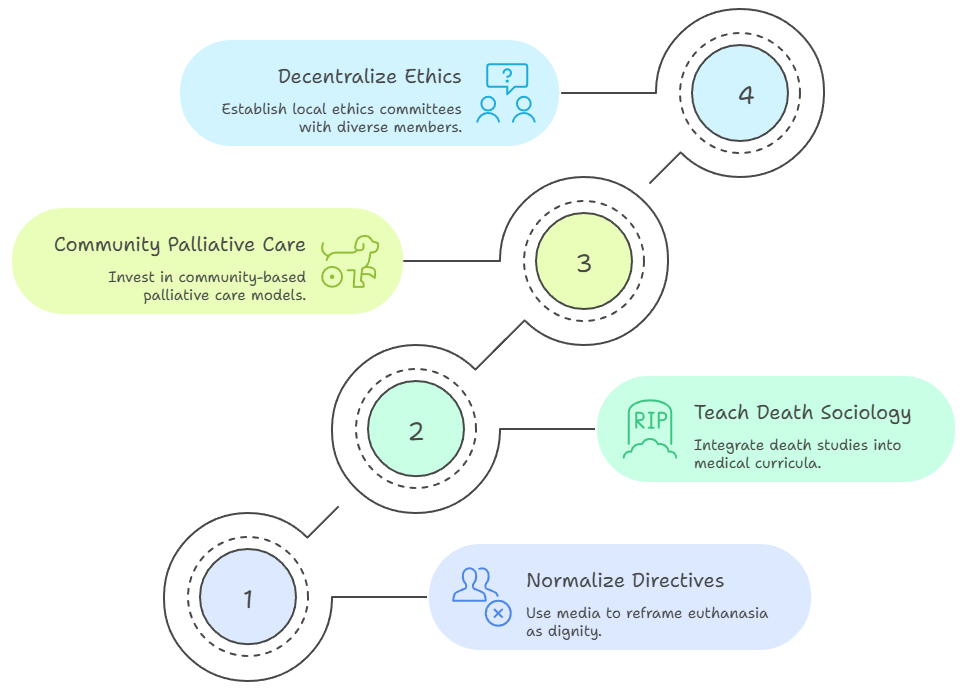
Use the power of mass media, local language theatre, and folk narratives to reframe euthanasia as dignity, not deviance.
Include sociology of death and dying in MBBS and nursing curricula — not just procedures, but cultural competence.
India must invest in models like Kerala’s community-based palliative care, which democratizes end-of-life support, including euthanasia conversations.
Establish local hospital ethics committees involving sociologists, spiritual leaders, and community health workers — not just doctors and lawyers. Conclusion: Right to Die as a Sociological QuestionEuthanasia is not just a legal right or a medical procedure — it is a mirror to our societal values, our discomfort with mortality, and our collective resistance to letting go. Until India reforms not just its laws but its social structures, cultural norms, and moral frameworks, the constitutional promise of dignity in death will remain a privilege, not a right. |
To Read more topics, visit: www.triumphias.com/blogs
Read more Blogs:
Nepal 2025 Gen Z Protests: When Digital Bans Spark a Societal Reckoning
2 comments