
Reviving MGNREGA: A Sociological Lens on Rural Employment and Social Equity in India
(Relevant for Sociology paper 1: Works and Economic Life and Paper 2: Rural and Agrarian transformation in India)
|
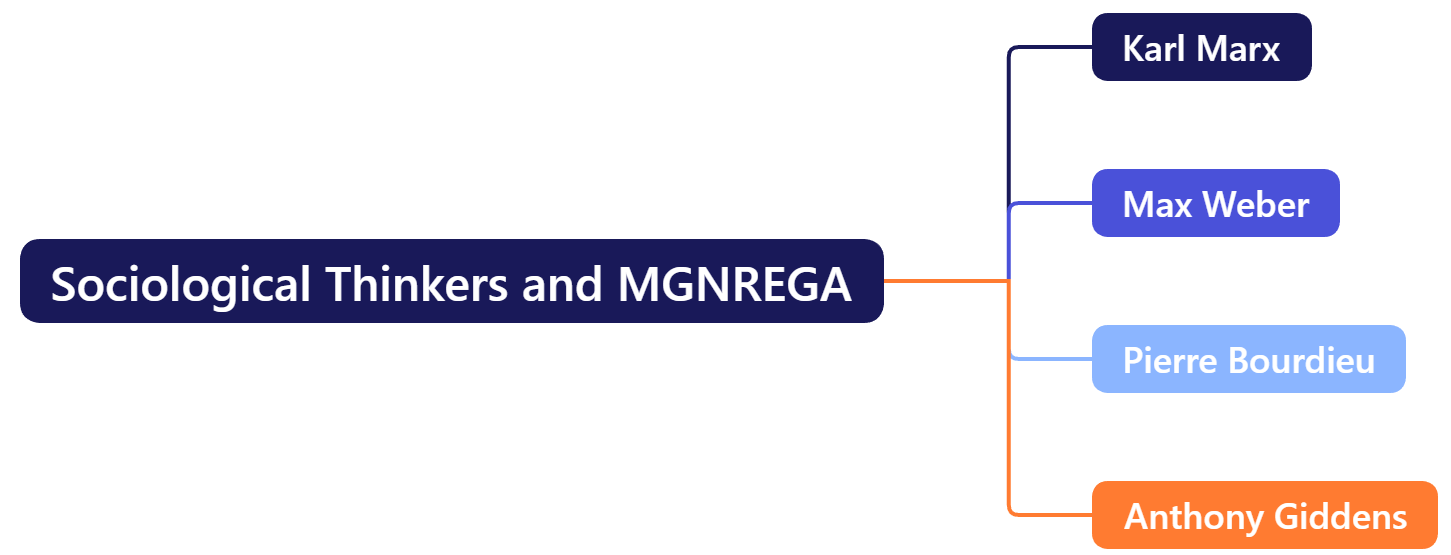
The resumption of the Mahatma Gandhi National Rural Employment Guarantee Scheme (MGNREGA) in West Bengal after a three-year suspension provides a unique opportunity to examine rural employment policies through a sociological lens. MGNREGA is not just an employment program; it is a social institution shaping power relations, economic structures, and social inequalities in rural India. A closer look at its design, challenges, and implications reveals deep insights into how policies intersect with poverty alleviation, social justice, and governance. MGNREGA: Beyond EmploymentMGNREGA, launched in 2005, guarantees 100 days of wage employment per rural household, with an additional 50 days in drought-affected areas. Its key features include decentralized implementation through Gram Panchayats, gender equity mandates (one-third female participation), and targeted provisions for tribal communities under the Forest Rights Act, 2006. From a sociological perspective, MGNREGA embodies Amartya Sen’s Capability Approach. By ensuring employment and income, it expands the real freedoms and capabilities of rural households, enabling them to live a life they value. Employment is not merely an economic transaction; it is a vehicle for social inclusion, empowering marginalized communities to participate in local governance and decision-making. Sociological Thinkers and MGNREGA
Marx’s critique of capitalist labor highlights the exploitation inherent in wage labor and the alienation of workers from the products of their labor. In rural India, landless laborers and marginal farmers face structural inequalities: they lack control over production and are dependent on seasonal work. MGNREGA can be seen as a state-mediated intervention that temporarily disrupts the power imbalance between capital and labor by guaranteeing wages and work rights. It transforms labor from a purely exploitative relationship into a socially recognized entitlement, offering workers a degree of autonomy and dignity.
Weber’s theory of bureaucracy helps us understand MGNREGA’s administrative structure. The scheme relies on a hierarchical system, from Gram Panchayats to District Programme Coordinators and central oversight. While bureaucracy ensures formal rules and accountability, Weber warns that over-bureaucratization can create rigidity, inefficiency, and alienation. This is evident in the delays in wage payments, excessive paperwork, and digital hurdles that marginalize workers lacking access to Aadhaar or smartphones.
Bourdieu’s concepts of social, economic, and cultural capital explain why some rural households benefit more from MGNREGA than others. Literate households with political awareness or digital literacy are better positioned to access employment, navigate grievance mechanisms, and secure timely payments. In contrast, marginalized groups—illiterate women, tribal families, or forest dwellers—may lack the social and cultural capital to claim their entitlements fully, highlighting the persistent inequalities in rural India.
Giddens’ theory of structuration emphasizes the interplay between individual agency and social structures. MGNREGA illustrates this dynamic: while the state provides a structured employment guarantee, individual households exercise agency in applying for work, participating in social audits, or leveraging employment for household welfare. Social audits and participatory planning processes enable rural communities to reshape local governance, creating a feedback loop where agency modifies the structure itself. Challenges Through a Sociological Lens
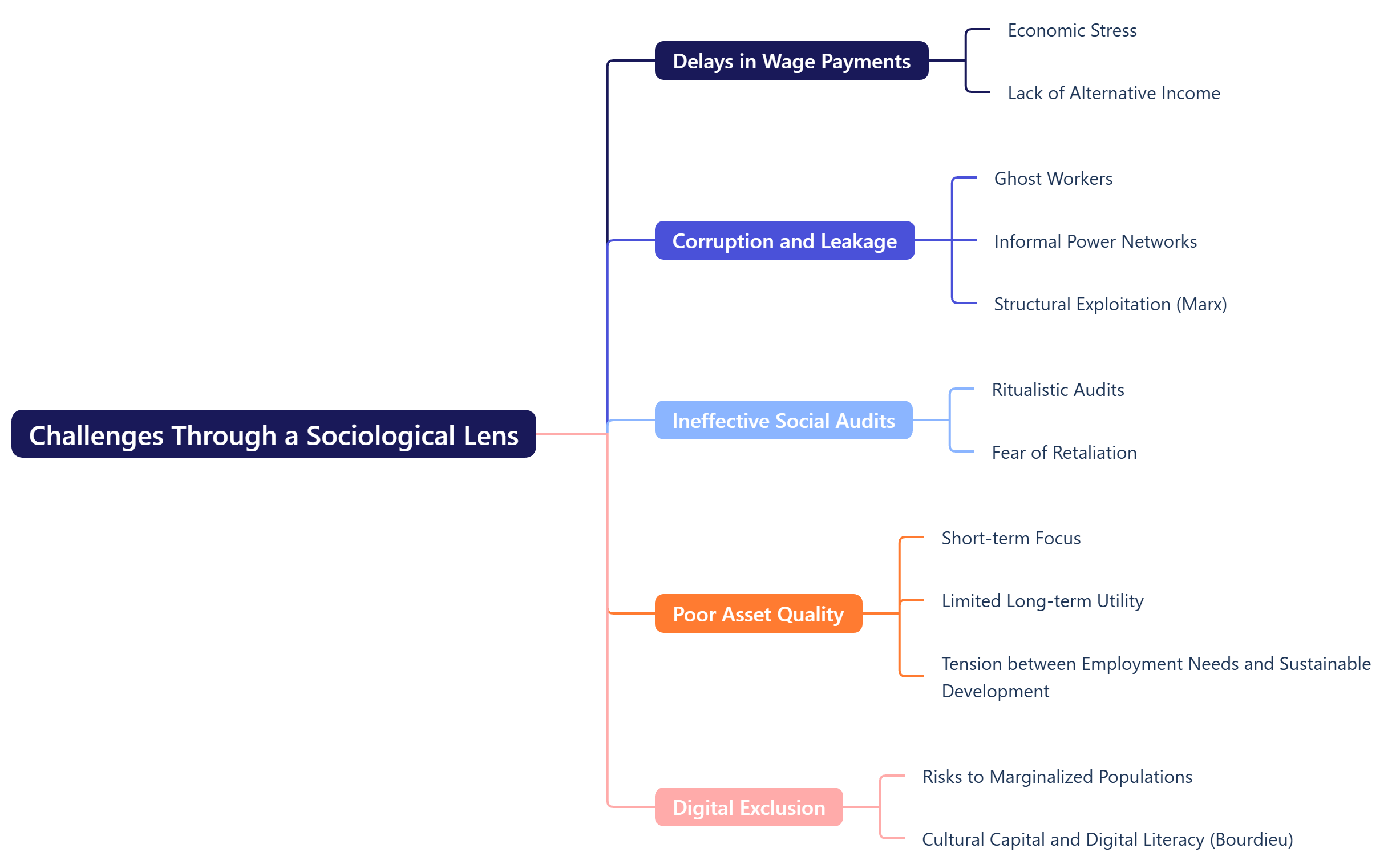
Despite its promise, MGNREGA faces several challenges that reflect structural and institutional inequalities:
Strengthening MGNREGA: Sociological InsightsTo realize the scheme’s potential as a tool for social justice, several measures can be adopted:
These steps are not merely administrative fixes—they are sociologically informed interventions that address underlying inequalities in rural society. MGNREGA as a Social Institution
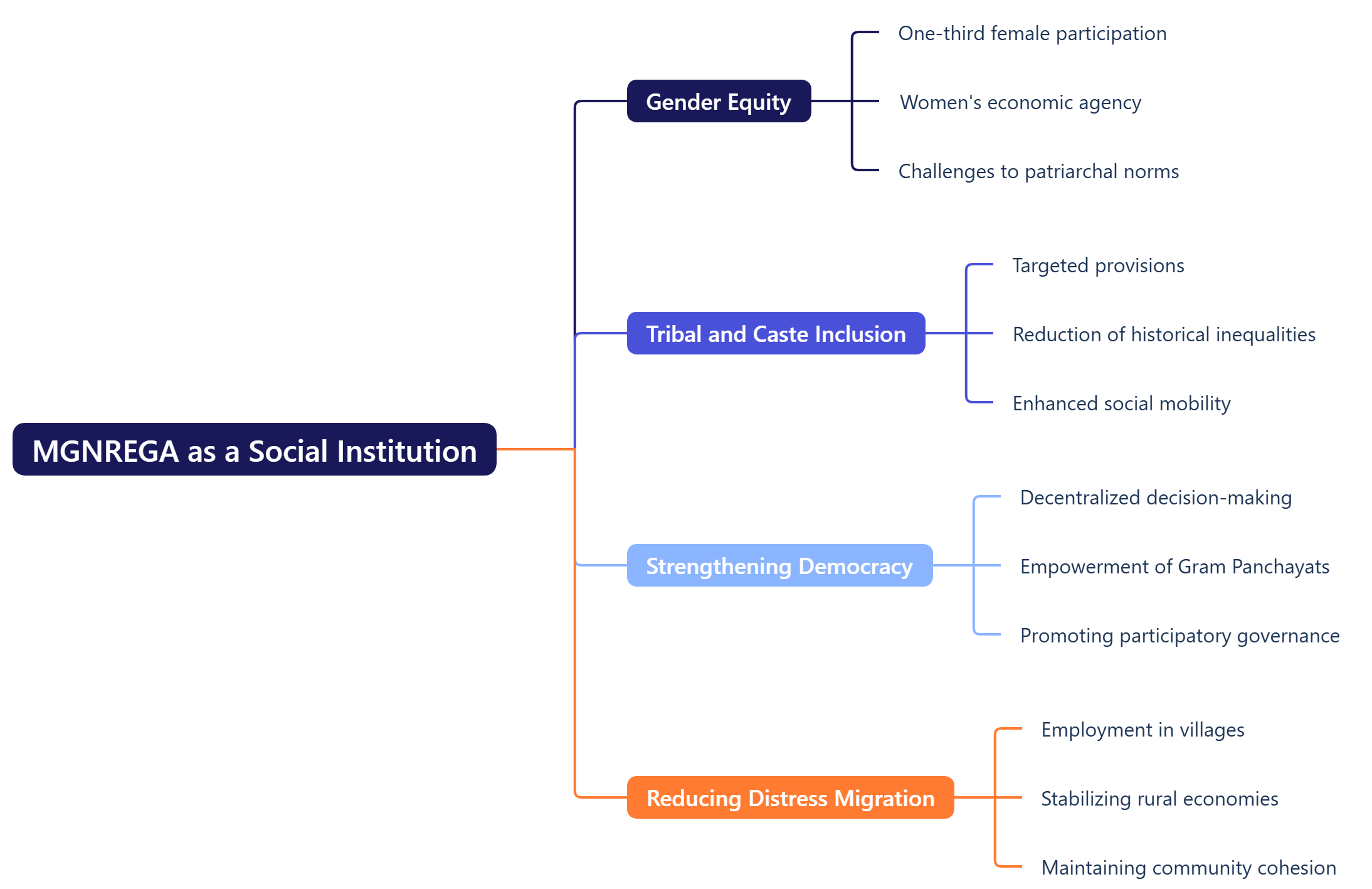
Viewed through a sociological lens, MGNREGA is more than a labor program; it is a social institution shaping rural life:
Thus, MGNREGA simultaneously addresses economic, social, and political dimensions of rural development. ConclusionThe resumption of MGNREGA in West Bengal highlights the ongoing struggle between central oversight and local autonomy, reflecting broader tensions in Indian governance. Sociologically, the scheme represents a confluence of labor rights, social justice, and democratic governance. Its effectiveness depends not only on financial resources and administrative efficiency but also on empowering rural communities, reducing structural inequalities, and fostering social accountability. In the words of Amartya Sen, development is not just about GDP growth—it is about expanding people’s freedoms. MGNREGA, if implemented with equity, transparency, and inclusion, can be a model of social policy that strengthens both livelihoods and democracy in rural India. |
To Read more topics, visit: www.triumphias.com/blogs