

Reshaping Plastic Waste Management for a Sustainable India
(Relevant for GS paper-3, Sustainable Growth)
Plastic Waste ManagementPlastic waste has emerged as one of the most daunting environmental challenges facing India today. With rapid urbanisation, increasing consumerism, and a throwaway culture, the country is grappling with the twin issues of excessive plastic consumption and ineffective waste management. India generates approximately 3.5 million tonnes of plastic waste annually, yet only 8-10% of this is effectively recycled. This unregulated plastic pollution has far-reaching consequences, from contaminating oceans and rivers to posing serious threats to human health and biodiversity. Current Scenario: A Plastic AvalancheAccording to recent data, India ranks among the top global plastic polluters, contributing around 9.3 million tonnes of plastic emissions annually. Urban India alone produces over 25,000 tonnes of plastic waste per day. Yet, most municipalities lack the infrastructure and capacity to handle collection, segregation, and recycling efficiently. The informal sector continues to manage over 90% of plastic waste recycling without proper training or support. Additionally, plastic waste has entered the food chain in the form of microplastics, threatening marine ecosystems and human health. Harmful practices like open dumping and burning of plastic contribute significantly to air, water, and soil pollution. Policy Landscape and Legislative EffortsIndia has taken significant legislative steps to address this crisis. The Plastic Waste Management Rules (2016), amended several times, mandate:
Recent amendments in 2024 introduced QR/barcode tracking systems to ensure real-time monitoring and accountability of plastic usage and disposal. From July 2025, producers must comply with digital traceability norms. Despite these policies, enforcement remains a major hurdle. Many state-level bans on plastic bags and other single-use items are poorly implemented. Data gaps, lack of coordination among stakeholders, and limited public awareness hinder effectiveness. Innovative Solutions and Success Stories
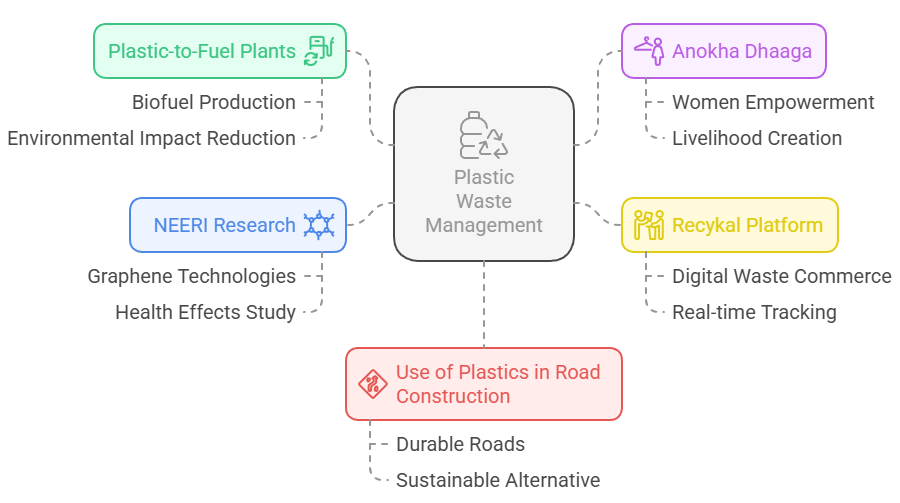
Several initiatives across India are pioneering innovation in plastic waste management:
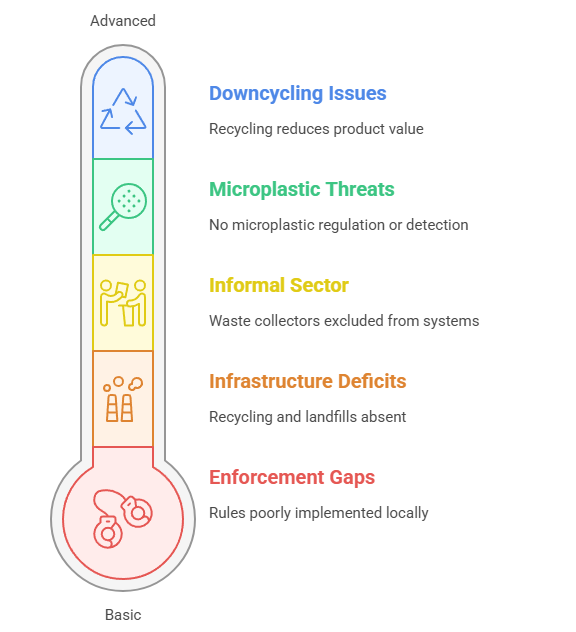
Role of Citizens and Behavioural ChangeNo policy or technology can succeed without the active participation of citizens. The Government’s “Lifestyle for Environment” (LiFE) campaign encourages environmentally conscious behaviour at the individual and community level. Awareness drives, eco-clubs, clean-up campaigns, and school-based initiatives have started influencing public attitudes. However, deeper behavioural change is essential—consumers must adopt reduce-reuse-recycle (3R) principles and shift towards biodegradable alternatives. Challenges Ahead
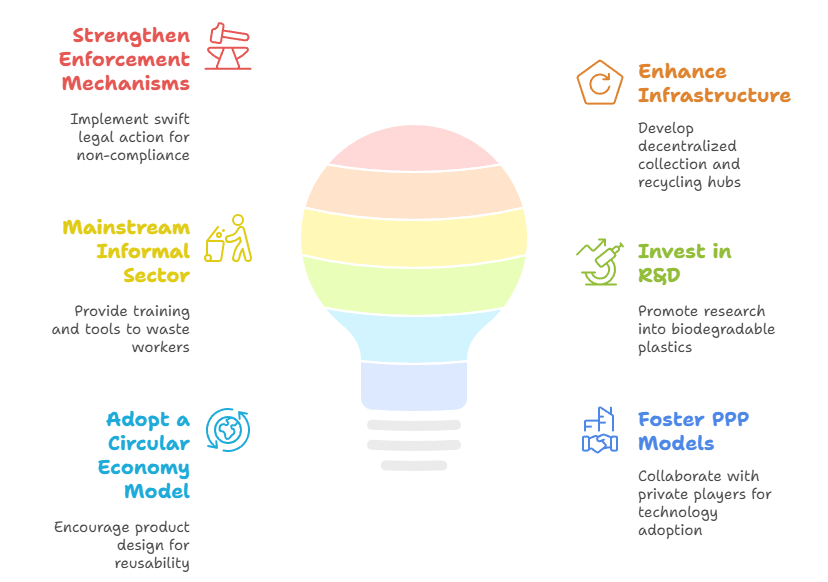
Recommendations for a Sustainable Future
Transforming plastic waste management in India requires a multifaceted approach combining legislation, innovation, infrastructure development, and mass awareness. India must move from a linear ‘use and throw’ culture to a circular economy where plastic is treated not as waste but as a resource. With the right interventions, India can not only reduce its environmental burden but also create green jobs, boost the recycling economy, and emerge as a global leader in sustainable development. The time for change is now—because every plastic bottle not recycled is a missed opportunity to protect our future. |
To Read more topics, visit: www.triumphias.com/blogs
One comment