
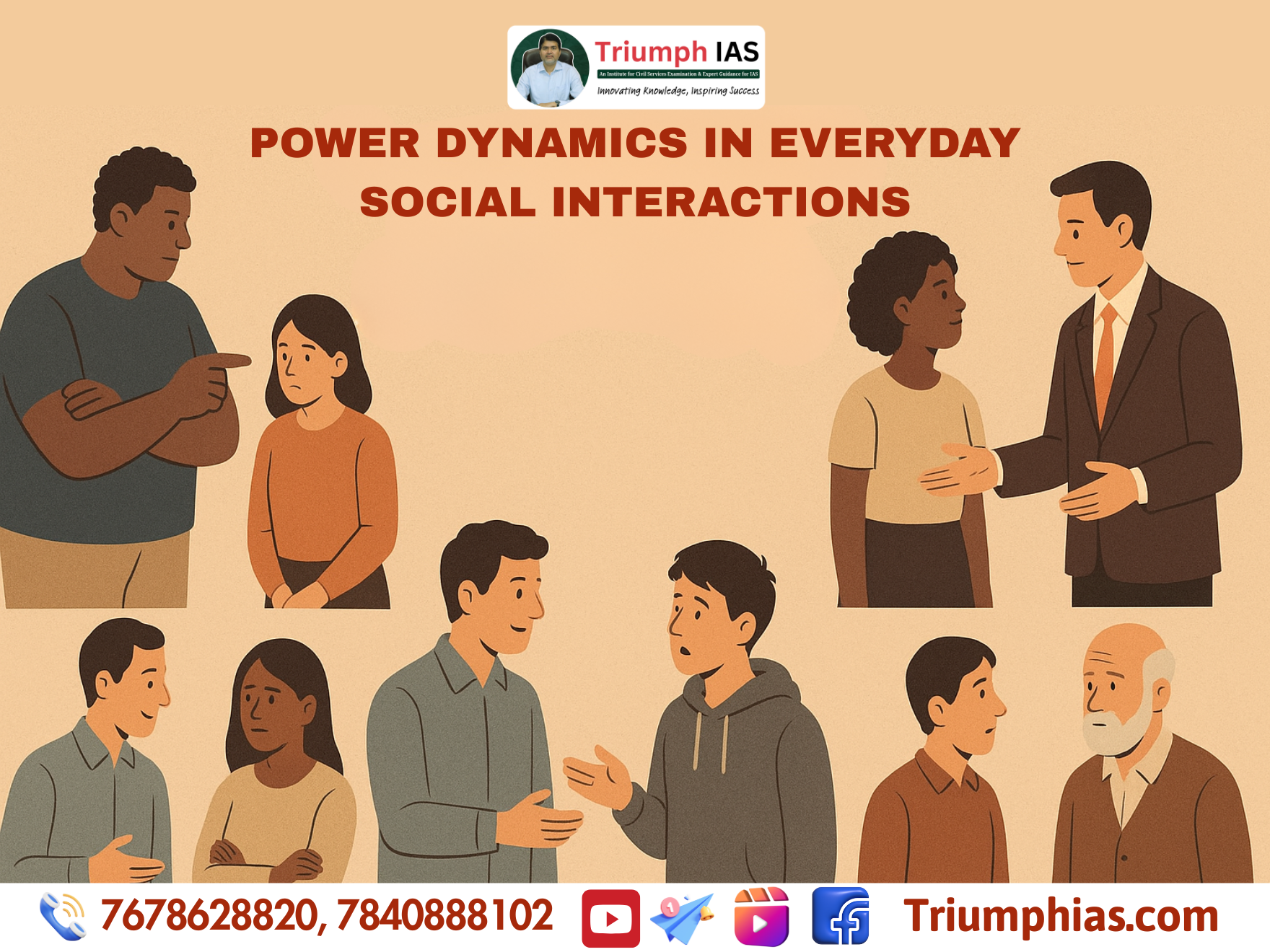
Power Dynamics in Everyday Social Interactions
(Relevant for Sociology Paper 1: Politics and Society)
|
Power is not confined to states or institutions; it plays out subtly in daily routines—in conversations, silences, gaze, seating arrangements, and digital feeds. Sociological thinkers help uncover how power works not only through force, but through ideas, norms, and expectations. Theoretical Approaches to PowerMax Weber defined power as the ability to impose one’s will despite resistance. His typology—traditional, charismatic, and legal-rational authority—helps decode everyday structures. In Indian families, elders often wield traditional authority over life choices, while bureaucracies follow legal-rational structures. Michel Foucault shifted the focus from centralized power to disciplinary power—subtle control through surveillance, norms, and self-regulation. Schools, hospitals, and offices become sites where people adjust their behavior without coercion, internalizing discipline. Steven Lukes offered a three-dimensional view:
Much of everyday domination happens at the third level, where resistance seems unnecessary because inequality is normalized. Pierre Bourdieu introduced symbolic power—dominance maintained through culture, language, accent, and manners. His idea of cultural capital shows how elite behavior is mistaken for merit. For example, English fluency can grant workplace credibility, regardless of skill. Erving Goffman viewed life as performance. In his dramaturgical model, individuals manage impressions in daily interactions. A person’s ability to “perform” respectability or competence often depends on class or cultural resources. Anthony Giddens, through structuration theory, bridged structure and agency. While social structures shape behavior, individuals reproduce or alter them through everyday acts—like a woman challenging workplace sexism or a Dalit student defying caste-based seating. Power dynamics in Everyday Practice: Contemporary Cases
In May 2025, a Dalit woman in Kerala alleged custodial abuse—forced to drink toilet water, denied food and sleep.
Delhi Public School (Dwarka) publicly shamed students for unpaid fees. The High Court termed it mental harassment.
TANGEDCO staff in Tamil Nadu protested harassment by higher officials; in Prayagraj, a contract worker climbed a tower in protest. Here, bureaucratic power (Weber) meets agency (Giddens). Workers use public protest to challenge everyday hierarchies and humiliation, revealing how micro-resistance can reshape structure.
French prosecutors are probing Musk’s X for biased content amplification. In Bangladesh, Google search was found favoring Indian media during unrest.
In Indian homes, working women often manage domestic chores despite having full-time jobs. This reflects traditional authority (Weber) and symbolic violence (Bourdieu). It is not enforced by law but by normalized expectations. A woman avoiding public parks after dark out of fear—without legal restriction—illustrates Foucault’s panopticism: surveillance through societal judgment rather than direct policing.
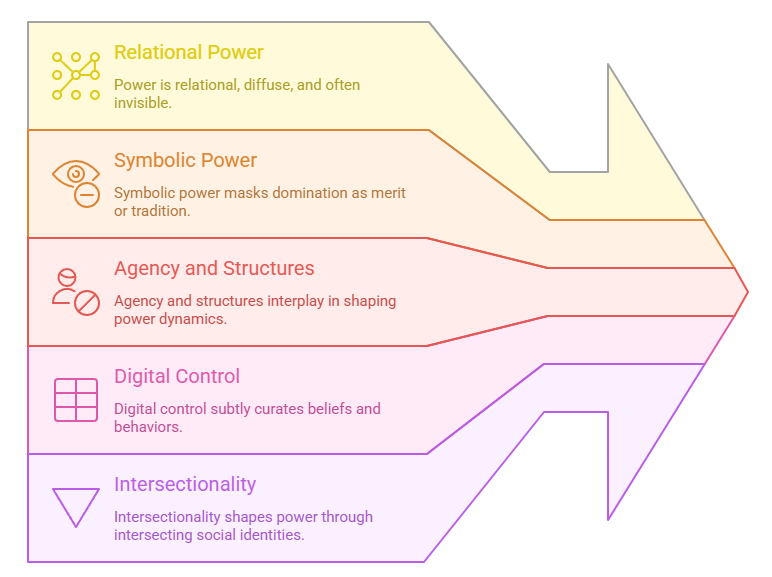
English-speaking professionals often dominate corporate or academic spaces, even when others have more relevant experience. This is symbolic power (Bourdieu) and impression management (Goffman)—where communication style, not content, defines legitimacy. Key Sociological Takeaways
Conclusion: Seeing Power SociologicallyPower resides not just in the hands of governments but in school rules, WhatsApp messages, elevator silences, and search engines. It governs through what is considered “normal,” “respectable,” or “competent.” As Foucault said, “Power is everywhere… because it comes from everywhere.” Recognizing its presence in daily life—not just in institutions but in smiles, uniforms, and silence—is the first step toward sociological insight and social change. |

To Read more topics, visit: www.triumphias.com/blogs
Read more Blogs:
Firecracker Ban in India: Environmental Protection and Social Justice
Universal Immunisation Programme in India: Progress, Challenges, and Sociological Insights
One comment