
Poverty and Inequality
(Relevant for Sociology Paper I: Stratification and Mobility)
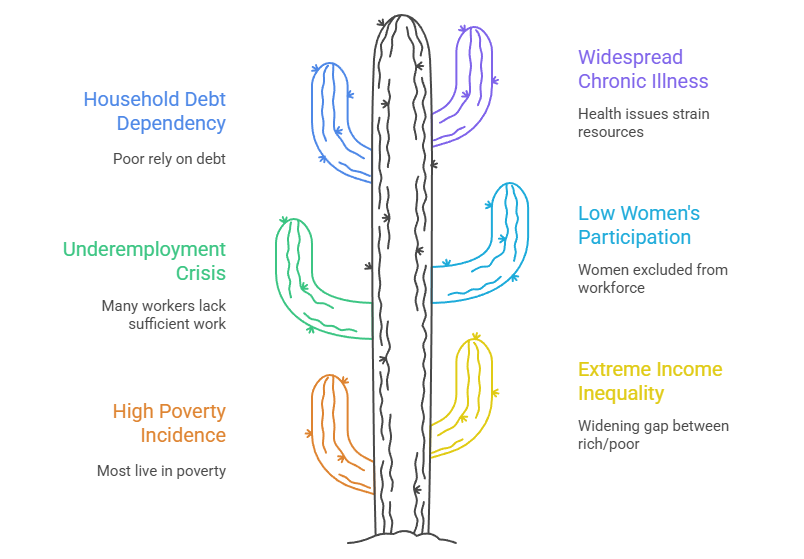
IntroductionBangladesh has long been presented as a development success story in South Asia, often praised for its progress in reducing poverty, improving health outcomes, and expanding access to education. However, the latest Power and Participation Research Centre (PPRC) survey (2025) reveals a worrying reversal of poverty reduction gains. The report highlights that one in four households now lives below the upper poverty line (UPL), while nearly one in ten households is below the lower poverty line (LPL). The national Gini coefficient—a key measure of inequality—has surged from 0.334 in HIES 2022 to 0.436 in 2025, with urban inequality reaching a striking 0.532. These figures not only paint a picture of rising disparities. Key Findings of the PPRC 2025 Survey
Sociological Analysis
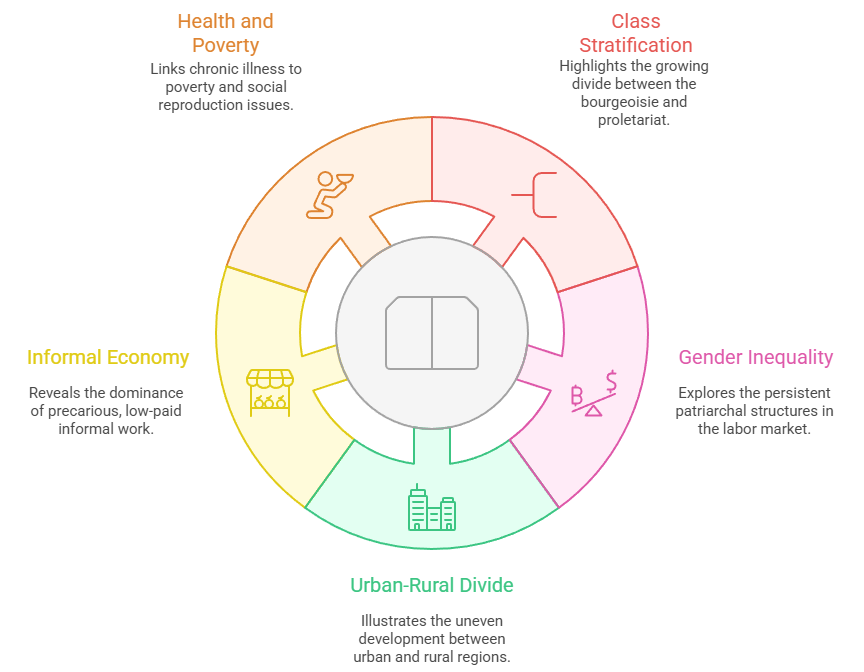
The survey reflects classic Marxist concerns about class exploitation. The bottom 10% not only earns little but also spend beyond their income, relying on debt and informal networks. Meanwhile, the top 10% control disproportionate resources. This reproduces class stratification, echoing Marx’s idea of the growing divide between the bourgeoisie and the proletariat. Max Weber’s theory of life chances is equally relevant. Access to stable employment, healthcare, and education varies significantly between social classes, shaping opportunities for upward mobility. Urban elites enjoy greater life chances, while rural poor face structural constraints.
With women’s labor force participation stagnant at 26%, the survey highlights persistent patriarchy in the labor market. Feminist sociology interprets this as the sexual division of labor, where women remain tied to unpaid domestic work while men dominate wage employment. This aligns with Sylvia Walby’s concept of patriarchal structures, where institutions like the family and labor market reproduces gender inequality. The exclusion of women from productive work not only reduces household income but also limits the transformative potential of women’s agency in poverty reduction.
Urban inequality at 0.532 reflects the unequal growth of cities like Dhaka compared to peripheral rural regions. From a sociological standpoint, this demonstrates regional disparities and the consequences of urban bias in development policy. Dependency theorists argue that such uneven development reflects the global capitalist system, where cities act as “core” zones extracting surplus from rural “peripheries.” Within Bangladesh itself, metropolitan regions become growth hubs while villages are trapped in agrarian distress and low productivity.
The finding that 38% of workers are underemployed reveals the dominance of the informal economy. From a sociological perspective, this reflects the dual labor market theory—a segmented labor force where secure, formal jobs are restricted to elites while the majority survive in precarious, low-paid, informal work. Karl Polanyi’s idea of the commodification of labor is also relevant. Workers in Bangladesh are increasingly treated as disposable units, without social security or adequate wages, intensifying social vulnerability.
The survey shows that over half of households suffer from chronic illness. This links to Amartya Sen’s capability approach: poverty is not merely low income but also deprivation of capabilities such as health, nutrition, and education. Illness reduces productivity, drains resources, and perpetuates intergenerational poverty. The fact that the poorest households skip meals points to food insecurity—a violation of basic human needs theory. This reveals a breakdown of social reproduction, where families struggle to meet survival needs. Comparative Insights with IndiaBangladesh’s rising inequality mirrors similar challenges in India:
Policy Recommendations
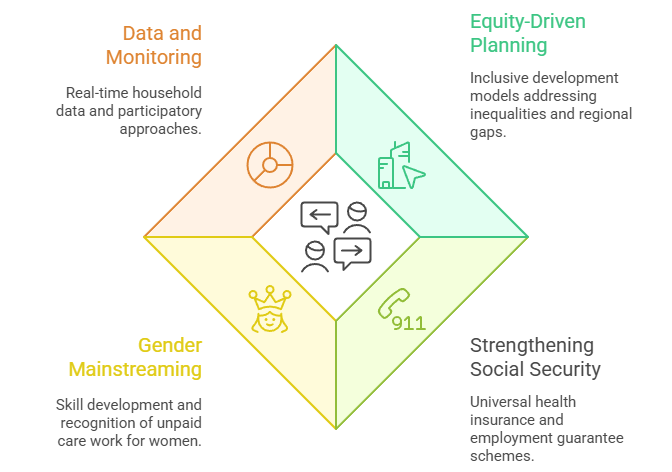
The PPRC survey suggests emergency family assistance, education grants, and price stabilization measures. A sociological approach would expand these into long-term strategies:
ConclusionThe 2025 PPRC survey on poverty and inequality in Bangladesh signals an alarming reversal of earlier development gains. Rising poverty, widening inequality, and entrenched underemployment point toward a crisis of social justice. From a sociological perspective, the findings highlight how class stratification, gender exclusion, informalization, and urban bias combine to reinforce poverty. The crisis cannot be reduced to income figures alone—it reflects deeper structural inequities in labor markets, social institutions, and state policies. For India and other developing societies, the Bangladesh case is a stark reminder: poverty reduction requires not just economic growth but also equity-driven social transformation. As sociologist A.R. Desai argued, true development must dismantle exploitative structures rather than simply redistribute marginal benefits. PYQsPaper I
Paper II
|
To Read more topics, visit: www.triumphias.com/blogs
Read more Blogs:
Harmonising Development and Conservation in Andaman and Nicobar
It’s disheartening to see a reversal of poverty reduction in Bangladesh, especially after the significant strides made over the past few decades. The rising Gini coefficient signals that economic growth isn’t reaching everyone equally. It would be interesting to explore what structural changes in policy could help reverse this trend.