
Overhauling Secondary Education in India
(Relevant for GS paper-2, Education)
|
Secondary education—the bridge between foundational schooling and higher learning—is critical for India’s socio-economic transformation. However, persistent structural issues hinder its full potential. The National Education Policy 2020 (NEP) and other government initiatives are reshaping this landscape, but implementation gaps remain. This blog examines the key challenges, recent reforms, and policy measures to reform secondary education, Persistent Challenges in Secondary Education
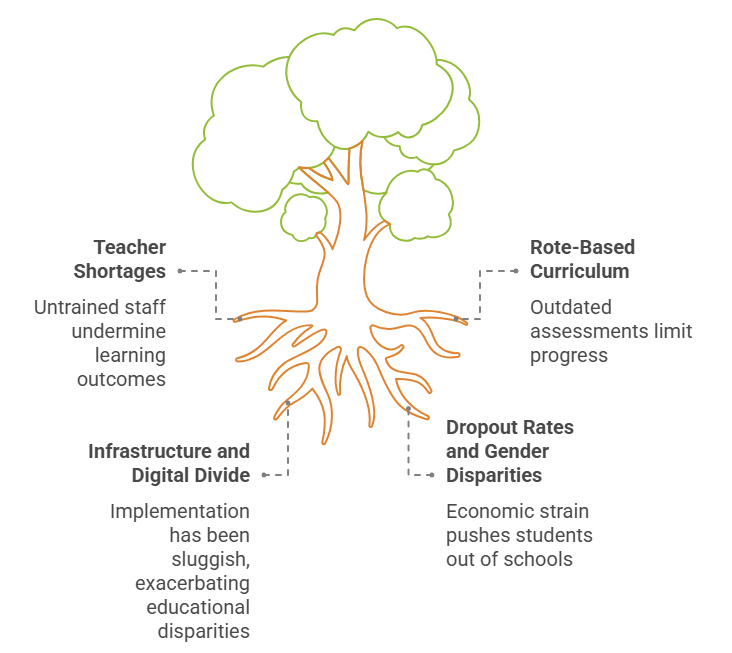
a) Teacher Shortages and Quality DeficitA significant shortage of trained teachers plagues secondary schools, particularly in rural areas. According to MoE data, around 1 million teaching posts across primary to higher-secondary remain vacant Some schools operate with high pupil–teacher ratios (up to 47:1) and rely on untrained staff, undermining learning outcomes. While digital tools like DIKSHA exist, their effectiveness is limited by poor internet access and lack of devices. b) Rote-Based Curriculum and Weak PedagogyDespite reforms, rote memorization continues to dominate the classroom. NEP 2020 mandates a shift toward experiential, critical, and competency-based learning, but entrenched mindsets and outdated assessments limit progress. c) Infrastructure and Digital DivideMany secondary schools, especially in rural regions, lack basic infrastructure—functional toilets, electricity, labs, and digital tools. Although the BharatNet project aims to connect rural panchayats, implementation has been sluggish, exacerbating educational disparities. d) Dropout Rates and Gender DisparitiesDropout rates increase sharply after primary school, particularly among girls and marginalized communities. ASER 2024 reports a 14.1% dropout rate in secondary classes and persistent gender gaps. Economic strain, lack of access, and early marriage push students out of schools. Recent Policy Developments & Initiatives
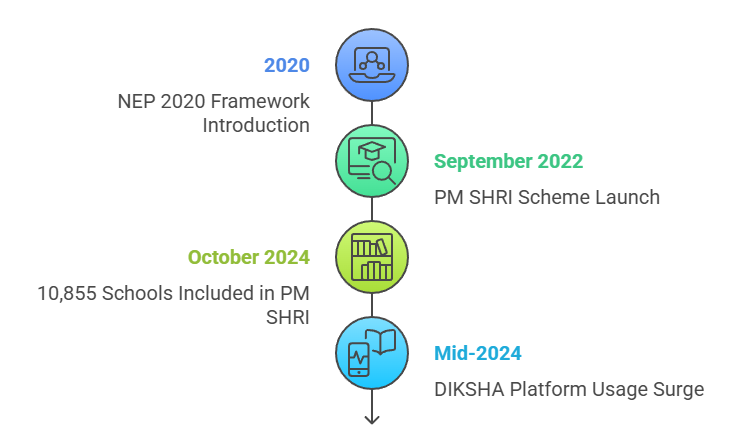
a) NEP 2020’s FrameworkNEP restructured education into a 5+3+3+4 format, emphasizing foundational learning, curricular flexibility, multilingualism, and vocational education. For secondary education, it suggests: Competency-based assessments and reduced exam emphasis. Inclusion of vocational subjects from Grade 6 to boost employability Multilingual instruction until Grade 5–8, with additions of “mother-tongue-first” frameworks b) PM SHRI SchemeLaunched in September 2022, PM SHRI aims to upgrade 14,500 model schools with quality infrastructure and NEP-aligned pedagogy. As of October 2024, 10,855 schools have been included c) Foundational Literacy & NIPUN BharatWhile targeted at primary grades, success in basic literacy and numeracy lays a stronger foundation for secondary learning. Grade 3 FLN competency improved from 58% to 70% between 2020–23. d) Digital EducationThe DIKSHA platform recorded over 3.5 billion page views and 50 million users by mid-2024 Offline content delivery and teacher training on DIKSHA through NISHTHA help bridge resource gaps, though digital inequality persists Recent Field-Level Reforms
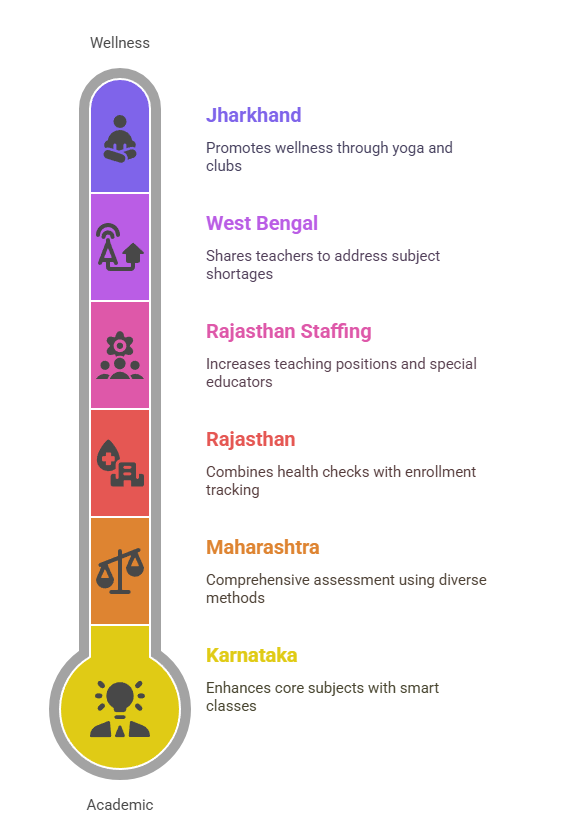
a) Maharashtra’s Holistic AssessmentAligned with NEP, Maharashtra launched 360° student evaluation—teacher, parent, peer, and self-assessments—for Grades 1–12. AI tools and digitized progress reports aim to reduce exam pressure b) Rajasthan Eye Check-Ups & Enrollment DrivesIn July, Rajasthan will organize eye-test camps for students and drivers under its Shala Swasthya Pariksha Abhiyan. It also links enrolment and midday meal data with digital tracking to reduce dropouts c) Rajasthan Staffing ReformsAfter a decade, Rajasthan is revising its staffing structure, potentially creating 38,000 new teaching positions, including 15,000 special-education teachers d) West Bengal’s Cluster SchoolsTo address scarce subject teachers in rural areas, West Bengal plans cluster-based shortfall sharing among schools, especially for English, Bengali, and Physics e) Jharkhand’s Yoga OlympiadJharkhand launched a state-wide Yoga Olympiad and clubs in government schools to promote wellness and holistic learning f) Karnataka’s ‘Mission Vidyashakti’Dharwad district initiated Mission Vidyashakti to enhance Class 6–8 learning in maths, science, and English using smart classes and expert-led sessions Key Reform Priorities for UPSC Aspirants
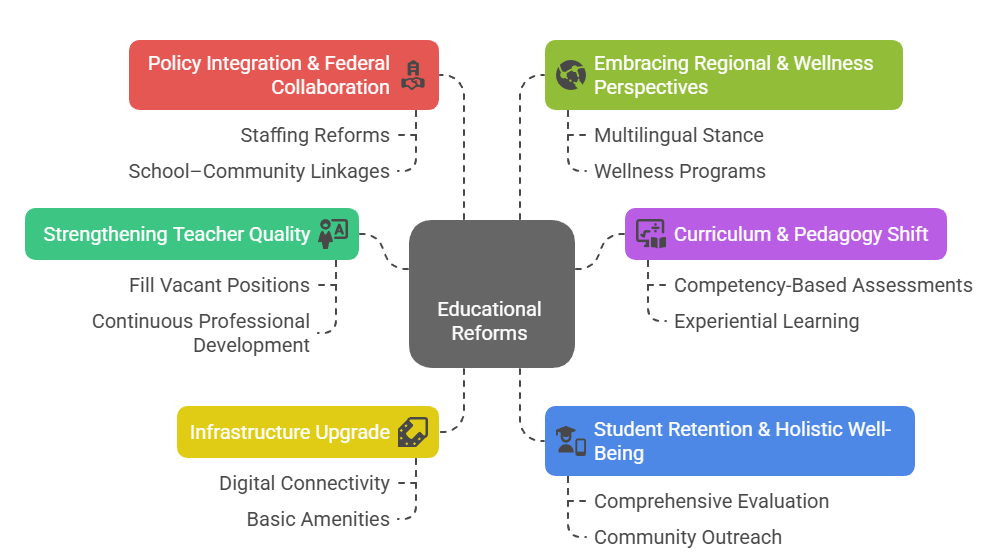
As UPSC candidates, it’s essential to analyze these reforms and challenges holistically: a) Strengthening Teacher QualityFill vacant positions in secondary schools and invest in continuous professional development through NISHTHA modules and digital upskilling. Encourage remote mentoring via digital platforms for under-resourced schools. b) Curriculum & Pedagogy ShiftFully implement competency-based assessments through tools like PARAKH under NCF 2023 Encourage experiential learning through projects, vocational electives, and inter-disciplinary studies. c) Infrastructure Upgrade Expand digital connectivity via BharatNet and local partnerships. Provide basic amenities like labs, toilets, libraries, etc., under PM SHRI and Samagra Shiksha Ambition d) Student Retention & Holistic Well-Being Scale successful models like Maharashtra’s comprehensive evaluation and Rajasthan’s health camps to other states. Address dropouts among girls through community outreach and support mechanisms. e) Policy Integration & Federal Collaboration Ensure center and state collaboration in staffing reforms and curriculum implementation. Strengthen school–community linkages via School Management Committees (SMCs). f) Embracing Regional & Wellness Perspectives Expand NEP’s multilingual stance using “mother tongue-first” methods while balancing employability Integrate wellness programs like yoga, mindfulness, and happiness curricula, learning from Jharkhand and Delhi’s initiatives . ConclusionRevamping secondary education in India demands a blend of quality teaching, equitable infrastructure, innovative pedagogy, holistic well-being, and strong policy coordination. While NEP 2020 and schemes like PM SHRI chart a promising path, real success hinges on coherent implementation across states, addressing ground-level challenges, and fostering community ownership. |

To Read more topics, visit: www.triumphias.com/blogs
One comment