Introduction
The internet has transformed communication, enabling instant expression and access to diverse viewpoints. However, the same platforms that connect us also serve as breeding grounds for online hate speech. In India, hate speech on social media has become a significant sociological issue, influencing public opinion, shaping political discourse, and, in many cases, triggering real-world violence. From communal clashes fueled by WhatsApp rumours to targeted harassment of women and minorities, online hate speech is more than a “virtual” problem—it has tangible consequences for social cohesion, political stability, and mental health.
Understanding Online Hate Speech
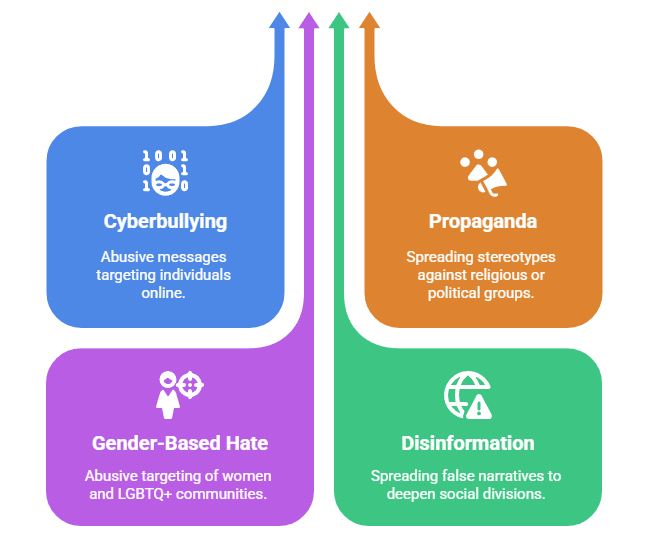
Hate speech can be defined as communication that expresses prejudice or incites hostility toward individuals or groups based on attributes like religion, caste, ethnicity, gender, or sexual orientation. Online hate speech includes:
- Cyberbullying and Harassment: Targeting individuals with abusive messages, trolling, or doxxing.
- Communal and Political Propaganda: Spreading stereotypes or misinformation against religious or political groups.
- Gender-Based Hate: Abusive targeting of women, LGBTQ+ communities, and activists.
- Disinformation Campaigns: Spreading false narratives to deepen social divisions.
Historical Context:
Hate speech is not new. In pre-digital India, pamphlets, inflammatory speeches, and rumor networks served similar functions. The difference today is scale, speed, and anonymity. A single tweet or WhatsApp message can reach millions in seconds, bypassing editorial checks and traditional gatekeeping mechanisms.
Factors Fuelling Online Hate Speech in India
- Political Polarization: Sociologist Seymour Martin Lipset observed that democracy often intensifies ideological competition. In India, polarized political narratives use social media to mobilize supporters and discredit opponents, sometimes crossing into hate speech.
- Algorithmic Amplification: Social media algorithms prioritize engagement over accuracy, making sensational, divisive content more visible. Zeynep Tufekci’s concept of “attention-driven architecture” explains why hate speech often trends online.
- Anonymity and Lack of Regulation: Howard Rheingold’s concept of “virtual communities” shows that online anonymity can both liberate and degrade discourse. When combined with weak cybercrime enforcement, it creates a safe haven for hate mongers.
- Cultural and Historical Prejudices: Existing caste, communal, and gender biases in Indian society easily spill into online spaces, making hate speech a digital extension of offline prejudice.
Real-World Consequences of Online Hate Speech
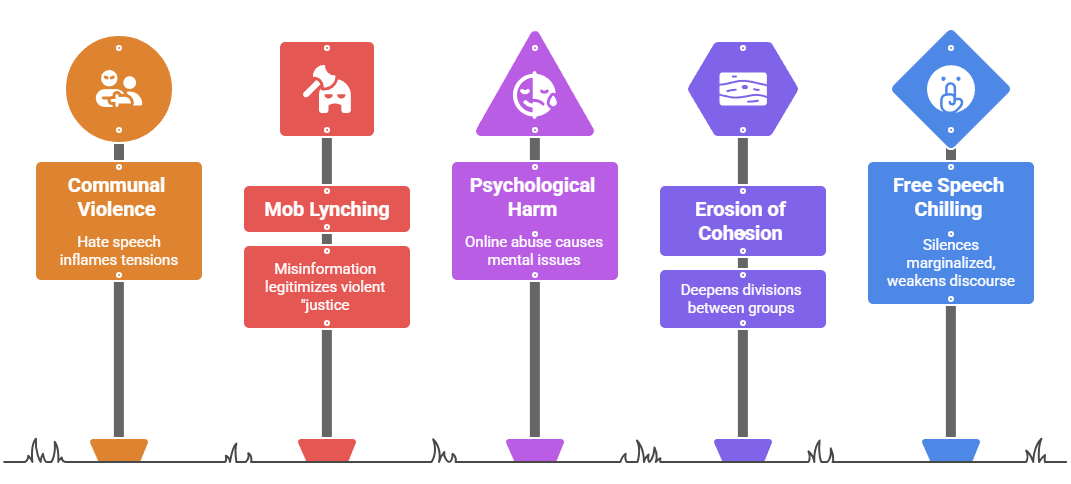
- Communal Violence: Online hate speech can inflame communal tensions, leading to physical clashes between communities. For example, false messages circulated on WhatsApp during the 2012 Assam violence triggered mass panic and migration. Such incidents show how virtual hostility can spill into real-world unrest.
- Mob Lynching and Vigilantism: Rumours about cow slaughter, child kidnapping, or other sensitive issues spread online have led to mob attacks. These events illustrate how digital misinformation can legitimize violent “justice” outside the legal system.
- Psychological Harm and Mental Health Issues: Victims of sustained online abuse often experience anxiety, depression, and feelings of isolation. Public shaming and trolling can permanently harm an individual’s self-esteem and social standing.
- Erosion of Social Cohesion: Hate speech deepens divisions between groups by reinforcing “us vs. them” thinking. It fosters mistrust, making collaboration and peaceful coexistence between communities more difficult.
- Chilling Effect on Free Speech: When marginalized communities or dissenting voices face targeted abuse, they may self-censor. This silences important perspectives and weakens democratic discourse.
Sociological Analysis
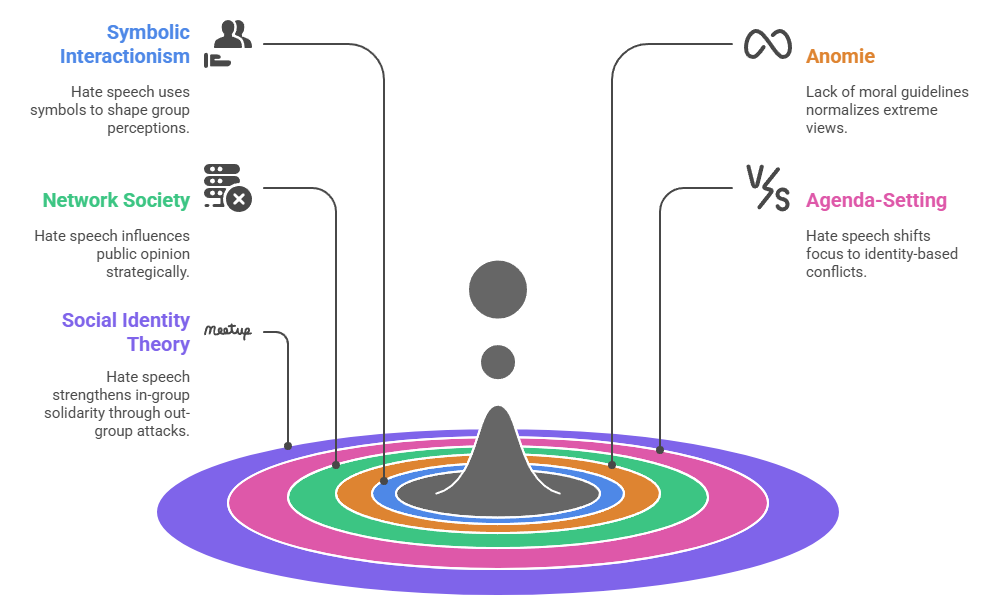
- Symbolic Interactionism: Hate speech relies on symbols—like derogatory terms or memes—that carry shared negative meanings, shaping how groups perceive each other.
- Durkheim’s Concept of Anomie: The absence of clear moral guidelines online creates normlessness, making extreme or hateful views seem acceptable.
- Castells’ Network Society: In a networked world, information is power. Hate speech becomes a strategic tool to influence public opinion and mobilize online communities.
- Agenda-Setting Theory: Hate speech shifts public focus from broader social issues to identity-based conflicts, controlling what people perceive as important.
- Social Identity Theory: Online hate strengthens in-group solidarity by attacking out-groups, reinforcing prejudices and deepening intergroup hostility.
State and Civil Society Responses
- Legal Framework
- Section 153A, IPC: Criminalizes promotion of enmity between groups.
- IT Act, 2000 (Section 66A): Previously used against offensive online messages but struck down in 2015 for being unconstitutional.
- New Intermediary Guidelines, 2021 place responsibility on platforms to remove unlawful content.
- Platform Moderation: Facebook, Twitter (X), and YouTube have policies against hate speech, but enforcement is inconsistent, often criticized for bias.
- Civil Society Campaigns: NGOs like Internet Freedom Foundation advocate for both protection from hate speech and freedom of expression.
Balancing Free Speech and Regulation
Sociologically, this balance is complex:
- Too much regulation risks political misuse and censorship.
- Too little regulation enables harm to vulnerable communities.
John Stuart Mill’s “harm principle” can guide policy—speech should be free until it causes direct harm.
Way Forward:
- Digital Literacy Campaigns: Educating citizens about misinformation, echo chambers, and respectful online communication can reduce the spread and acceptance of hate speech. Digital literacy helps people critically evaluate online content before reacting or sharing.
- Community Moderation Models: Involving local language moderators who understand cultural context ensures that harmful content is identified accurately and promptly. This approach also reduces bias in content moderation.
- Intergroup Dialogue Programs: Structured dialogues between conflicting groups, as suggested by Gordon Allport’s Contact Hypothesis, can break stereotypes, reduce prejudice, and promote mutual understanding in both online and offline spaces.
- Algorithmic Transparency: Social media platforms should disclose how their algorithms promote content, making it easier to identify whether hate speech is being amplified. Greater transparency can help hold tech companies accountable.
- Strengthening Civil Society Engagement: Collaboration between government, NGOs, academic institutions, and tech companies can create a multi-stakeholder framework for monitoring and countering hate speech effectively.
Conclusion
Online hate speech is not just a technology problem—it is a social problem amplified by technology. The real-world consequences in India, from communal riots to psychological harm, reflect deep societal fractures. Sociology helps us see that tackling online hate requires addressing structural inequalities, political incentives, and cultural biases alongside digital governance. This topic is a perfect example of how classical sociological theories apply to emerging challenges in the digital era. The future of India’s social harmony, democratic health, and civic discourse will depend on how effectively we can confront and contain the forces of online hate.
PYQs
Paper I –
- Discuss the role of mass media in the social change process in developing societies. (2013)
- Examine the relationship between mass media and social movements in contemporary society. (2014)
- How does mass media act as an instrument of social control? Illustrate with suitable examples. (2015)
- Evaluate the role of mass media in strengthening or weakening democracy. (2016)
- Discuss how social media is transforming patterns of social interaction in India. (2017)
- Examine the sociological significance of “fake news” and its implications for society. (2018)
- Analyse the role of digital platforms in shaping public opinion and political discourse. (2019)
- Discuss the impact of social media on deviant behaviour in society. (2020)
- Critically examine the relationship between technology, communication networks, and social integration. (2021)
- Discuss the role of digital media in reinforcing or challenging social inequalities. (2022)
- Evaluate how virtual communities affect patterns of socialisation and identity formation. (2023)
Paper II –
- Discuss the role of mass media in the growth of communalism in India. (2013)
- Analyse the relationship between caste and politics in contemporary India with reference to media influence. (2014)
- Examine how political propaganda in media shapes public opinion in India. (2015)
- Discuss the role of communication networks in communal riots in India. (2016)
- Evaluate the impact of social media on political mobilisation in India. (2017)
- How does digital communication influence inter-community relations in India? (2018)
- Analyse the role of WhatsApp and other social media platforms in spreading rumours leading to mob lynching. (2019)
- Examine how hate speech in social media is affecting the secular fabric of Indian society. (2020)
- Critically analyse the challenges of regulating online content without infringing on freedom of expression. (2021)
- Discuss the role of new media in shaping youth political participation in India. (2022)
- Evaluate the sociological implications of online trolling and harassment of journalists and activists in India. (2023)
|

One comment