Introduction
In the digital era, much of human interaction takes place online. Social media platforms, online forums, gaming communities, and digital support groups have become new sites of socialisation, identity formation, and cultural exchange. For sociology, this means traditional fieldwork methods such as ethnography need adaptation to study these digital spaces. This is where Netnography, or “online ethnography,” becomes crucial. Coined by Robert Kozinets in the 1990s, netnography refers to the qualitative research method of studying online communities, cultures, and practices through observation, participation, and content analysis.
For UPSC sociology, Netnography is highly relevant to themes such as research methods, media and society, digital activism, identity politics, social change, and globalisation. With India’s massive internet user base and the rise of digital communities, netnography provides insights into how technology reshapes social life.
What is Netnography?
- Definition: Netnography is the application of ethnographic research techniques to online spaces. It involves systematically studying the interactions, language, symbols, and behaviours of people within digital communities.
- Scope: It covers diverse online settings, including:
- Facebook, Instagram, Twitter (X) communities
- Reddit and Quora discussion groups
- WhatsApp and Telegram groups
- Online gaming communities
- E-commerce review platforms (e.g., Amazon reviews)
- Activist networks (#MeToo, #FarmersProtest, #BlackLivesMatter)
Why Netnography Matters:
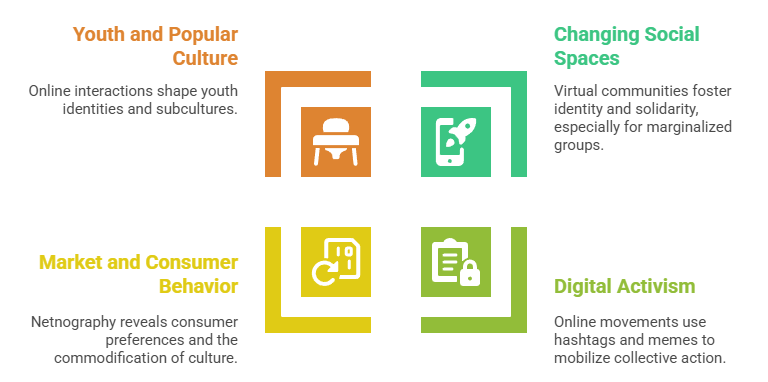
- Changing Social Spaces: Society is no longer confined to physical boundaries. Virtual communities create new spaces for identity, solidarity, and mobilisation. For example, LGBTQ+ youth in India often form supportive networks online where physical spaces may be hostile.
- Understanding Digital Activism: Movements such as #MeToo in India, Shaheen Bagh protests, and Farmers’ Protests gained momentum online. Netnography helps in analysing how hashtags, memes, and digital campaigns mobilise people and sustain collective action.
- Market and Consumer Behaviour: Corporates increasingly use netnography to study consumer preferences in online markets. For sociologists, this reflects the commodification of culture and the role of digital capitalism.
- Insights into Youth and Popular Culture: From K-pop fandoms to gaming cultures like PUBG, netnography uncovers how youth identities, subcultures, and peer interactions are shaped online.
Methodology of Netnography
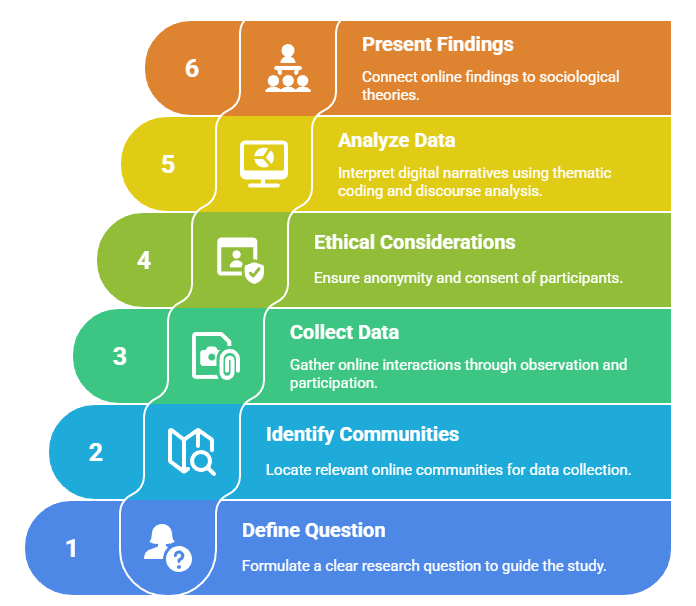
Just like ethnography, netnography follows systematic steps:
- Defining the research question – Example: How do Indian women use digital communities for feminist activism?
- Identifying online communities – Social media platforms, closed groups, or discussion forums.
- Data collection – Through observation, participation, and archiving of online interactions (text, images, videos).
- Ethical considerations – Ensuring anonymity and consent, especially when dealing with vulnerable groups.
- Data analysis – Thematic coding, discourse analysis, and interpretation of digital narratives.
- Presentation – Linking online findings to broader sociological theories of identity, power, and social change.
Advantages of Netnography
- Access to hidden communities – Queer groups, mental health forums, or marginalised voices find expression online.
- Cost-effective and time-saving – Unlike physical fieldwork, netnography requires fewer resources.
- Rich cultural insights – Online interactions reveal slang, humour, rituals, and practices of digital communities.
- Global perspective – Enables cross-cultural analysis by studying communities beyond national borders.
Limitations of Netnography
- Authenticity issues – People may present exaggerated or false identities online.
- Ethical dilemmas – Accessing private groups without consent raises concerns.
- Over-reliance on digital voices – Marginalised people without internet access remain invisible.
- Contextual challenges – Online behaviour may not always reflect offline realities.
Sociological Analysis
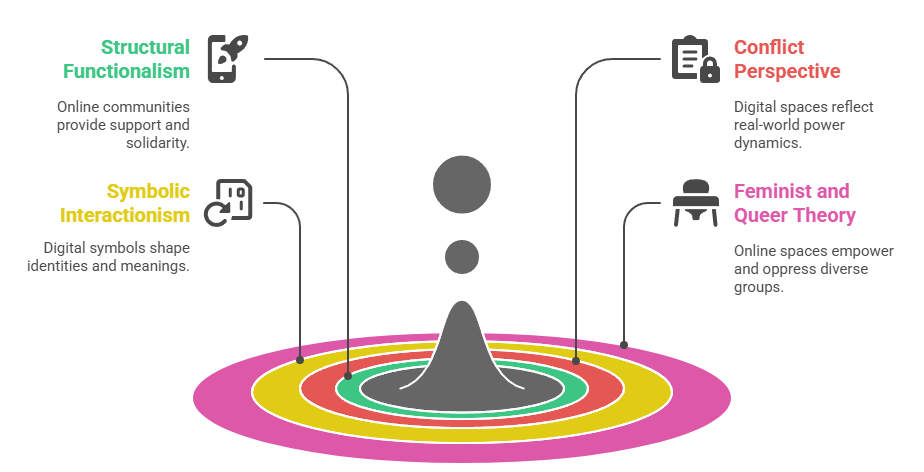
- Structural Functionalism: Online communities perform important social functions — offering support, solidarity, and collective identity. For instance, health forums for cancer patients provide emotional support and information.
- Conflict Perspective: Netnography reveals how power operates in digital spaces. Caste-based trolling, gendered hate speech, and online exclusion mirror real-world hierarchies. The digital divide itself is a form of inequality.
- Symbolic Interactionism: Digital communication is full of symbols — emojis, hashtags, memes. Interactionists study how these micro-level symbols shape identities and social meanings.
- Feminist and Queer Theory: Netnography highlights how online spaces can both empower and oppress. For example, women’s digital activism challenges patriarchy, while queer groups form “chosen families” online. At the same time, misogyny and homophobia are amplified on digital platforms.
Netnography and Indian Society
- Digital Activism in India
- #MeToo India revealed systemic sexual harassment.
- Shaheen Bagh Movement used online platforms for mobilisation.
- Farmers’ Protest 2020-21 gained global solidarity through Twitter campaigns.
- Caste and Digital Spaces: Dalit activists and writers use online spaces to challenge Brahminical dominance. Netnography helps study how caste discourse shifts in virtual communities.
- Youth Culture: Indian youth participate in global fandoms (BTS Army, Marvel communities) while also shaping local digital cultures through memes, reels, and gaming.
- State and Surveillance: Netnography also exposes state control, censorship, and surveillance in digital communication. The tension between free expression and regulation is a core sociological debate.
Future of Netnography
With India’s internet users crossing 800 million, netnography will become a key tool in sociological research. As AI-driven social media, virtual reality, and the metaverse expand, digital ethnography will need to adapt to study virtual identities, immersive communities, and algorithm-driven cultures.
Conclusion
Netnography is not just a research method; it is a window into the digital transformation of society. In India, where online spaces are sites of both empowerment and exclusion, netnography provides invaluable insights into contemporary issues of identity, power, social change, and resistance. Understanding netnography is crucial to connecting sociological theories with current affairs, making it a key analytical tool for answering questions on research methods, globalisation, and Indian society.
PYQs
Paper 1
- What are the limitations of participant observation as a method of data collection in sociology? (2014)
- Examine the significance of ethnography in sociological research. (2015)
- Discuss the advantages and limitations of using the Internet as a source of sociological data. (2016)
- Explain the relevance of qualitative methods in understanding contemporary social issues. (2017)
- Evaluate the application of ethnographic methods to study virtual communities. (2018)
- Discuss the role of content analysis in studying digital media platforms. (2019)
- Analyse the methodological challenges of researching online behaviour in sociology. (2020)
- What are the ethical concerns in conducting sociological research in online communities? (2021)
- Examine the contribution of digital ethnography (netnography) to the study of globalisation and identity. (2022)
- Discuss the scope of mixed methods in analysing social media activism. (2023)
- Critically evaluate the role of new research tools (big data, digital ethnography) in sociological studies. (2024)
Paper 2
- Discuss the impact of globalisation on Indian society with reference to media and communication. (2014)
- Examine the role of social media in shaping youth culture in India. (2015)
- How do new communication technologies affect caste and community relations in India? (2016)
- Analyse the role of social networking sites in mobilising social movements in India. (2017)
- Examine the sociological implications of digital activism in India with reference to the #MeToo movement. (2018)
- Discuss the significance of online spaces in the assertion of Dalit and minority identities. (2019)
- Analyse the impact of digital platforms on women’s empowerment in India. (2020)
- How has the COVID-19 pandemic highlighted the role of digital communities in India? (2021)
- Examine the sociological role of online communities in the Farmers’ Protest in India. (2022)
- Critically analyse the role of social media in shaping political mobilisation in India. (2023)
- Discuss the sociological impact of online hate speech and digital exclusion in India. (2024)
|

One comment