Introduction
Political independence in the 20th century marked the end of formal colonialism, but not the end of foreign domination. A more covert and sophisticated system emerged—Neo-Colonialism—where the developed world continues to influence the Global South economically, politically, and culturally. For Sociology optional aspirants, neo-colonialism is a critical lens to examine global inequalities, the impact of globalization, and the power structures embedded in international institutions.
What is Neo-Colonialism?
Neo-colonialism refers to the indirect control or influence exerted by powerful developed countries over former colonies or developing nations, especially in economic, political, or cultural spheres. Coined by Kwame Nkrumah, Ghana’s first president, neo-colonialism is often described as “imperialism in disguise.” Unlike old colonialism, where powers had direct political control, neo-colonialism operates through multinational corporations, global financial institutions (IMF, World Bank), and international trade agreements that disproportionately benefit the Global North.
Sociological Theories and Neo-Colonialism
- Dependency Theory –Andre Gunder Frank’s Dependency Theory argues that political independence did not equate to economic freedom for developing nations. According to Frank, the economies of post-colonial states—particularly in the Third World—remain deeply intertwined with and subordinate to the interests of the developed world. Neo-colonialism, in this context, operates by keeping former colonies locked into a structure of economic dependence, where their role is confined to supplying raw materials, cheap labor, and markets for Western goods. A striking example is how many African countries continue to export primary commodities like minerals and agricultural products, while importing expensive finished goods from industrialized Western nations. This trade imbalance perpetuates underdevelopment and prevents self-sustained growth, reinforcing a cycle of dependency.
- Immanuel Wallerstein’s World-Systems Theory provides another robust framework to understand neo-colonialism. He classifies the world into core, semi-periphery, and periphery nations, where each plays a specific role in the global capitalist system. According to Wallerstein, core countries, mainly in the Global North, dominate global finance, high-tech industries, and trade networks, while periphery nations in the Global South are relegated to supplying low-skill labor and raw materials. Neo-colonialism sustains this structure by ensuring that periphery countries remain economically subordinate, lacking control over production processes, technological advancement, and international policymaking. This unequal exchange helps maintain the hegemonic position of core states, even in a formally decolonized world.
- From a Marxist perspective, neo-colonialism is seen as a modern extension of capitalist exploitation on a global scale. It embodies the economic dominance of wealthy capitalist nations over poorer countries, effectively turning developing nations into the global proletariat. Neo-colonialism represents a form of class domination, where imperialist powers extract surplus value from the Global South through mechanisms such as foreign investment, control over global institutions (e.g., IMF and World Bank), and exploitative trade agreements. The Marxist lens exposes how neo-colonialism disguises itself under the rhetoric of free trade, aid, and development, while in reality maintaining a world order that benefits global capitalists and subjugates the labor and resources of the periphery.
Contemporary Relevance:
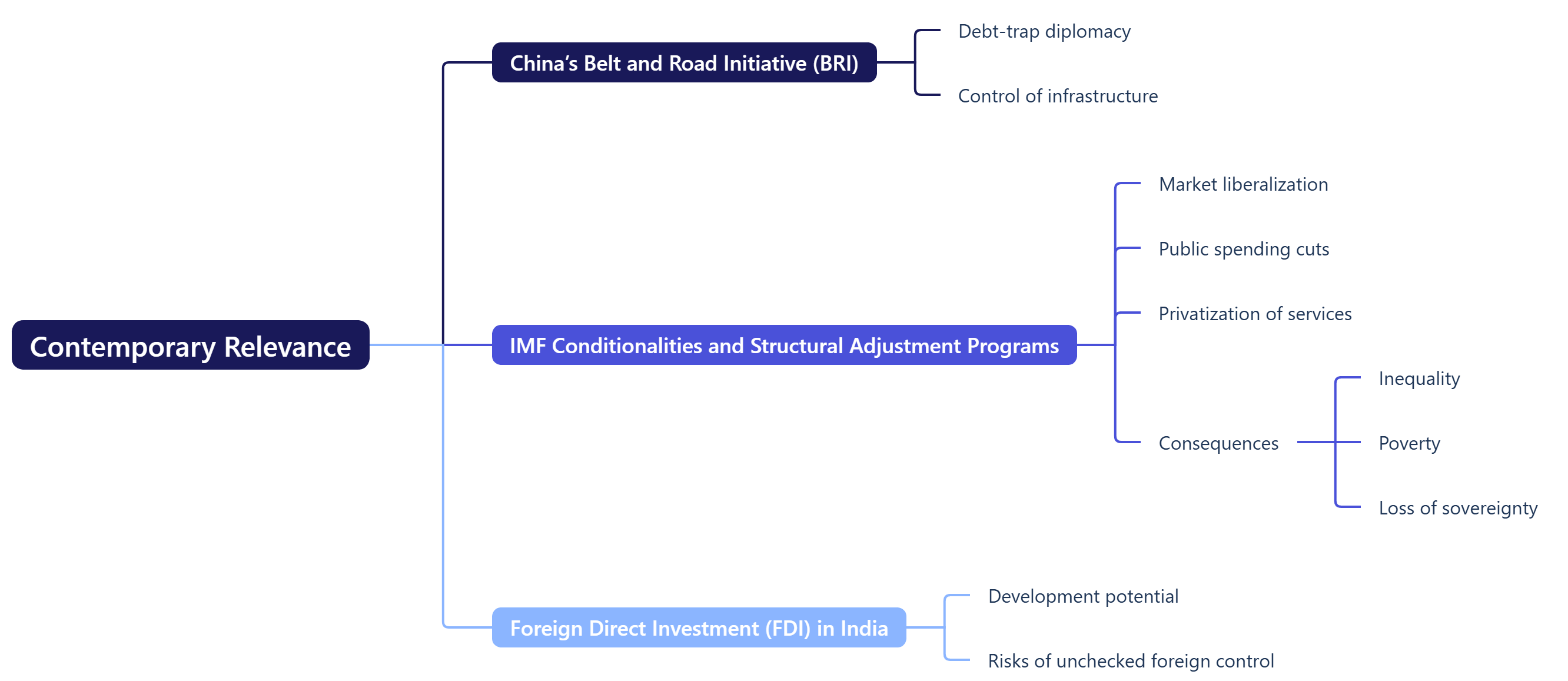
- China’s Belt and Road Initiative (BRI): Criticized as a form of debt-trap diplomacy—a neo-colonial strategy to control strategic infrastructure in countries like Sri Lanka, Pakistan, and parts of Africa.
- IMF Conditionalities and Structural Adjustment Programs: Developing countries are forced to liberalize markets, cut public spending, and privatize services—leading to inequality, poverty, and loss of sovereignty.
- Foreign Direct Investment (FDI) in India: While FDI can boost development, unchecked foreign control in critical sectors like retail, agriculture, or data economy raises neo-colonial concerns.
Digital Colonialism: The New Frontier
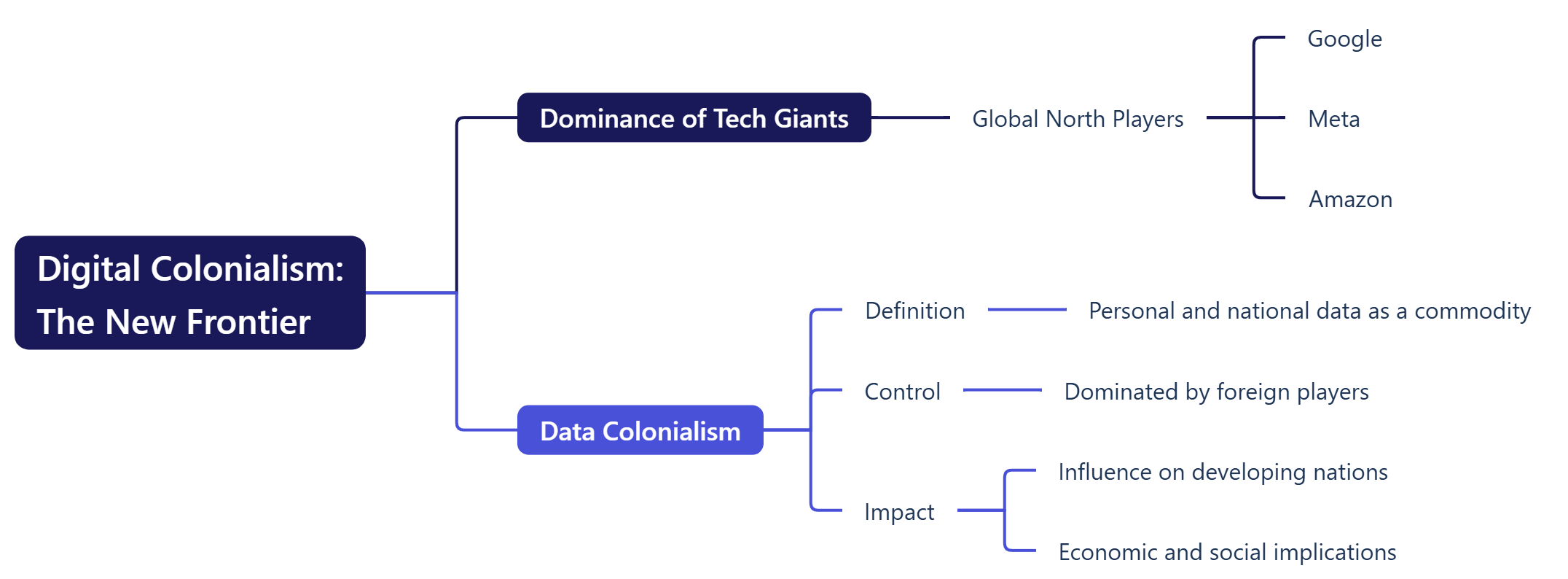
- Tech giants from the Global North (Google, Meta, Amazon) dominate the data and digital infrastructure in India and other developing nations.
- Sociologists call this “data colonialism”, where personal and national data becomes a commodity controlled by foreign players.
Case Study: India’s Position in the Global Order
India, despite being a former colony, now plays a dual role—a victim of Western economic dominance and a rising regional power.
- Programs like Make in India, Digital India, and Atmanirbhar Bharat aim to resist neo-colonial dependence by promoting self-reliance and technology sovereignty.
- Advocates for Global South cooperation at G20 and BRICS forums.
- Critiques Western climate policy, which shifts burden to developing nations.
Conclusion
Neo-colonialism is not a relic of the past; it is the subtle machinery of the present. While nations may appear politically free, their economic and cultural autonomy often remains compromised. Understanding this concept through a sociological lens is crucial for addressing contemporary global inequalities.
PYQs
Paper 1 –
- Do you think globalization has led to the demise of the nation-state? Substantiate with suitable arguments. (2015)
- Critically examine the role of multinational corporations in perpetuating global dependency. (2016)
- How do conflict and functionalist perspectives explain global inequality? Substantiate with examples. (2017)
- Discuss the relevance of Dependency Theory in understanding the problems of development in the Global South. (2018)
- Discuss how globalization is creating cultural homogeneity and simultaneously reviving local identities. (2019)
- Explain Immanuel Wallerstein’s World-Systems Theory. How does it help in understanding global inequality? (2020)
- Explain the concept of cultural imperialism. How does it operate in the age of digital globalization? (2020)
- Examine the relationship between globalization and social inequality in the context of neo-liberalism. (2021)
- How do post-colonial perspectives in sociology help us understand the relationship between knowledge and power? (2022)
- Examine the sociological significance of digital capitalism in contemporary societies. (2023)
Paper 2 –
- Critically evaluate the impact of globalization on Indian agriculture and rural development. (2015)
- Analyze the implications of WTO and IMF conditionalities on India’s welfare policies. (2016)
- Discuss the implications of liberalization and privatization on the Indian working class. (2017)
- How do global economic policies affect regional disparities in India? (2018)
- How has the emergence of global consumer culture impacted traditional values and family structures in India? (2019)
- Evaluate the influence of global capital and foreign direct investment (FDI) on the socio-economic structure of Indian society. (2020)
- Examine the dual impact of globalization on social mobility and inequality in India. (2020)
- Examine the impact of global digital platforms on Indian youth identity and culture. (2021)
- How is India’s vision of ‘Atmanirbhar Bharat’ a response to global economic dependency? (2022)
- Discuss the relevance of dependency and world-system theories in explaining India’s position in the global economy. (2023)
|



One comment