

Modernizing India’s Gig Work Ecosystem
(Relevant for GS paper-3, Employment)
|
India’s gig economy is undergoing a significant transformation, reshaping the nation’s labor market and economic landscape. With the proliferation of digital platforms and a youthful, tech-savvy workforce, gig work has emerged as a vital source of employment. However, this rapid expansion brings forth challenges related to worker rights, social security, and regulatory frameworks. This blog delves into the current state of India’s gig economy, recent policy developments, and the path forward for sustainable and inclusive growth. Understanding the Gig EconomyThe gig economy encompasses a labor market characterized by short-term contracts or freelance work, as opposed to permanent jobs. In India, this sector includes a diverse range of occupations, from ride-sharing drivers and food delivery personnel to freelance professionals in IT, design, and content creation. The flexibility and autonomy offered by gig work have attracted millions, especially among the youth and those seeking supplementary income. Current Landscape and Growth Trajectory
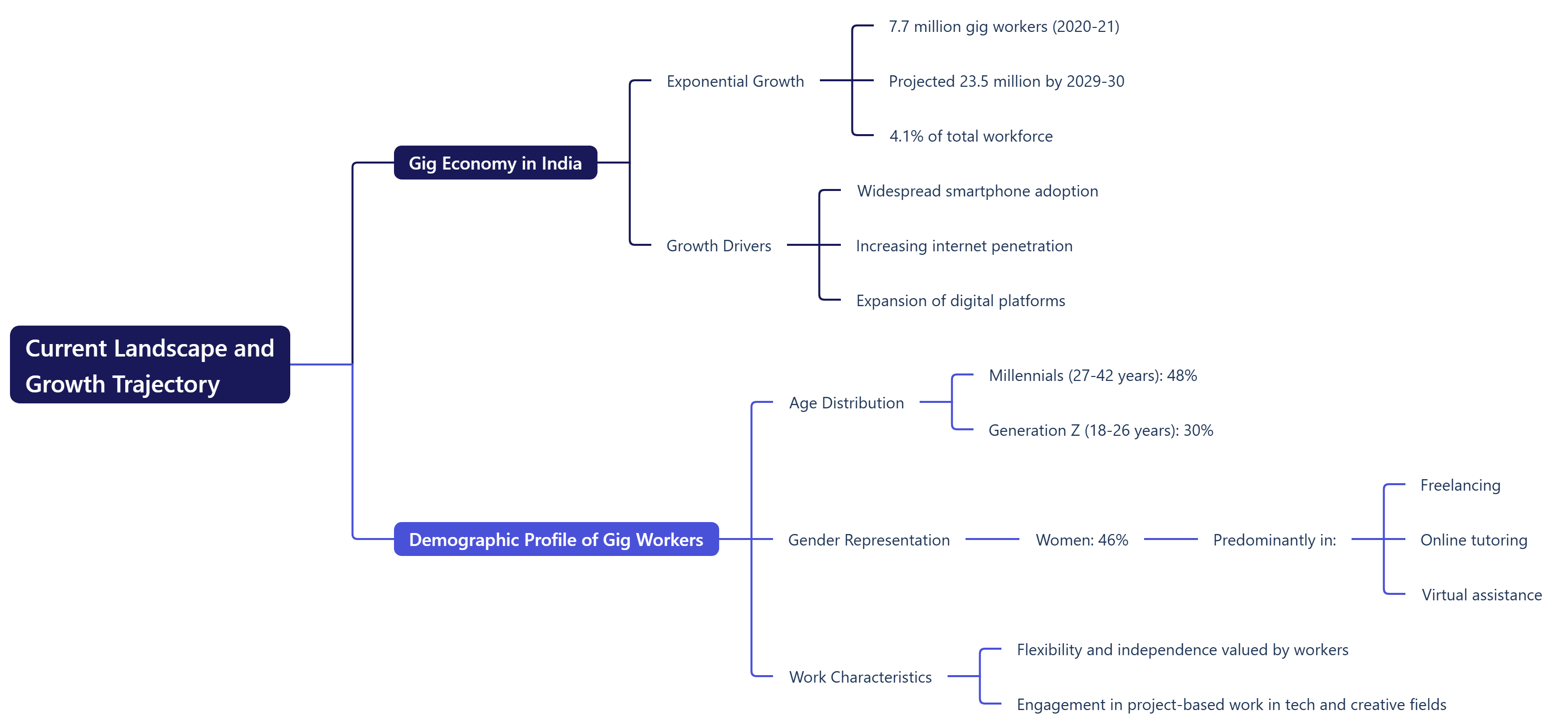
India’s gig economy has witnessed exponential growth in recent years. According to NITI Aayog, the number of gig workers stood at approximately 7.7 million in 2020-21 and is projected to reach 23.5 million by 2029-30, constituting about 4.1% of the total workforce . This surge is fueled by factors such as widespread Smartphone adoption, increasing internet penetration, and the expansion of digital platforms across various sectors. The demographic profile of gig workers is diverse. Millennials (ages 27-42) make up 48% of the gig workforce, valuing the flexibility and independence that gig work offers. Generation Z (ages 18-26) accounts for about 30%, often engaging in project-based work in technology and creative fields. Notably, women constitute approximately 46% of gig workers, predominantly in areas like freelancing, online tutoring, and virtual assistance. Economic Impact and OpportunitiesThe gig economy contributes significantly to India’s economic growth. It serves as a bridge for workers transitioning from the informal sector to more structured employment models, providing a safety net and structured earnings. For instance, a large portion of India’s gig workforce, like drivers and delivery workers, comes from informal sectors like agriculture and unskilled labor. With the rise of platforms like Zomato and Swiggy, millions of informal workers have found additional avenues for income. Moreover, the gig economy drives digital transformation by promoting the use of smartphones, digital payments, and online services. This integration into the mainstream economy enhances India’s tech-driven economic expansion. Policy Interventions and Social Security MeasuresRecognizing the growing significance of gig workers, the Indian government has initiated several measures to extend social security benefits to this segment. In the 2025 budget, provisions were announced to provide healthcare and other benefits to approximately 10 million gig workers. The government plans to issue identity cards and register all gig workers on a national database, facilitating better access to health, housing, skill development, insurance, credit, and food schemes. At the state level, Rajasthan pioneered the Rajasthan Platform-Based Gig Workers (Registration and Welfare) Bill in July 2023, imposing a surcharge on online transactions to fund welfare benefits for gig workers. Other states like Karnataka, Tamil Nadu, and Telangana have also taken steps to register gig workers and address their grievances . Challenges and Concerns of Gig Workers
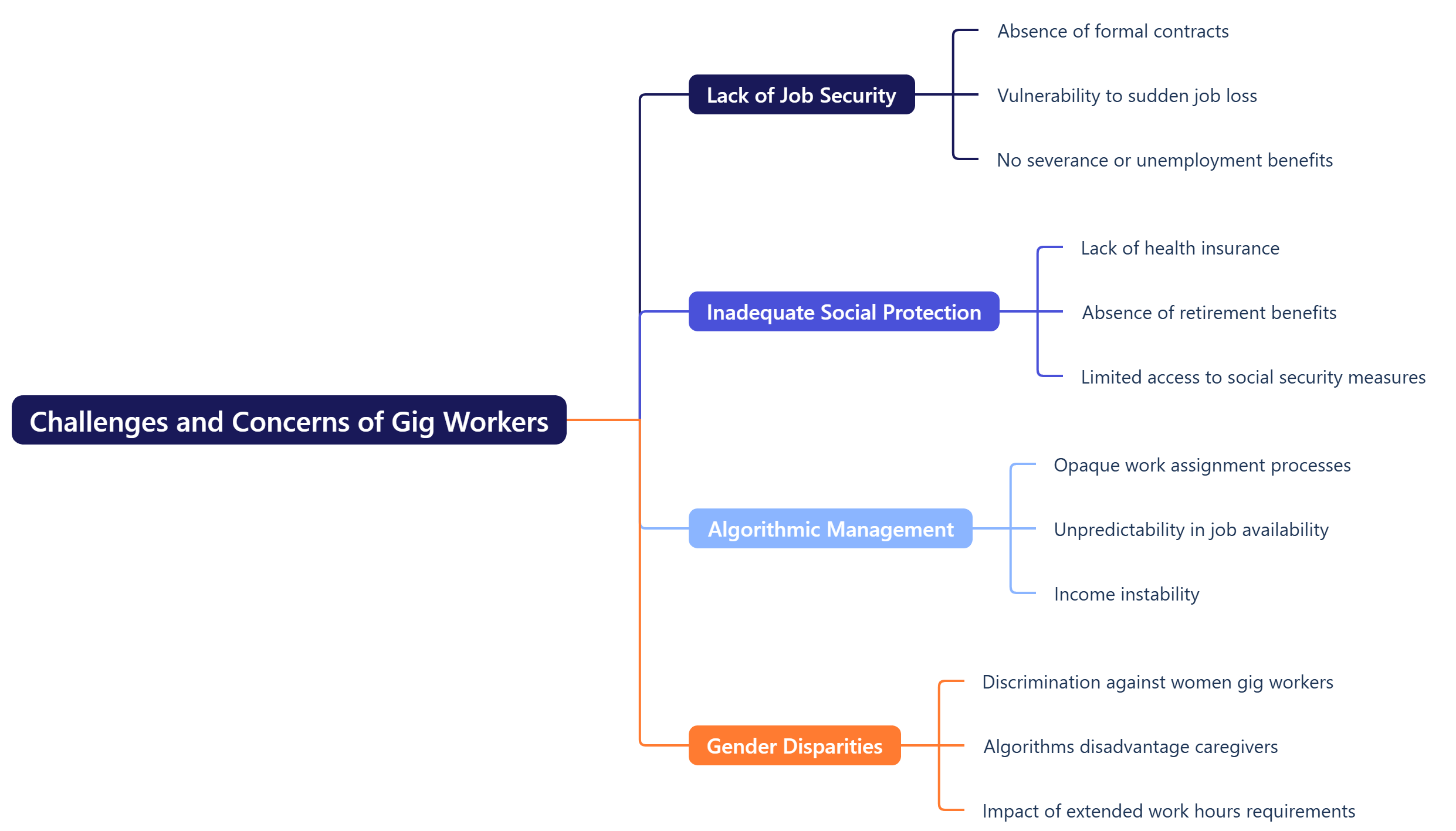
Despite these advancements, gig workers face several challenges:
The Road Ahead: Recommendations for Sustainable Growth
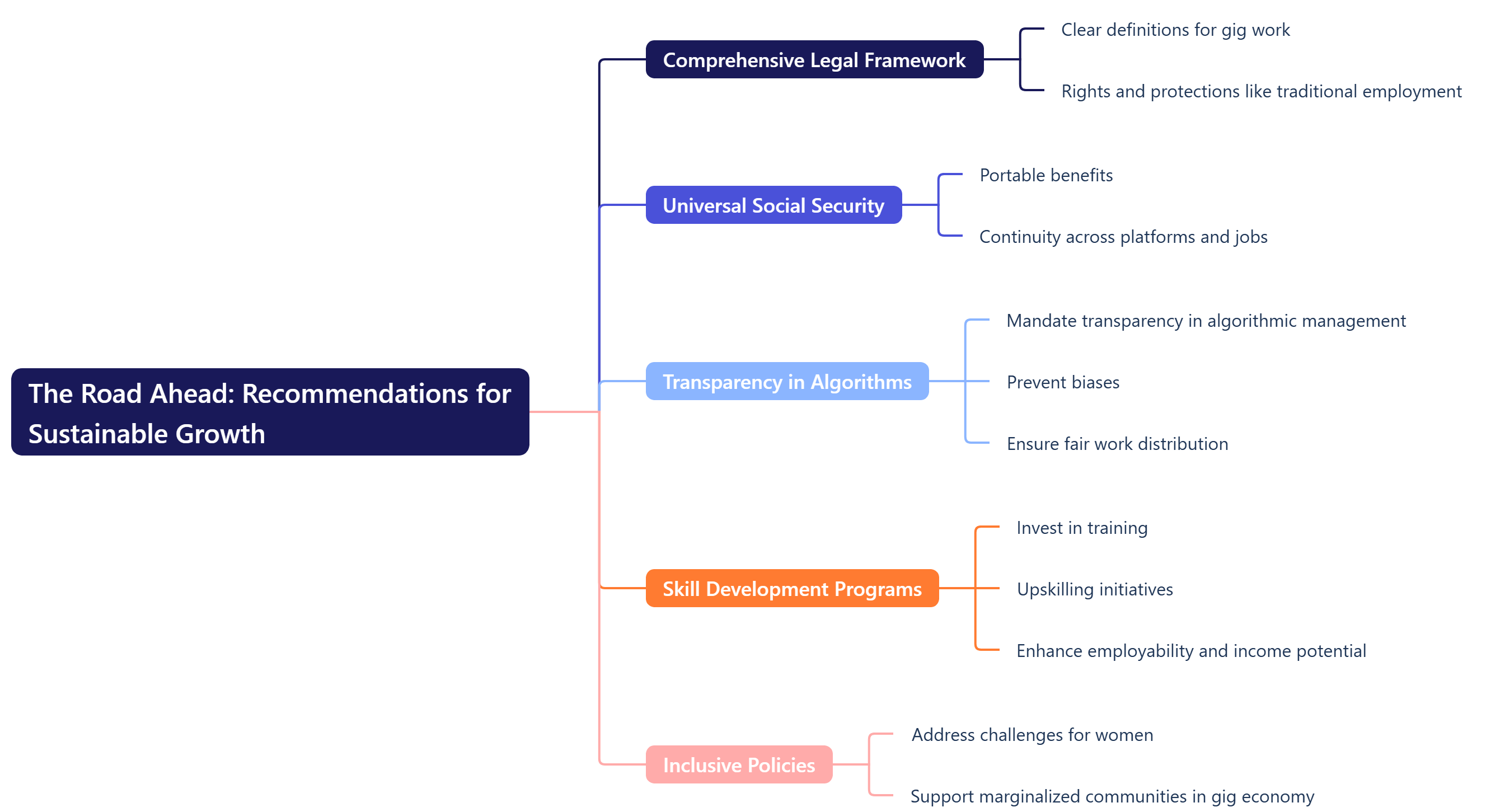
To harness the full potential of the gig economy while ensuring worker welfare, the following measures are recommended:
ConclusionIndia’s gig economy stands at a pivotal juncture. With the right mix of policy interventions, technological advancements, and stakeholder collaboration, it can evolve into a robust pillar of the nation’s economy. Ensuring the rights and welfare of gig workers is not just a matter of social justice but also a prerequisite for sustainable and inclusive economic growth. As India aspires to become a $5 trillion economy, empowering its gig workforce will be instrumental in achieving this vision. |

One comment