Introduction: Modernising Logistics
India’s logistics sector is undergoing a significant transformation, driven by policy reforms, technological advancements, and infrastructure development. Despite its substantial contribution to the economy, the sector has historically faced challenges such as high costs, fragmentation, and inefficiencies. With the implementation of the National Logistics Policy (NLP) and other strategic initiatives, India aims to enhance the efficiency and competitiveness of its logistics landscape.
Current Landscape of India’s Logistics Sector
As of 2024, the Indian logistics market is valued at approximately USD 228.4 billion and is projected to reach USD 357.3 billion by 2030, growing at a compound annual growth rate (CAGR) of 7.7% . The sector plays a pivotal role in facilitating trade and commerce, supporting various industries including manufacturing, agriculture, and retail.
However, logistics costs in India are relatively high, accounting for about 14% of the GDP, compared to 8-10% in developed countries . This disparity impacts the competitiveness of Indian goods in the global market and underscores the need for comprehensive reforms.
Challenges in the Logistics Sector
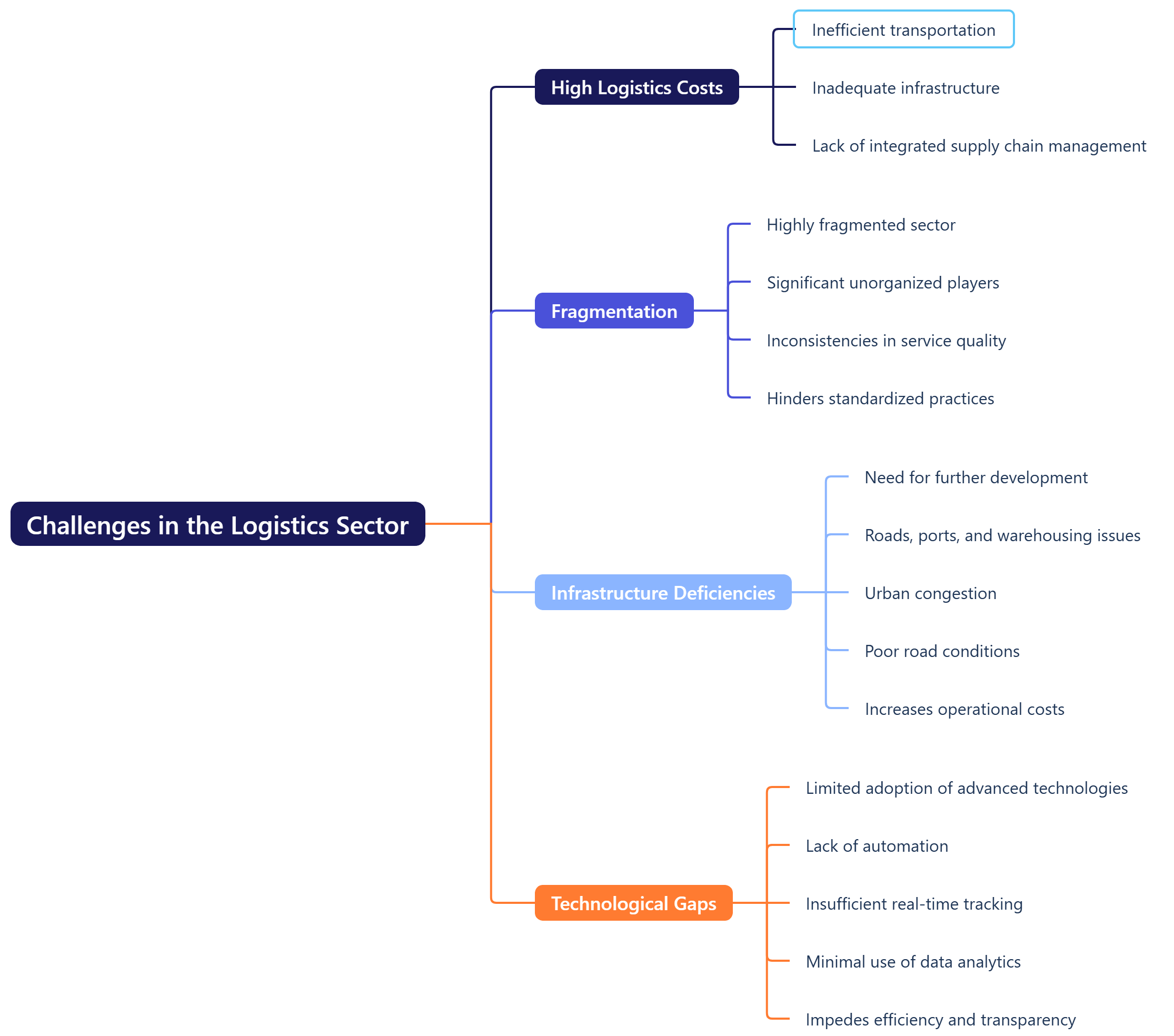
- High Logistics Costs: The elevated logistics costs are attributed to factors such as inefficient transportation, inadequate infrastructure, and a lack of integrated supply chain management.
- Fragmentation: The sector is highly fragmented, with a significant portion operated by unorganized players. This fragmentation leads to inconsistencies in service quality and hinders the adoption of standardized practices.
- Infrastructure Deficiencies: Despite improvements, India’s logistics infrastructure, including roads, ports, and warehousing facilities, requires further development to meet growing demands. Urban congestion and poor road conditions contribute to delays and increased operational costs
- Technological Gaps: Limited adoption of advanced technologies such as automation, real-time tracking, and data analytics impedes efficiency and transparency in logistics operations.
National Logistics Policy (NLP) 2022: A Strategic Framework
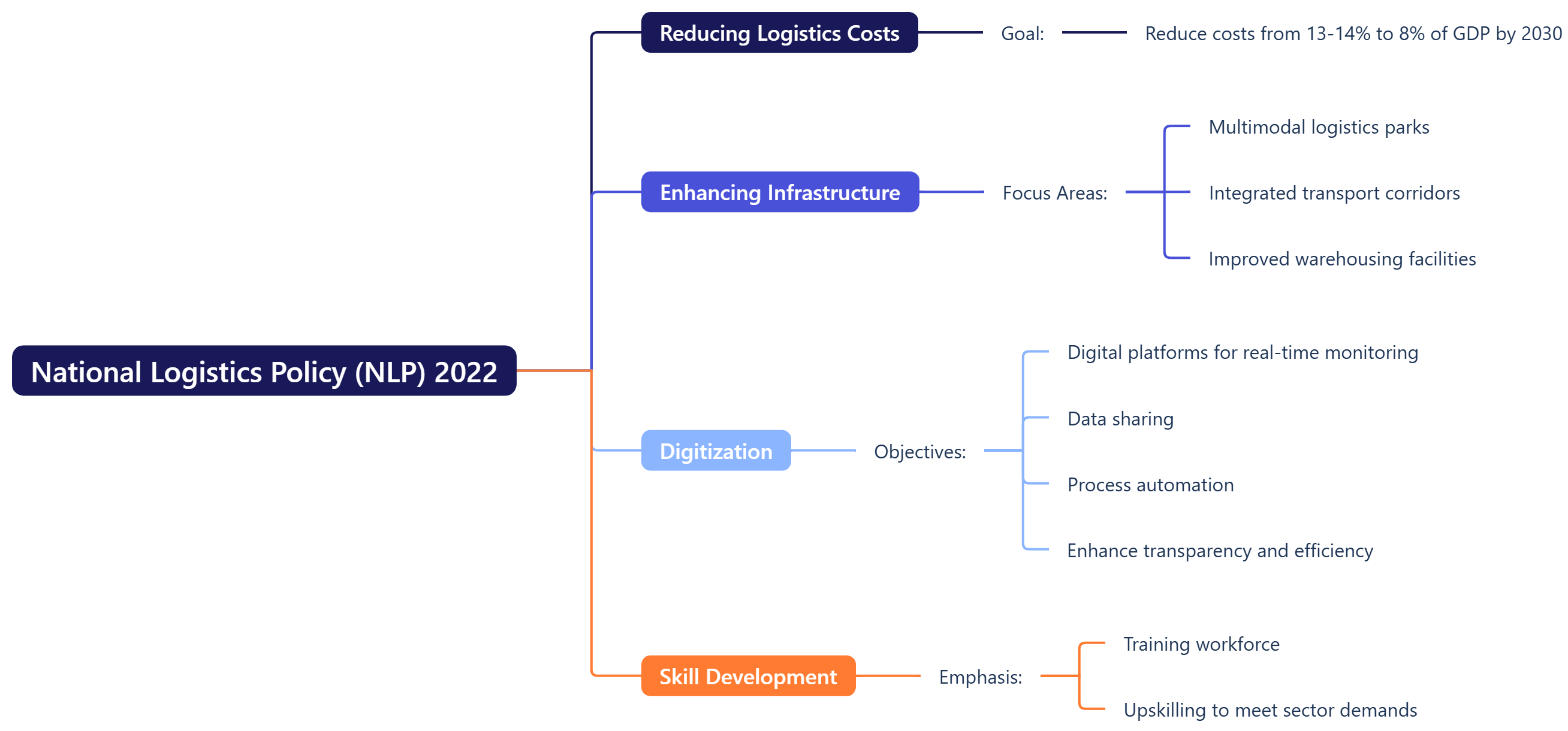
Launched in September 2022, the National Logistics Policy aims to address the aforementioned challenges and streamline logistics operations across the country. Key objectives of the NLP include:
- Reducing Logistics Costs: Targeting a reduction of logistics costs from 13-14% to around 8% of GDP by 2030 .
- Enhancing Infrastructure: Promoting the development of multimodal logistics parks, integrated transport corridors, and improved warehousing facilities.
- Digitization: Implementing digital platforms for real-time monitoring, data sharing, and process automation to enhance transparency and efficiency.
- Skill Development: Focusing on training and upskilling the workforce to meet the evolving demands of the logistics sector.
Recent Developments and Initiatives
- Infrastructure Projects: The Bharatmala Pariyojana aims to construct over 34,800 kilometers of highways, enhancing road connectivity and reducing transportation time .
- Technological Integration: The Unified Logistics Interface Platform (ULIP) facilitates seamless data exchange among various stakeholders, promoting efficiency and reducing paperwork.
- Investment in Warehousing: There is a growing focus on developing Grade A warehousing facilities to meet the demands of organized retail and e-commerce sectors.
Recommendations for Further Improvement
- Promote Multimodal Transportation: Encouraging the use of railways, waterways, and airways alongside road transport can optimize logistics operations and reduce costs.
- Strengthen Public-Private Partnerships: Collaborations between government agencies and private enterprises can drive innovation, investment, and efficiency in the logistics sector.
- Enhance Regulatory Framework: Streamlining regulations and simplifying compliance procedures can facilitate smoother logistics operations and attract foreign investment.
- Focus on Sustainability: Implementing eco-friendly practices, such as the use of electric vehicles and energy-efficient warehouses, can contribute to environmental sustainability.
Conclusion
Reforming India’s logistics sector is crucial for enhancing the country’s economic competitiveness and achieving sustainable growth. The National Logistics Policy, along with ongoing infrastructure and technological initiatives, provides a robust framework for addressing existing challenges. By fostering collaboration, innovation, and investment, India can build a resilient and efficient logistics ecosystem that supports its aspirations of becoming a global economic powerhouse.
|



One comment