

Modernising India Defence
(Relevant for GS paper-3, Defence Technology)
|
As India aspires to become a developed nation by 2047, modernising its defence apparatus is paramount. The year 2025, designated as the “Year of Defence Reforms,” marks a significant stride towards transforming India’s military into a technologically advanced, self-reliant, and globally competitive force. This comprehensive blog delves into the current state of India’s defence sector, highlighting key reforms, challenges, and the path ahead. Defence Budget and AllocationIn the fiscal year 2025-26, India’s defence budget stands at ₹6.81 lakh crore, reflecting a 9.5% increase from the previous year. However, a substantial portion—₹4.7 lakh crore—is allocated to salaries and pensions, leaving only ₹1.8 lakh crore for capital outlay and modernisation. This allocation underscores the pressing need to balance personnel costs with investments in advanced weaponry and infrastructure. Indigenous Defence Production and Exports
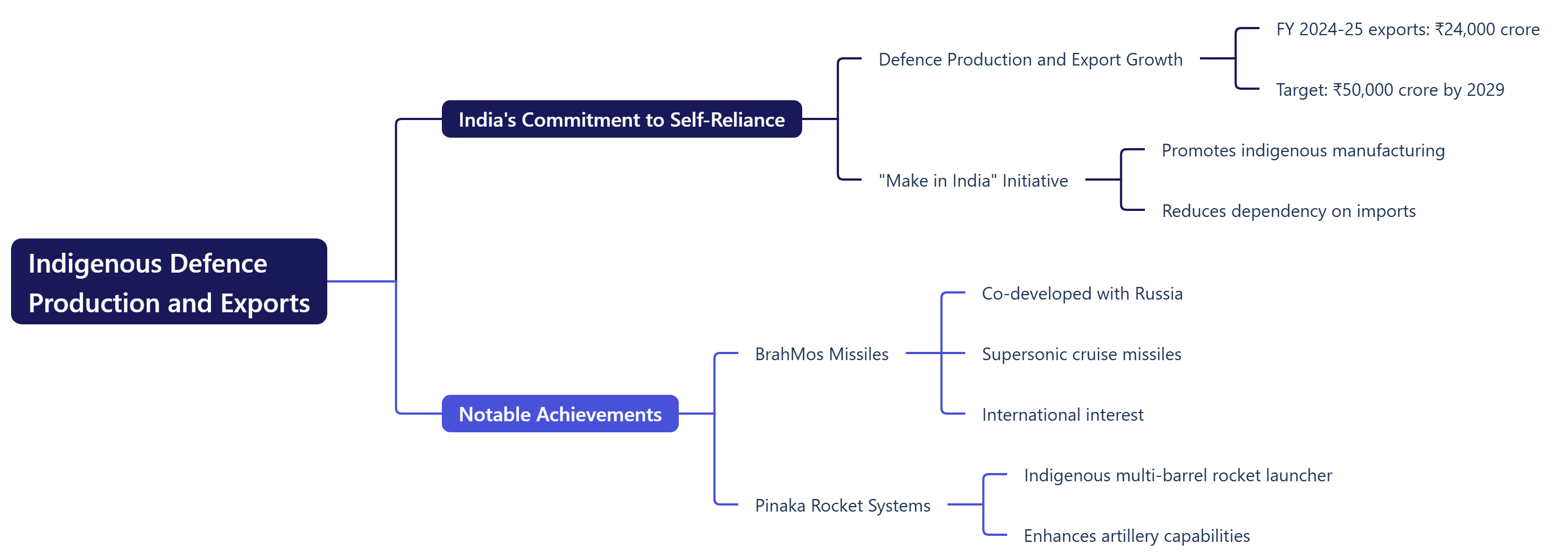
India’s commitment to self-reliance is evident in its burgeoning defence production and export figures. In FY 2024-25, defence exports reached a record ₹24,000 crore, with ambitions to double this to ₹50,000 crore by 2029. The “Make in India” initiative has catalysed this growth, promoting indigenous manufacturing and reducing dependency on imports. Notable achievements include:
Furthermore, India’s defence production value soared to ₹1.26 lakh crore in FY 2023-24, marking a 16.7% growth over the previous year. Strategic Acquisitions and Partnerships
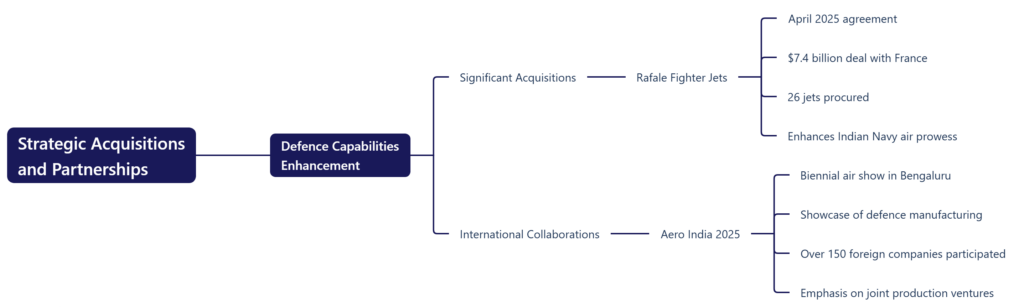
To bolster its defence capabilities, India has engaged in significant acquisitions and international collaborations:
These initiatives not only augment India’s defence arsenal but also foster global partnerships and technological exchange. Embracing Emerging Technologies
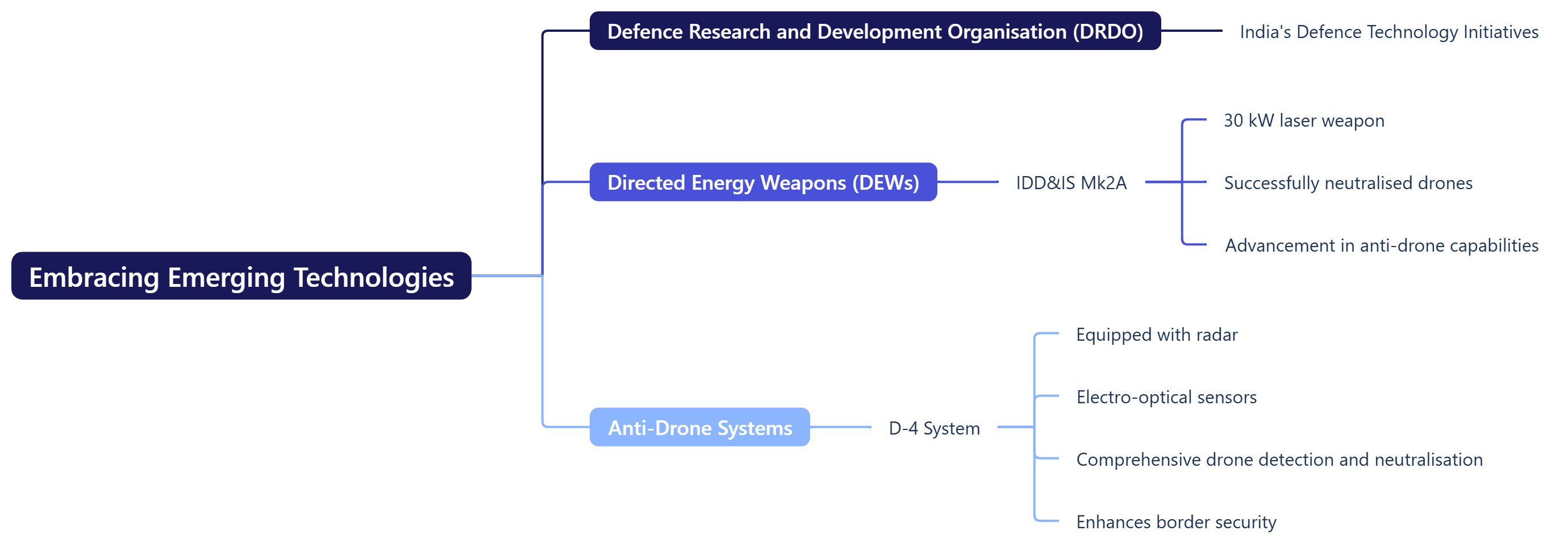
The Defence Research and Development Organisation (DRDO) spearheads India’s foray into cutting-edge defence technologies:
These innovations signify India’s commitment to integrating artificial intelligence, robotics, and cyber capabilities into its defence framework. Structural Reforms and JointnessRecognising the need for cohesive operations, India is advancing towards integrated theatre commands:
Such reforms aim to enhance operational efficiency and readiness in multi-domain warfare scenarios. Challenges and the Road Ahead
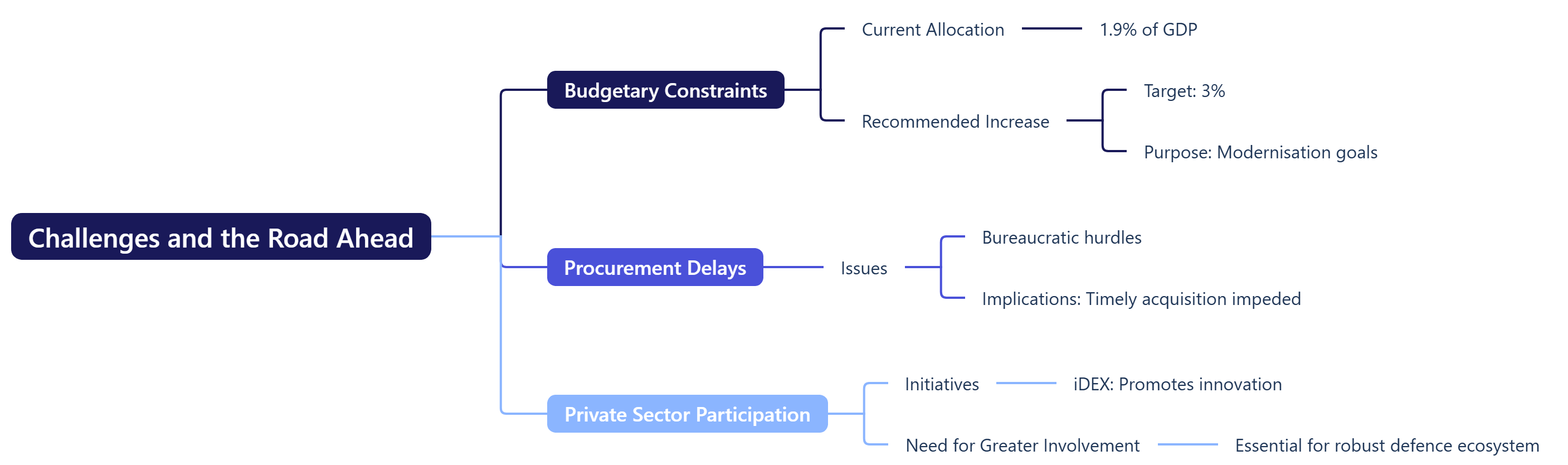
Despite commendable progress, challenges persist:
Addressing these issues requires policy reforms, increased funding, and fostering a conducive environment for public-private partnerships. ConclusionModernising India’s defence is not merely about upgrading weaponry; it’s about building a resilient, self-reliant, and technologically advanced military force. As India strides towards its 2047 vision, a synergistic approach encompassing budgetary support, indigenous innovation, strategic partnerships, and structural reforms is imperative. The “Year of Defence Reforms” in 2025 serves as a pivotal juncture, setting the trajectory for India’s emergence as a global defence powerhouse. |

One comment