
Millets: A Pathway to Sustainable Farming in India
(Relevant for GS paper-3, Agriculture)
|
Millets, often termed “nutri-cereals,” are emerging as a cornerstone in India’s pursuit of sustainable agriculture. These ancient grains, including varieties like jowar (sorghum), bajra (pearl millet), and ragi (finger millet), are gaining renewed attention for their resilience, nutritional value, and adaptability to diverse agro-climatic conditions The Significance of Millets in Sustainable AgricultureMillets are inherently suited for sustainable farming practices. They require minimal water, thrive in arid and semi-arid regions, and are less dependent on chemical fertilizers and pesticides. Their short growing cycle and ability to grow on poor soils make them ideal for resource-constrained farmers, especially in the face of climate change and water scarcity. India’s Position in Global Millet ProductionIndia stands as the world’s largest producer of millets, contributing approximately 40% to global production. States like Rajasthan, Maharashtra, Karnataka, and Madhya Pradesh are leading cultivators, producing significant quantities of jowar, bajra, and ragi. In the 2024-2025 period, India’s millet production is estimated at 11.57 million metric tons, cultivated over 9.2 million hectares, with an average yield of 1.26 tons per hectare . Government Initiatives Promoting Millets
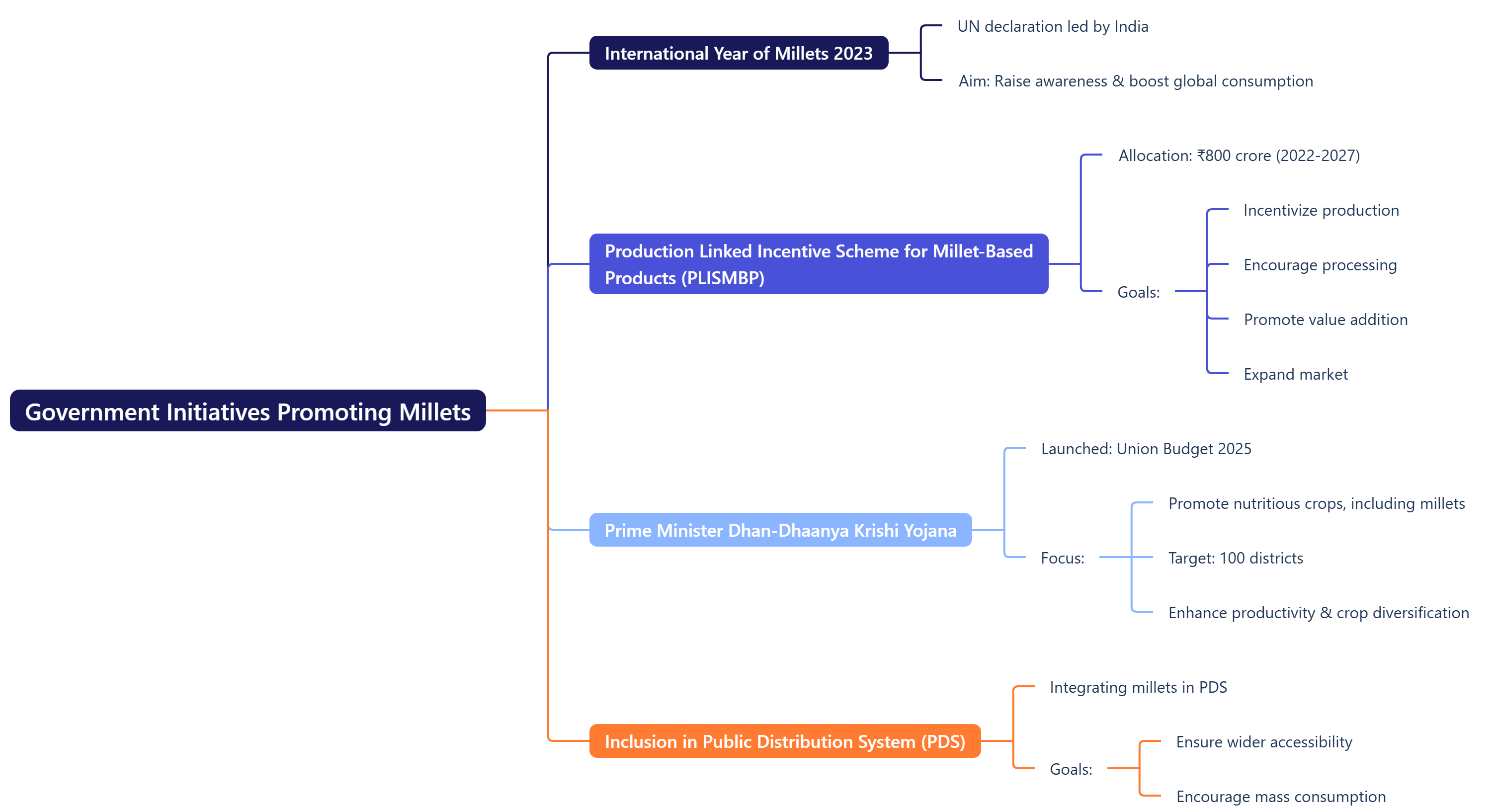
Recognizing the potential of millets, the Indian government has launched several initiatives:
Economic and Nutritional BenefitsMillets are not only environmentally sustainable but also economically beneficial. They offer a cost-effective alternative to water-intensive crops like rice and wheat. Nutritionally, millets are rich in proteins, dietary fiber, vitamins, and minerals, making them essential for combating malnutrition and promoting health. Their gluten-free nature also caters to individuals with specific dietary requirements. Challenges in Millet Promotion
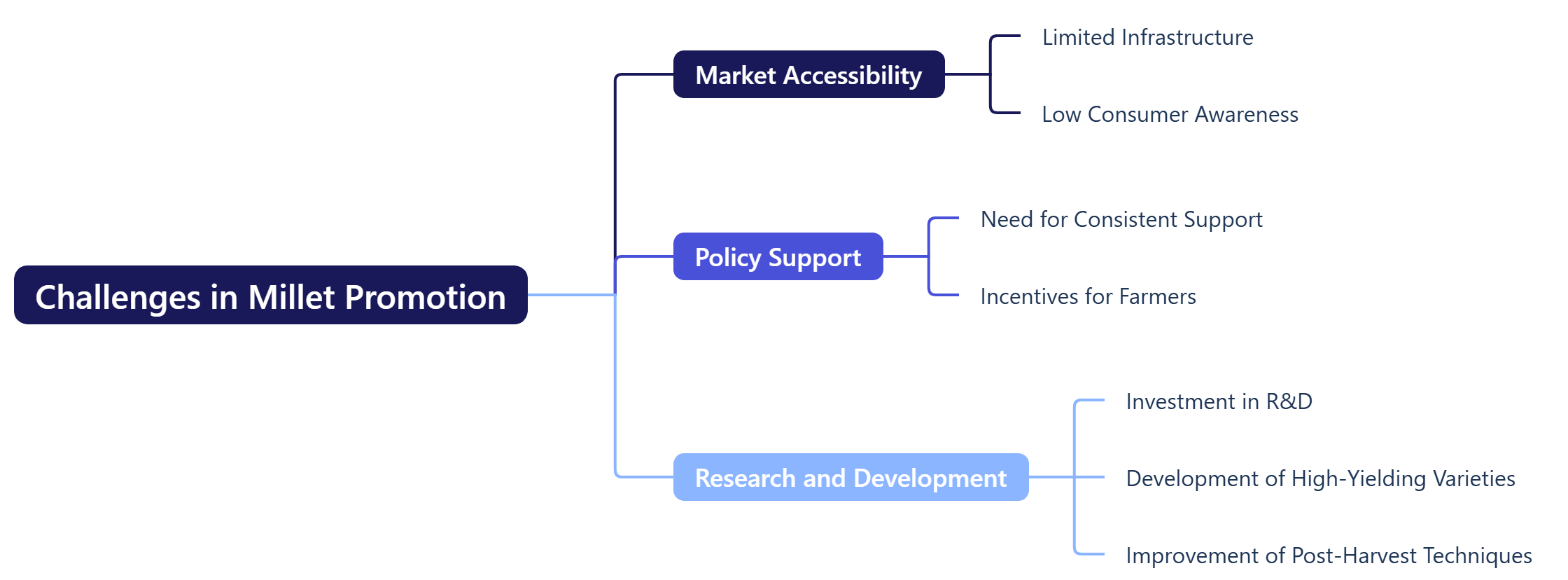
Despite their advantages, millets face challenges:
The Road Ahead
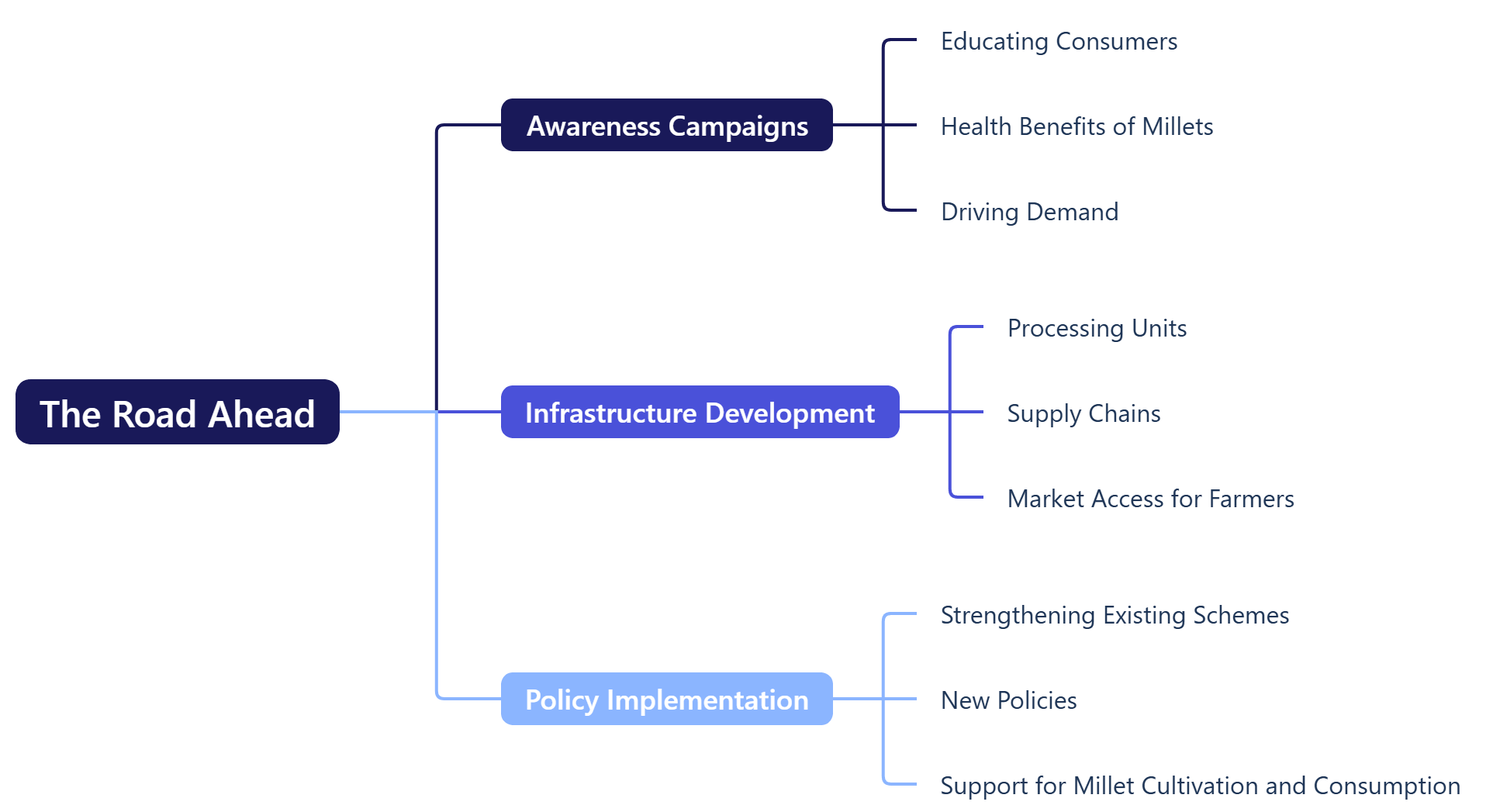
To fully harness the potential of millets, a multi-pronged approach is necessary:
ConclusionMillets hold the promise of a sustainable and nutritious future for India’s agriculture. By addressing existing challenges and leveraging their inherent benefits, millets can play a pivotal role in ensuring food security, promoting health, and achieving environmental sustainability. |

One comment