
Mapping Marginalisation: A Sociological Analysis of India’s First Individual Entitlement Survey for PVTGs
(Relevant for Sociology Paper 1 & Paper 2: Research Methods and Analysis and Tribal Communities in India)
Mapping MarginalisationThe Government of India’s plan to conduct the first-ever Individual Entitlement Survey for Particularly Vulnerable Tribal Groups (PVTGs) is a major administrative step, but beneath its technocratic surface lies a far deeper sociological story. To unpack these complexities, we must examine this initiative through the insights of classical sociologists, anthropologists, critical thinkers, tribal studies scholars, and decolonial theorists. PVTGs: A Category Born Out of Social Perception, Not Just Policy
PVTGs are described as “primitive,” isolated, backward, and technologically simple. These terms reflect deep social attitudes, not merely developmental indicators.
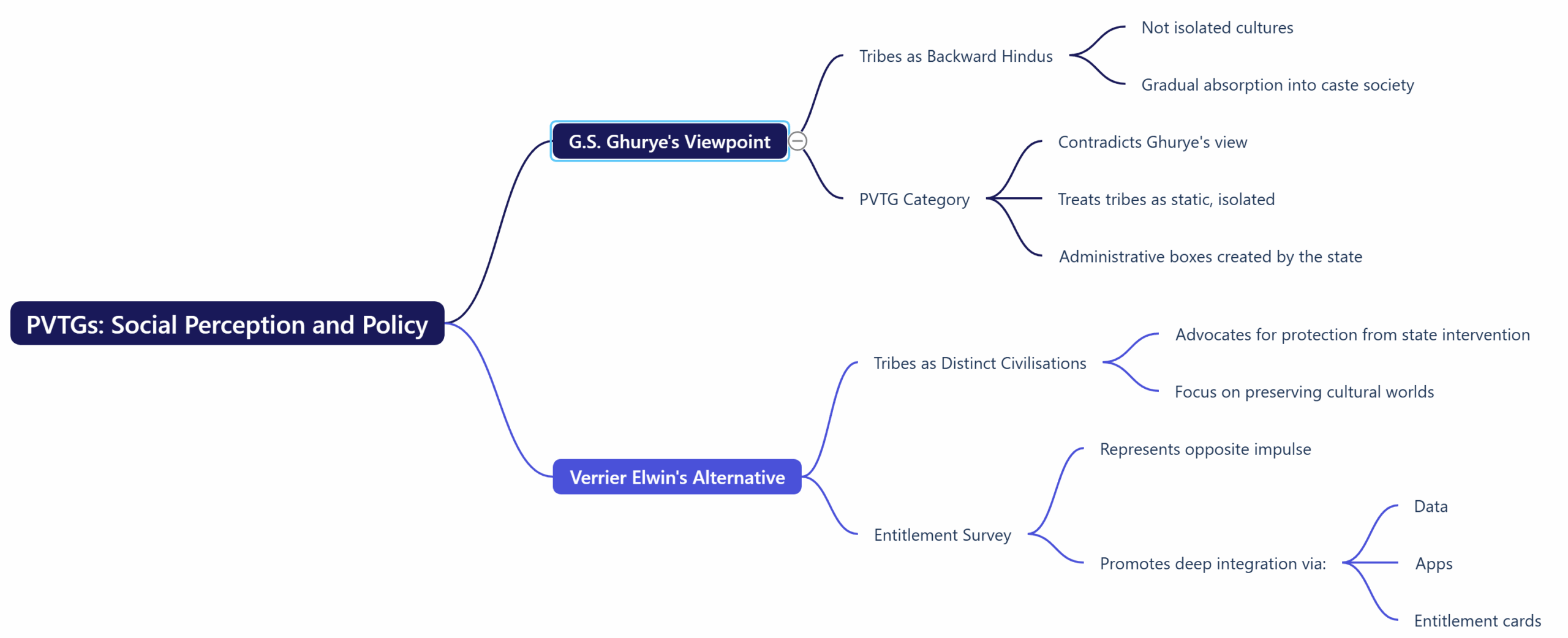
Ghurye argued that Indian tribes are not isolated cultures but “backward Hindus” gradually absorbed into caste society.
Elwin argued PVTGs should be protected from excessive state intervention to preserve their cultural worlds. This tension—assimilation vs. cultural autonomy—has shaped tribal policy for decades. The Survey as a Tool of State Visibility: James C. Scott’s “Seeing Like a State”James C. Scott famously argued that states seek to make populations legible—counted, measured, classified—so they can govern them. Scott’s viewpoint applied:
This can empower them—but it also expands state authority into spaces once governed by customary norms. State visibility can both uplift and discipline. Distribution of Schemes and Inequality: Bourdieu’s “Forms of Capital”The survey tracks access to 39 schemes—from MGNREGA to pensions to scholarships.
Bourdieu’s viewpoint applied: The survey acknowledges the gap—but does not automatically correct the social inequalities underneath. Administrative Expansion into Tribal Life: Weber’s “Rational-Bureaucratic Authority”Max Weber argued that modern states extend control through rational, rule-bound bureaucracy.
Weber’s viewpoint applied: For PVTGs, who rely on oral traditions and community-based decision-making, the bureaucratic mode may feel alien. Cultural Survival vs. Development: Marshall Sahlins’ “Original Affluent Society”Sahlins showed that small, hunting-gathering communities often live with more leisure, stability, and ecological harmony than modern industrial populations. Sahlins’ viewpoint applied:
Development schemes may disrupt these systems. State Power in the Name of Welfare: Foucault’s “Governmentality”Michel Foucault argued that modern states exercise power not through force but through welfare, surveillance, and classification. Foucault’s viewpoint applied:
This is disciplinary power wrapped in benevolence. Tribal Identity, Resistance, and Modernity: The Indian Sociological Lens
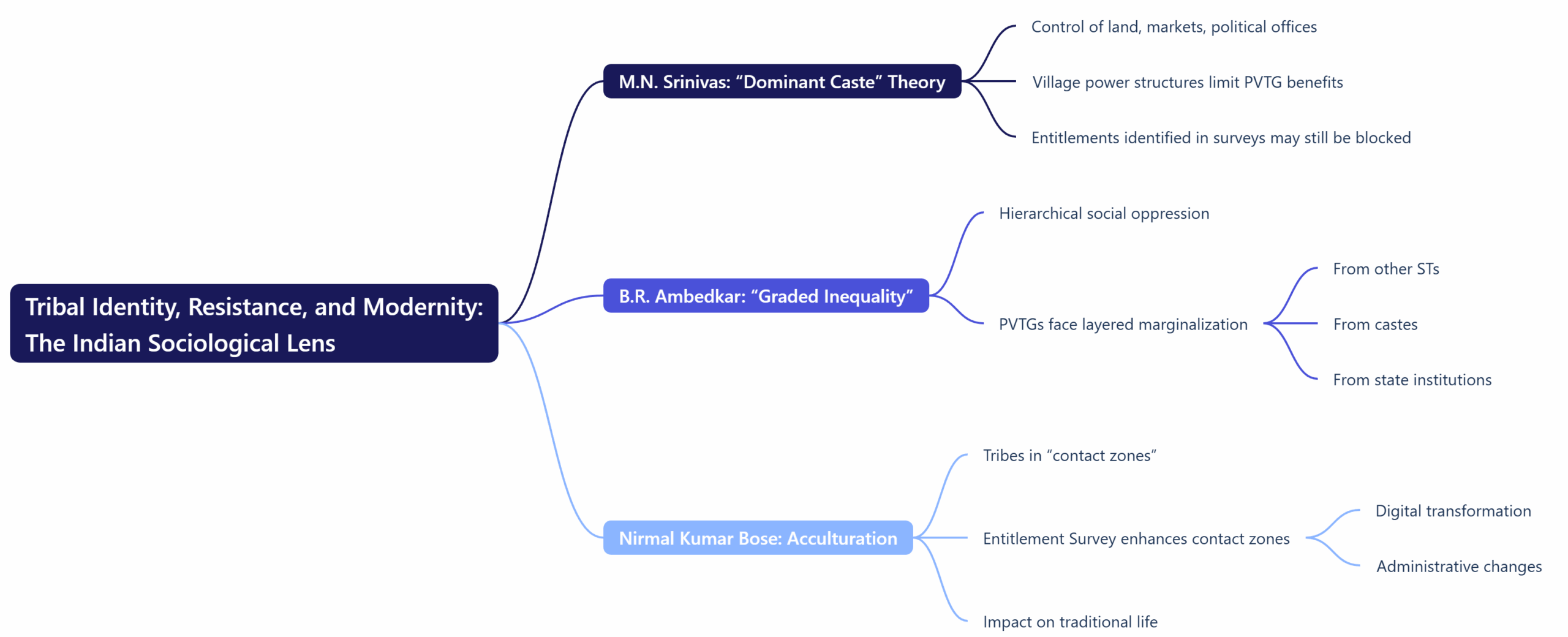
In tribal regions, dominant caste groups often control land, markets, and political offices.
Ambedkar’s idea of hierarchical social oppression applies to PVTGs too—they face layered marginalisation from other STs, castes, and state institutions.
Bose argued that tribes live in “contact zones.” The Universal Entitlement Card: Polanyi’s “Disembedded Economy”Karl Polanyi argued that markets and state systems often “disembed” individuals from social relations. Polanyi’s viewpoint applied: Scope and Scale: A Durkheimian View of Social IntegrationDurkheim believed societies must integrate marginal groups into the collective conscience. But Durkheim warned that forced integration without respecting cultural rhythms can produce anomie. The challenge is to integrate without erasing distinctiveness. Tribal Development Missions: Postcolonial and Subaltern PerspectivesGail Omvedt’s View: Adivasi resistance is a political struggle, not a welfare issue. Development missions often treat PVTGs as passive recipients rather than political agents. Ranajit Guha: Subalternity Tribal voices remain unheard in policymaking. Amartya Sen: Capability Expansion Schemes should enhance capabilities—education, health, agency—not just distribute goods. What a Sociologically Sensitive Policy Must Consider
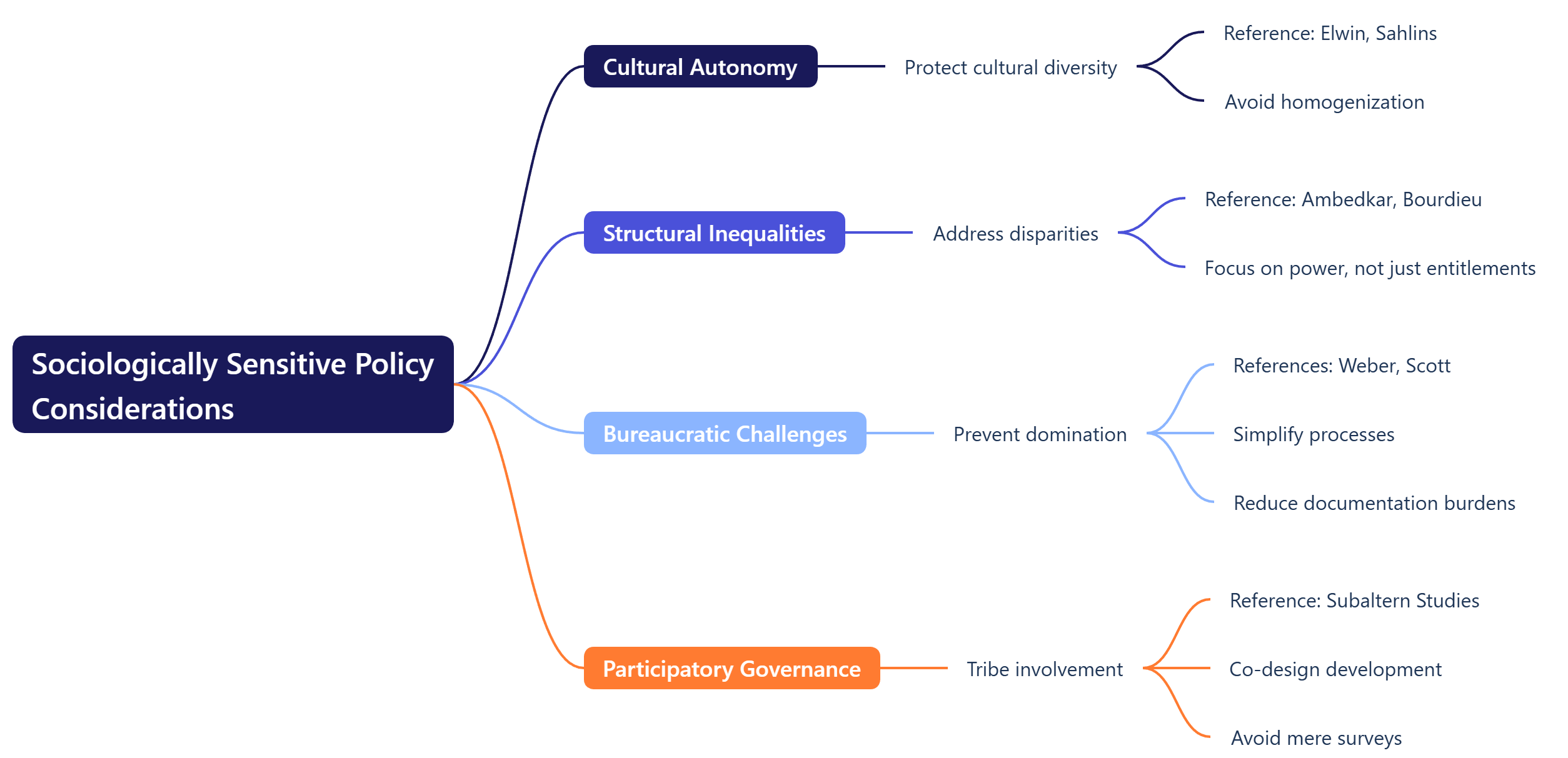
Development should not homogenise.
More than entitlements, PVTGs need power.
Simplify processes; reduce documentation burdens.
Tribes must co-design development, not merely be surveyed. Conclusion: Beyond Enumeration, Toward JusticeThe Individual Entitlement Survey is a landmark step—but it is also a moment to reflect. This initiative marks a shift from tribal invisibility to administrative visibility, but sociology warns us that visibility brings both rights and control. A truly just tribal policy must blend ,the state’s welfare responsibility.the tribe’s cultural autonomy and the community’s voice in governance.Only then can India avoid turning welfare into another instrument of domination and truly uplift PVTGs as equal partners in development. |
To Read more topics, visit: www.triumphias.com/blogs
You always manage to explain things so clearly and effectively. This post was full of insights that I’ll definitely keep in mind. Keep doing what you do best!