Introduction
In the age of hyper-connectivity, humans are paradoxically becoming more isolated. The loneliness epidemic has emerged as a major public health and sociological concern globally, including in India. From urban professionals to elderly citizens, rising numbers report chronic feelings of loneliness despite being digitally connected. For UPSC aspirants, understanding this issue is crucial as it lies at the intersection of sociology, health, and public policy.
Understanding Loneliness as a Sociological Phenomenon
Loneliness is not merely a psychological issue but a social construct shaped by cultural, structural, and technological factors. The sociology of loneliness explores how changes in family structures, work patterns, urbanization, and digital technologies are reconfiguring human relationships.
Key Sociological Drivers of the Loneliness Epidemic
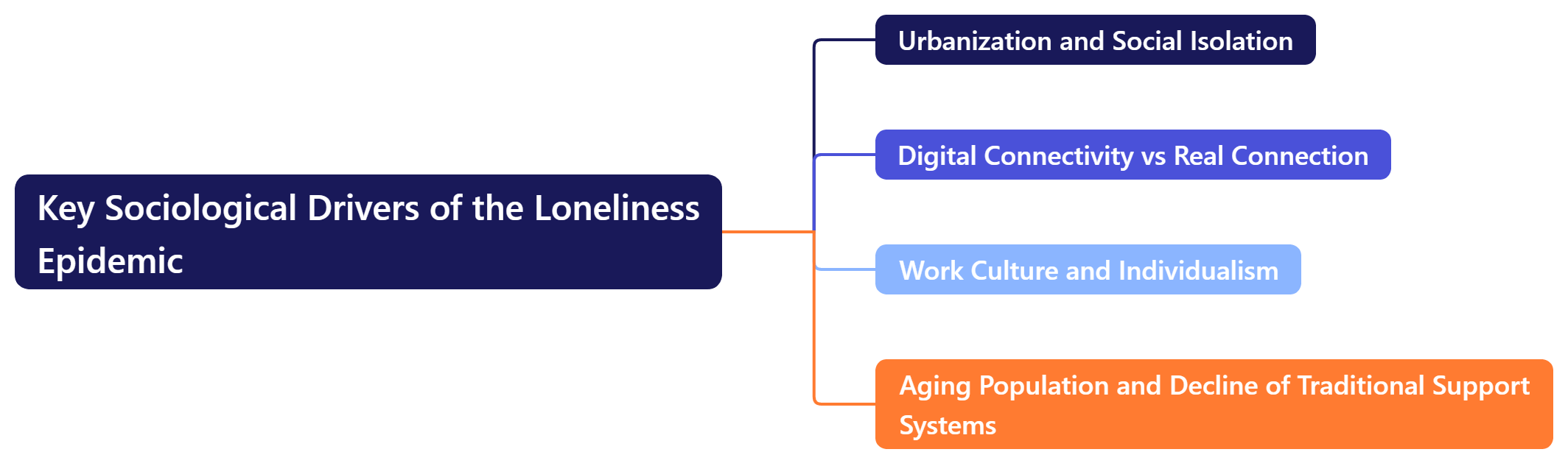
- Urbanization and Social Isolation: Urbanization has led to the breakdown of joint families and the rise of nuclear units and solitary lifestyles. In overcrowded cities and gated communities, people live in physical proximity but lack emotional connection, weakening traditional community bonds and increasing emotional detachment.
- Digital Connectivity vs Real Connection: While social media promises connection, it often results in superficial, performative relationships. As Sherry Turkle American sociologist notes, we are “alone together” — constantly online, yet emotionally unfulfilled. Virtual interactions lack the depth and warmth of face-to-face relationships, worsening loneliness.
- Work Culture and Individualism: The gig economy and neoliberal work culture promote competition and individualism. With reduced leisure time, long work hours, and job insecurity, individuals are deprived of opportunities for meaningful social engagement, further deepening their sense of isolation.
- Aging Population and Decline of Traditional Support Systems: India’s aging population is increasingly facing emotional neglect, particularly as joint family systems erode. Institutional care homes often lack the emotional intimacy of family life, leaving the elderly vulnerable to social alienation and psychological distress.
Sociological Analysis
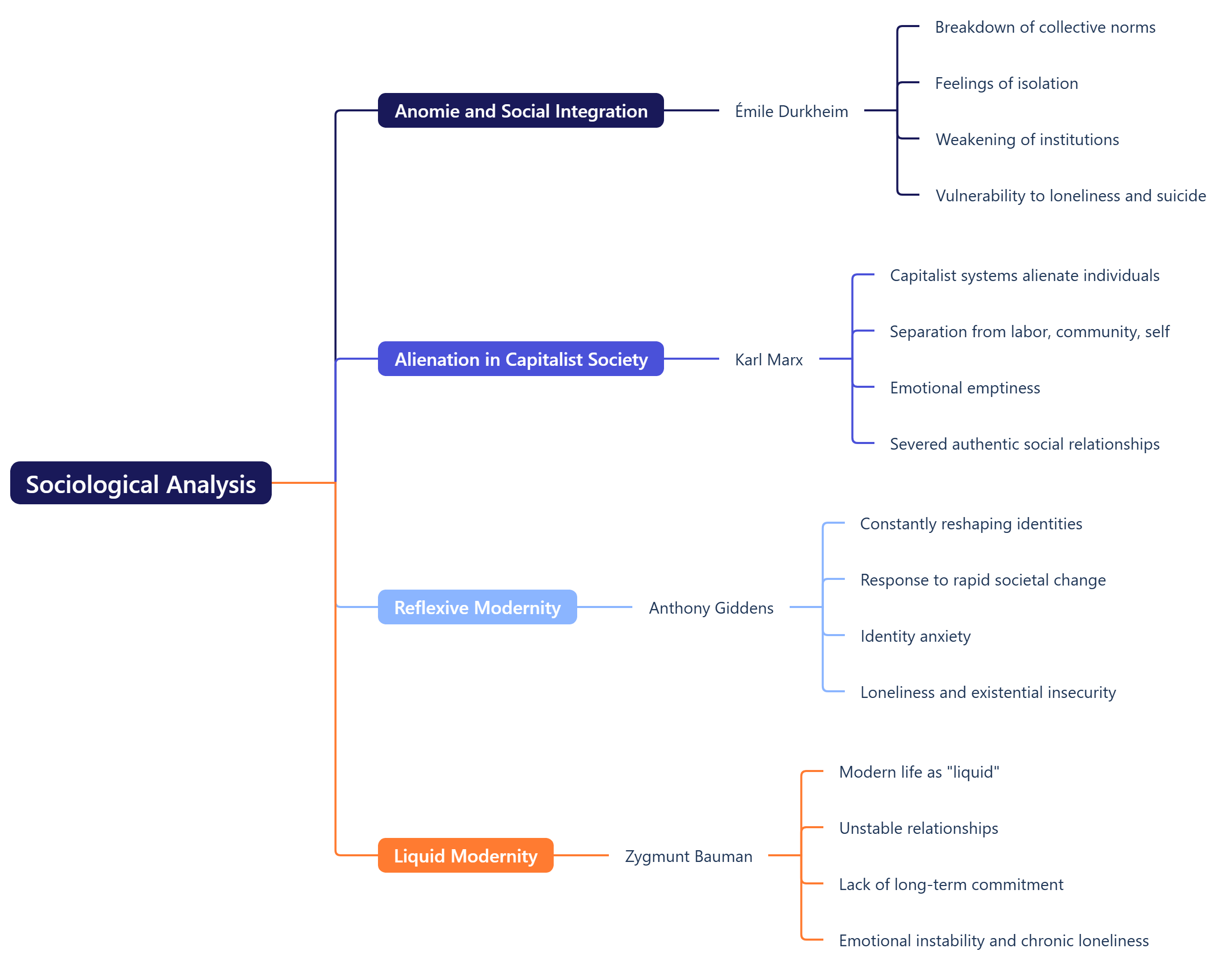
- Anomie and Social Integration: Émile Durkheim emphasized that in modern societies, the breakdown of collective norms (anomie) leads to feelings of isolation. As institutions weaken, individuals feel rootless and socially adrift, increasing their vulnerability to loneliness and even suicide.
- Alienation in Capitalist Society: Karl Marx argued that capitalist systems alienate individuals from their labor, community, and sense of self. This structural alienation in modern economies breeds emotional emptiness, severing people from authentic social relationships.
- Reflexive Modernity: Anthony Giddens’ theory of reflexive modernity highlights how people constantly reshape their identities in response to rapid societal change. This self-monitoring and identity anxiety in uncertain environments often results in loneliness and existential insecurity.
- Liquid Modernity: Zygmunt Bauman describes modern life as “liquid,” where relationships lack stability and long-term commitment. This transience leads to emotional instability and chronic loneliness as people find it difficult to form lasting social bonds.
Real-Life Indicators in India
- Census 2011 recorded over 15 million single-member households in India.
- Mental health surveys reveal rising loneliness among students and professionals.
- COVID-19 pandemic aggravated isolation, especially among migrants and elderly.
Policy Responses and Interventions
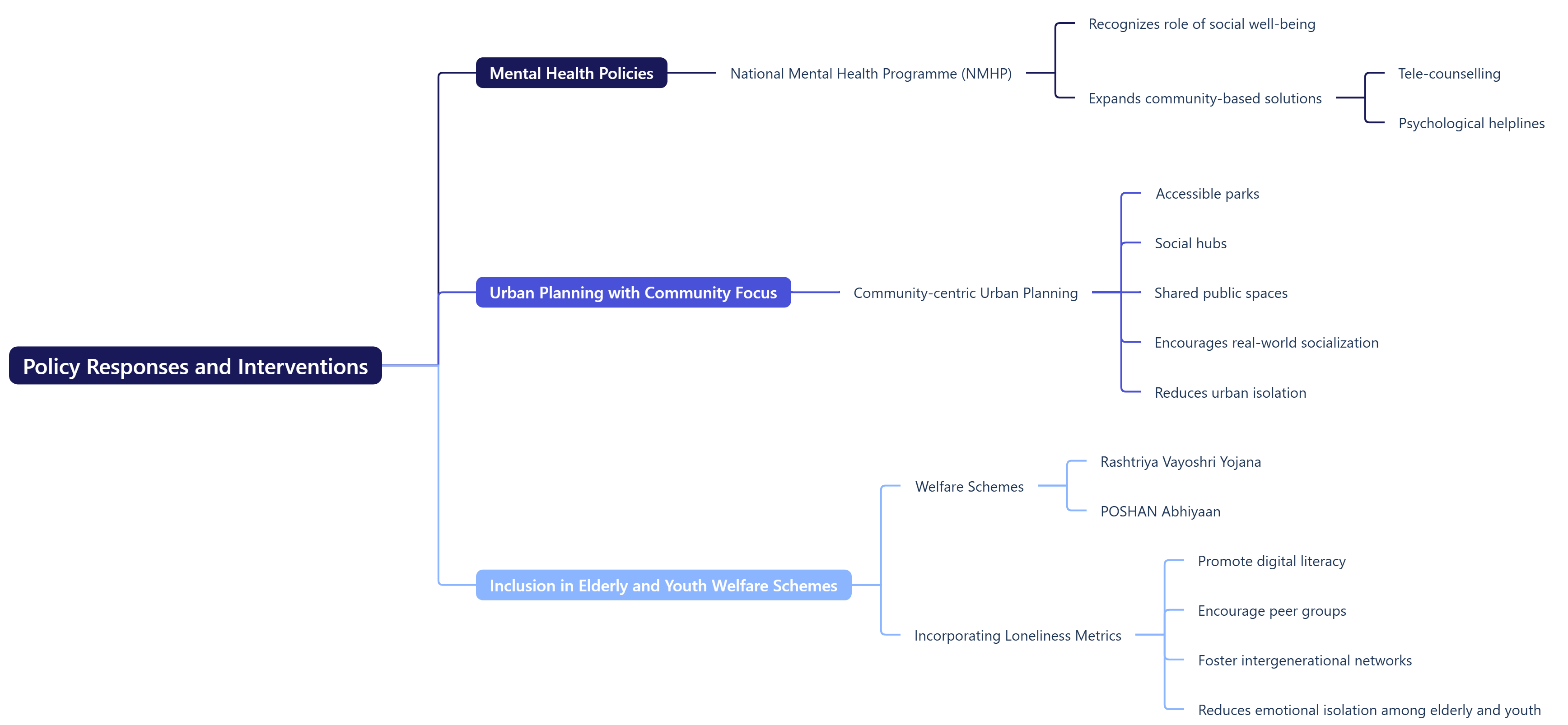
- Mental Health Policies: India’s National Mental Health Programme (NMHP) has begun recognizing the role of social well-being. Community-based solutions like tele-counselling and psychological helplines are being expanded to support emotionally distressed individuals.
- Urban Planning with Community Focus: Reimagining cities with community-centric urban planning—through accessible parks, social hubs, and shared public spaces—can encourage real-world socialization and rebuild community ties, reducing urban isolation.
- Inclusion in Elderly and Youth Welfare Schemes: Welfare schemes like Rashtriya Vayoshri Yojana and POSHAN Abhiyaan should incorporate loneliness metrics. Promoting digital literacy, peer groups, and intergenerational networks can reduce emotional isolation among the elderly and youth.
Conclusion
The loneliness epidemic is not a personal failing but a systemic outcome of modern sociocultural structures. As India modernizes, the challenge is to balance technological progress with emotional and social well-being. For UPSC aspirants, understanding this issue is vital to envisioning inclusive and compassionate policy frameworks.
PYQs
Paper 1
- What are the consequences of the breakdown of traditional social institutions in modern societies? (2015)
- Discuss the concept of anomie. How does it explain deviant behavior in modern society? (2016)
- Explain Marx’s theory of alienation. Is it still relevant in the context of contemporary capitalism? (2017)
- What is meant by ‘reflexivity’ in the context of modernity? Discuss with reference to Giddens’ perspective. (2018)
- How does urbanization lead to social disorganization? Illustrate with suitable examples. (2020)
- Critically examine Zygmunt Bauman’s concept of ‘liquid modernity’. (2022)
Paper 2
- Discuss the problems of the elderly in India. How is modernization affecting their status? (2015)
- Examine the impact of urbanization on the institution of family in India. (2016)
- Examine the changing nature of kinship in the context of increasing mobility and individualism in Indian society. (2018)
- Explain the implications of changing work culture and employment patterns on social life in India. (2019)
- How has the COVID-19 pandemic highlighted inequality in the Indian society? (2021)
- Discuss how digital technologies are transforming social relationships in India. (2022)
|


One comment