
Job Creation and National Security: The Interlinked Imperatives
(Relevant for GS paper-3, Economic Growth and National Security)
IntroductionNational security is often viewed purely through the lens of military strength and border defence. However, in today’s complex world, security depends equally on economic stability, social cohesion, and public well-being. Job creation lies at the heart of these pillars. Unemployment not only hinders a country’s growth but can also sow the seeds of social unrest, extremism, and vulnerability to security threats. Hence, creating productive and dignified jobs is more than an economic goal; it is a strategic imperative for national security. The Link between Employment and Security
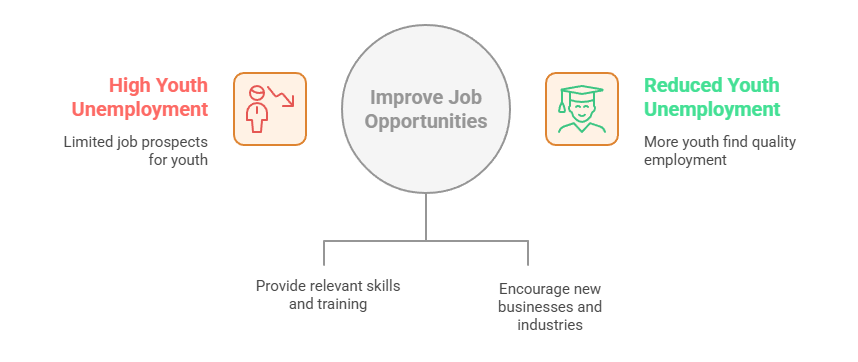
Economic instability often breeds insecurity. Studies by the International Labour Organization (ILO) and the World Bank have shown a direct correlation between unemployment and increased rates of crime and radicalization. A disenfranchised youth bulge — one with limited job prospects — can become an easy target for extremist narratives. In India, where over 65% of the population is under the age of 35, the demographic dividend can quickly turn into a demographic disaster if youth aspirations for quality employment remain unfulfilled. According to the Periodic Labour Force Survey (PLFS) 2022–23, India’s overall unemployment rate stood at 3.2%, but youth unemployment remains high at 12.9% for the 15-29 age group. Insurgency, Extremism, and UnemploymentRegions facing unemployment, poverty, and marginalization have historically been more prone to insurgencies and left-wing extremism (LWE). The Ministry of Home Affairs’ reports highlight that Naxalite-affected districts overlap considerably with areas of chronic poverty and lack of job opportunities. As per data from the MHA’s Annual Report (2022-23), LWE incidents have declined by 76% since 2010 — a success attributed partly to robust security operations and partly to better implementation of schemes like MGNREGA and Skill India that generate rural and semi-skilled employment. Targeted employment schemes like the Aspirational Districts Programme aim to promote growth and create sustainable livelihoods in these conflict-prone areas, curbing the influence of extremist elements. Role of Job Creation in Internal StabilityStable societies require stable incomes. When citizens can support their families through gainful employment, their stake in preserving law and order rises. Government initiatives like Make in India, the Production-Linked Incentive (PLI) scheme, and Start-up India have fostered a domestic manufacturing and entrepreneurship ecosystem that aims to create millions of new jobs — especially in labor-intensive sectors like textiles, electronics, food processing, and green energy. The PLI scheme alone has attracted over ₹2.7 lakh crore in investments across 14 key sectors as of 2024 and is projected to generate around 60 lakh direct and indirect jobs in the coming five years. Increased industrialization is key to sustaining not only economic prosperity but also preventing disillusionment that could fuel unrest. National Security and Youth Engagement
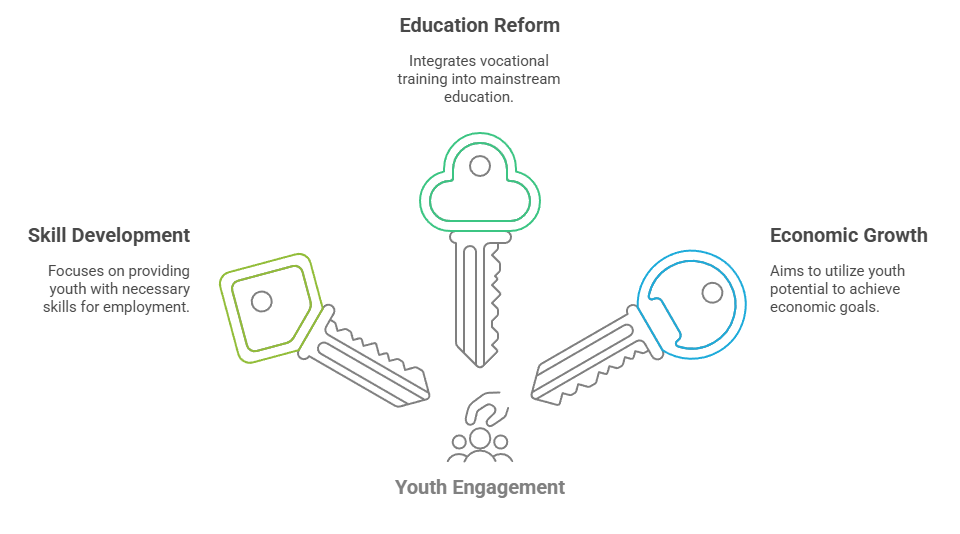
A disengaged youth population is a liability. Recent incidents of communal violence and cybercrimes involving youth highlight the risks of idle youth populations. India’s aspirations to become a Vishwaguru and a $5 trillion economy cannot be achieved without putting youth to productive use. Schemes like PM-Kaushal Vikas Yojana (PMKVY) have provided skill training to over 1.5 crore youth since its inception. This skilling initiative aims to bridge the skill gap that often fuels unemployment. Encouragingly, the National Education Policy (NEP) 2020 integrates vocational education into mainstream schooling to ensure that youth become employable upon graduation, mitigating jobless growth risks that cause unrest. Border Security and EmploymentA unique but crucial angle is the role of local employment in enhancing border security. Residents of border villages act as the first line of defense and intelligence gatherers against infiltration and cross-border smuggling. Recognizing this, the Vibrant Villages Programme (VVP) was introduced in the Union Budget 2022-23, with an allocation of ₹4,800 crore for improving infrastructure, creating tourism-based livelihoods, and boosting local economies. Providing sustainable incomes to border populations reduces migration and builds resilience against anti-India propaganda that exploits economic hardships in these sensitive zones. Job Creation and CybersecurityThe nature of security threats has evolved. The National Crime Records Bureau (NCRB) indicates a sharp rise in cybercrime cases — India witnessed 65,893 cybercrime cases in 2022 alone. Many cyber-offenders originate from economically backward areas, enticed into cyber fraud networks due to lack of opportunities. Promoting robust skill development in cybersecurity, IT, and other digital domains can help absorb this idle talent into mainstream roles. The Data Protection Act 2023 and the push toward a Digital India make skilled youth vital assets — both as cybersecurity professionals and entrepreneurs capable of innovating against cyber threats. Gender and Job Creation: Impact on SecurityGender-inclusive employment also plays a part in ensuring a secure society. Rising female labor force participation — which, according to PLFS 2022-23, stood at 37% — empowers women economically and socially. Increased female participation reduces vulnerabilities that come with poverty, trafficking, and exploitation. It also enhances household incomes, improving education and health outcomes that reduce generational cycles of poverty and instability. Policy Measures and Way Forward
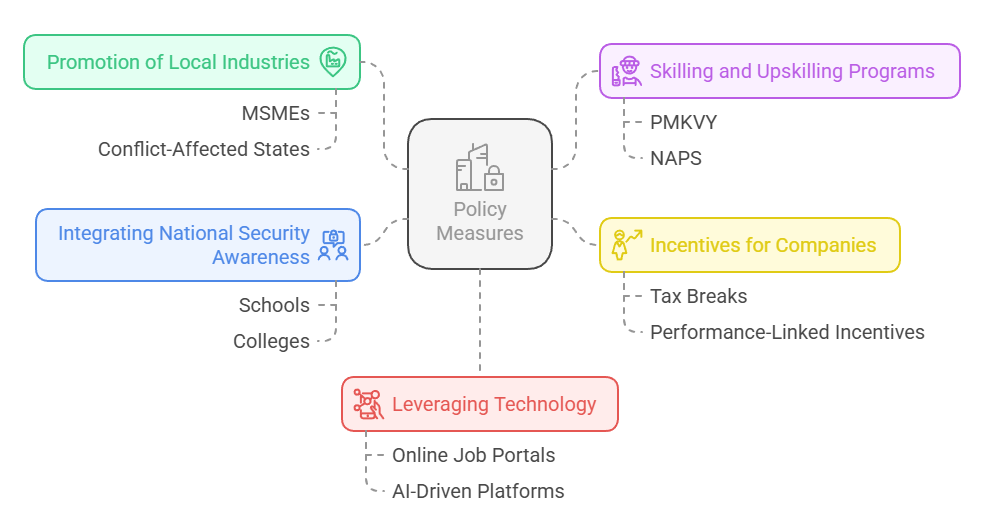
To strengthen the link between job creation and national security, the following policy measures deserve attention:
ConclusionEmployment generation and national security are inextricably intertwined. When youth are productively engaged and communities economically stable, a nation not only grows faster but also shields itself against internal strife and external threats. In the contemporary era of hybrid warfare, cyber threats, and social media-driven radicalization, a secure nation cannot be built on guns and gates alone — it must be built on jobs, hopes, and opportunities. Hence, sustained job creation is not merely an economic policy objective; it is a cornerstone of India’s national security strategy and its future as a stable, strong global power. |

To Read more topics, visit: www.triumphias.com/blogs
2 comments