

Internal Migration and Its Influence on Demographic Patterns in India
(Relevant for Sociology Paper I: Social Change in Modern Society and Sociology Paper II: Rural and Agrarian Transformation in India; Population Dynamics)
IntroductionInternal migration in India is a dynamic and complex process with profound implications for demographic patterns, urbanization trends, labor distribution, and social transformation. According to the Census 2011, over 45 crore Indians were internal migrants — a number that has undoubtedly grown in the past decade. With rapid urbanization, economic liberalization, and regional disparities, migration has become a critical factor influencing population distribution and the demographic profile of both rural and urban areas. This blog delves into the sociological impact of internal migration on demographic patterns, such as rural-urban migration, demographic transition, urban slums, seasonal migration, circular migration, and migrant labor in India. We also integrate sociological theories to analyze how migration reshapes family structures, social identities, and urban societies. What is Internal Migration?Internal migration refers to the movement of people within national boundaries, often from rural to urban areas, or across states for employment, education, marriage, or survival. It is broadly classified into:
Each type carries unique demographic consequences, particularly in India’s context where economic inequality, agricultural distress, and regional imbalance drive large-scale mobility. Demographic Impacts of Internal Migration in India
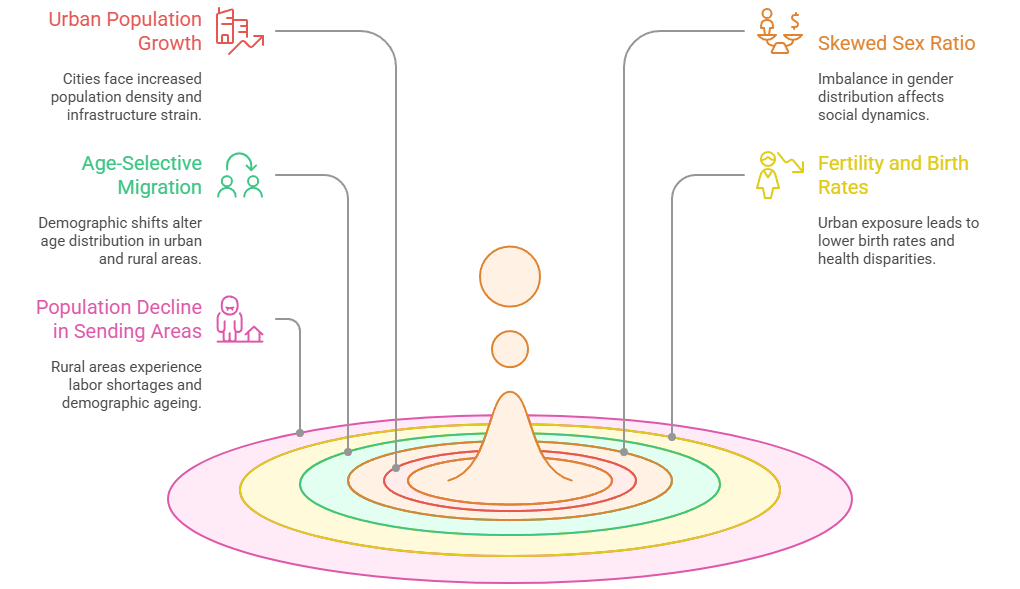
Internal migration significantly boosts urban population growth, especially in metropolitan cities like Delhi, Mumbai, and Bengaluru. Migrants seeking jobs and better living standards add to the population load, contributing to urban sprawl, rising slums, traffic congestion, and pressure on civic amenities such as water, sanitation, housing, and transportation.
Migration often leads to a gender imbalance, particularly where male-dominated labor migration is common. This masculinization of urban labor markets results in distorted sex ratios, while rural areas left behind by men often witness a feminization of agriculture and household roles.
Most internal migrants belong to the youth age group (15–35 years), which leads to a demographic shift. Urban areas gain a younger, more economically active population, while rural regions see a higher proportion of elderly dependents and children, altering dependency ratios and affecting productivity.
Migrants adapt to urban fertility norms, leading to declining birth rates among them. Urban exposure increases contraceptive use and family planning. However, lack of healthcare access in slums results in high maternal and infant mortality, creating uneven health outcomes despite reduced fertility.
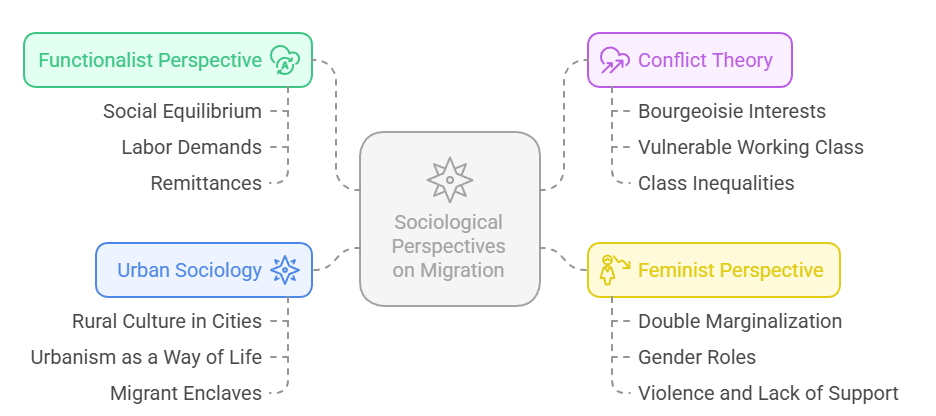
Villages and small towns face population decline due to out-migration. This results in abandoned agricultural lands, labor shortages, and demographic ageing. The social burden falls on women, elderly, and children, who are often left behind, transforming rural household dynamics. Sociological Analysis
Policy Implications and Challenges
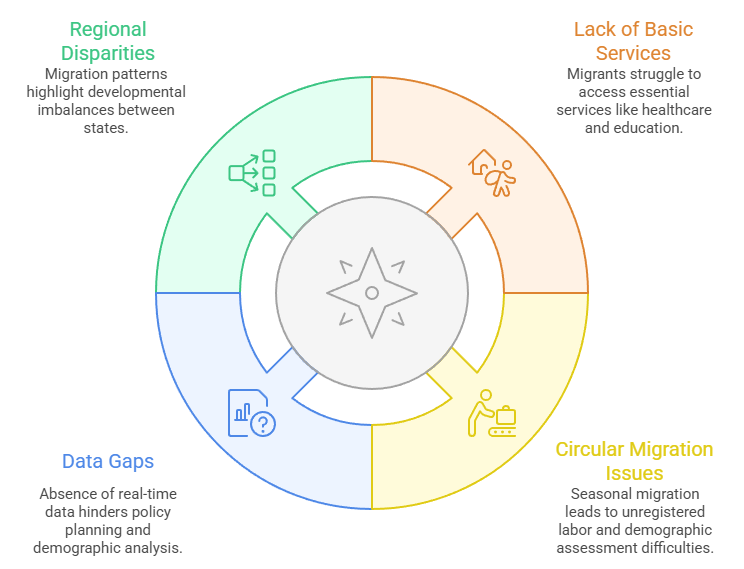
Despite contributing to the economy, internal migrants often lack access to:
This exclusion exacerbates intergenerational poverty and hinders demographic development.
Seasonal migration leads to unregistered and unregulated labor, making it difficult to assess true demographic shifts or plan welfare distribution. The COVID-19 pandemic exposed the fragility of migrant lives, forcing reverse migration and re-emphasizing the need for portable social security.
There is a lack of real-time data on internal migration. The Census 2021 delay and underutilization of e-Shram portal data affect policy planning and demographic analysis.
Migration highlights deep-rooted developmental imbalances — states like Kerala, Maharashtra, Delhi, Gujarat attract migrants, while Bihar, Jharkhand, Uttar Pradesh, Odisha remain sending states, leading to asymmetric demographic shifts. Government Initiatives for Migrants
These initiatives aim to integrate migrant populations into urban demography while maintaining links to rural roots. ConclusionInternal migration is a demographic force reshaping India’s urban and rural landscapes. It not only changes population distribution, but also influences family structures, gender roles, labor markets, and social identities. A nuanced sociological understanding of migration helps identify structural inequalities, cultural shifts, and policy gaps that need to be addressed to ensure inclusive demographic development. Internal migration offers a rich topic that intersects with population studies, rural-urban divide, informal economy, social justice, gender inequality, and development policies. As India moves forward, recognizing the demographic dividends and challenges of internal migration is essential for planning a balanced and equitable society. Previous Year QuestionsPaper 1
Paper 2
|
To Read more topics, visit: www.triumphias.com/blogs
One comment