Introduction
Inter-caste marriages in India have always been at the epicenter of debates around social integration, equality, and the fight against the deeply rooted caste system. The Dr. Ambedkar Scheme for Social Integration through Intercaste Marriage, launched in 2013, aimed to incentivize such unions and promote the annihilation of caste as advocated by Dr. B.R. Ambedkar himself. However, recent developments—including the discontinuation and merger of the scheme—have raised critical concerns about the government’s commitment to fostering genuine social change.
What Was the Intercaste Marriage Scheme?
The Dr. Ambedkar Scheme was a central government initiative to support and encourage inter-caste marriages, particularly those involving Scheduled Castes (SC). Under the scheme, eligible couples were entitled to receive a financial incentive of Rs. 2.5 lakh, disbursed in installments over five years. Its objective was not only to provide financial support but also to act as a preventive social policy against caste-based violence, “honour” killings, and discrimination.
However, the scheme has now been quietly discontinued, merged with broader schemes meant for SC/ST welfare, causing confusion and dismay among social activists and beneficiaries.
Why Did the Scheme Fail?
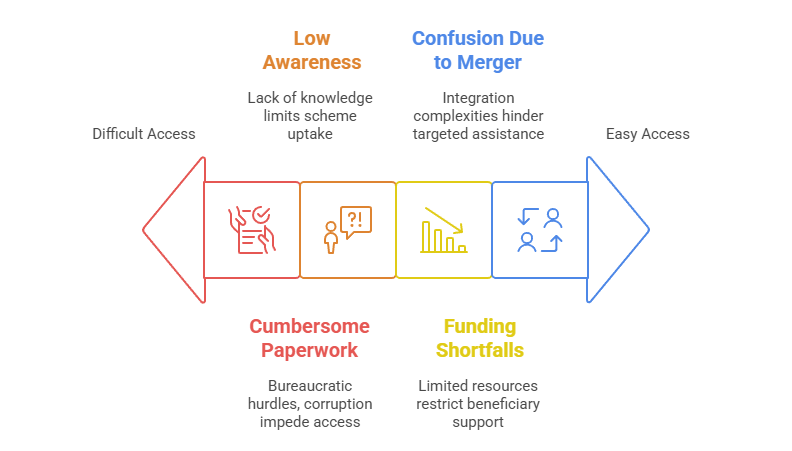
Despite noble intentions, the implementation of the scheme was marred by bureaucratic hurdles, lack of awareness, and systemic corruption:
- Cumbersome paperwork and delays: Over 83% of beneficiaries (IIPA Study) faced difficulties due to lengthy verification processes, unhelpful officials, and even demands for bribes.
- Low awareness and outreach: Very few couples even knew about the scheme or how to access it.
- Funding shortfalls: The number of couples supported was always below target, and funding dwindled over the years.
- Confusion due to Merger: The recent merger of the scheme with other SC/ST welfare schemes has made it even harder for couples to access targeted support.
Why Inter-Caste Marriage Support Is Essential in India
Inter-caste marriages remain an effective mechanism for breaking caste barriers and promoting social mobility. As highlighted by sociologists like M.N. Srinivas (Sanskritisation), inter-caste unions can catalyze upward mobility and social integration, disrupting traditional caste hierarchies.
- Social integration and unity: According to the IIPA study, 97% of beneficiaries believe inter-caste marriages promote unity and reduce caste prejudices.
- Protection from violence: With “honour killings” and caste-based violence still rampant (NCRB 2022 reports 18 honour killings and 27 caste-related murders in a year), financial and legal support for couples is crucial.
- Economic independence: Many couples, especially from economically weaker and middle-class backgrounds, rely on such support after facing familial
Sociological Analysis
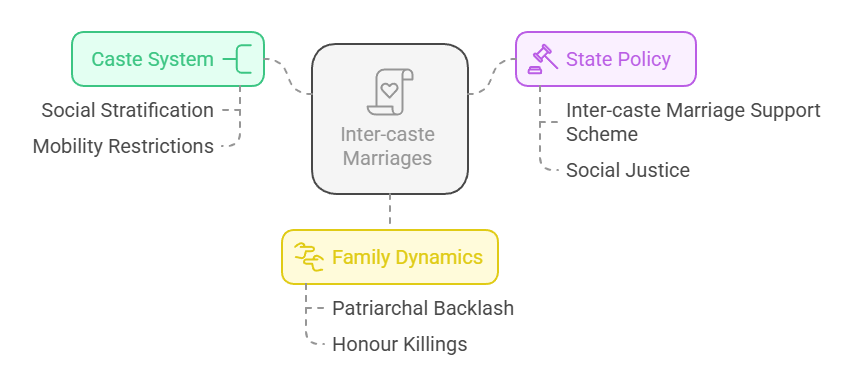
- Caste, Social Stratification, and Mobility: The persistence of the caste system in India continues to shape social stratification and restrict upward mobility. Inter-caste marriages, by breaking the norm of caste endogamy, challenge these rigid social boundaries. Sociologists like André Béteille and Louis Dumont have argued that such unions threaten established power hierarchies within Indian society. When state support for these marriages is withdrawn, it reinforces social exclusion and discourages the dismantling of traditional caste barriers, limiting social mobility and integration.
- State Policy and Social Justice: State policies play a crucial role in advancing social justice and equity. The original intent behind the Inter-caste Marriage Support Scheme was preventive—helping to integrate society by incentivizing progressive choices, rather than merely responding to incidents of caste-based violence. By merging this scheme with general atrocity prevention laws, the government shifts focus to reactive measures instead of proactive social integration. This undermines the spirit of affirmative action and dilutes the impact of targeted interventions needed for real change.
- Family, Patriarchy, and Honour Killings: Inter-caste marriages often trigger patriarchal backlash and resistance from families obsessed with maintaining caste “purity.” This opposition can lead to extreme outcomes like honour killings, which remain a grim reality in many parts of India. The weakening or removal of state support and protection for inter-caste couples exposes them further to violence, harassment, and isolation. Without legal and institutional safeguards, the risks associated with defying patriarchal and caste norms increase, discouraging more couples from taking this progressive step.
Key Lessons for Policy and Society
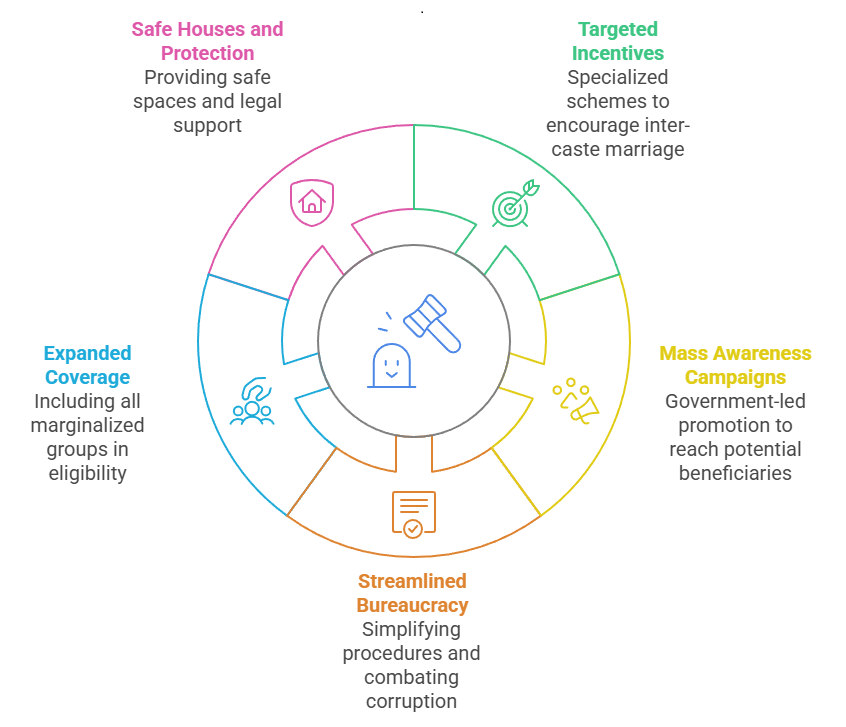
- Need for Targeted Incentives: Only specialized schemes, not general welfare programs, can effectively promote inter-caste marriage and social integration.
- Mass Awareness Campaigns: As recommended by the IIPA, the government must actively promote such schemes to reach potential beneficiaries.
- Streamlining Bureaucratic Procedures: Simplifying paperwork and cracking down on corruption is essential for real impact.
- Expanding Coverage: The definition of “eligible couples” should be widened to include all marginalized groups, not just SCs.
- Safe Houses and Protection: Following judicial orders, states must create safe spaces and offer legal, financial, and police protection to inter-caste and inter-faith couples.
Conclusion:
The collapse of the Inter-caste Marriage Support Scheme is a setback for the anti-caste movement and the broader goal of achieving social justice and integration in India. If India truly aspires to be a modern, egalitarian society—as envisioned by Ambedkar and Phule—it must revive and reform such schemes, prioritizing social mobility, legal protection, and economic security for those who dare to defy caste boundaries. Understanding the intersection of caste, state policy, social mobility, and gender is critical for tackling questions on social change, social justice, and affirmative action. The story of the Intercaste Marriage Support Scheme is not just a serious issue—it’s a lens to analyze the persistence of caste, the failures of social policy, and the ongoing struggle for equality in India.
Previous Year Questions
Paper I:
- Discuss the persistence of caste in modern India. How does it influence social mobility and integration? (2022)
- How does caste endogamy reinforce the caste system in India? (2019)
- Analyse the role of the state and law in transforming caste and family relations in contemporary India. (2018)
- Explain the impact of modernization on patterns of marriage and kinship in India. (2015)
Paper II:
- Examine the factors responsible for the persistence of the caste system in India. (2023)
- Discuss the impact of social legislation and government policies on caste and marriage in India. (2021)
- How do inter-caste and inter-religious marriages contribute to the transformation of Indian society? (2020)
- Evaluate the effectiveness of state intervention in promoting social change among Dalits and other marginalized communities. (2019)
- Discuss the relevance of anti-caste movements and the contribution of Dr. B.R. Ambedkar to social justice in India. (2018)
- Explain the phenomenon of ‘honour killings’ in India. What do they reveal about caste and gender relations? (2017)
- How do contemporary trends in marriage challenge traditional norms of caste and religion in India? (2016)
- Examine the role of law and judiciary in protecting the rights of inter-caste couples in India. (2015)
- Discuss the significance of kinship and marriage as agents of social change in India. (2014)
|


One comment