Introduction
In the digital era, information warfare has emerged as a decisive tool of statecraft and conflict. From influencing public opinion to destabilizing governments, this new form of warfare does not rely on bullets, but bytes. As countries like China, Russia, and the U.S. increasingly weaponize information, India too finds itself both a target and a participant in this new domain of warfare.
What is Information Warfare?
Information warfare refers to the strategic use of information to gain a competitive advantage over adversaries. It includes:
- Disinformation and fake news
- Psychological operations (PsyOps)
- Cyber propaganda
- Social media manipulation
- Deepfakes and AI-generated content
- Hacking for narrative distortion
Key Components of Information Warfare
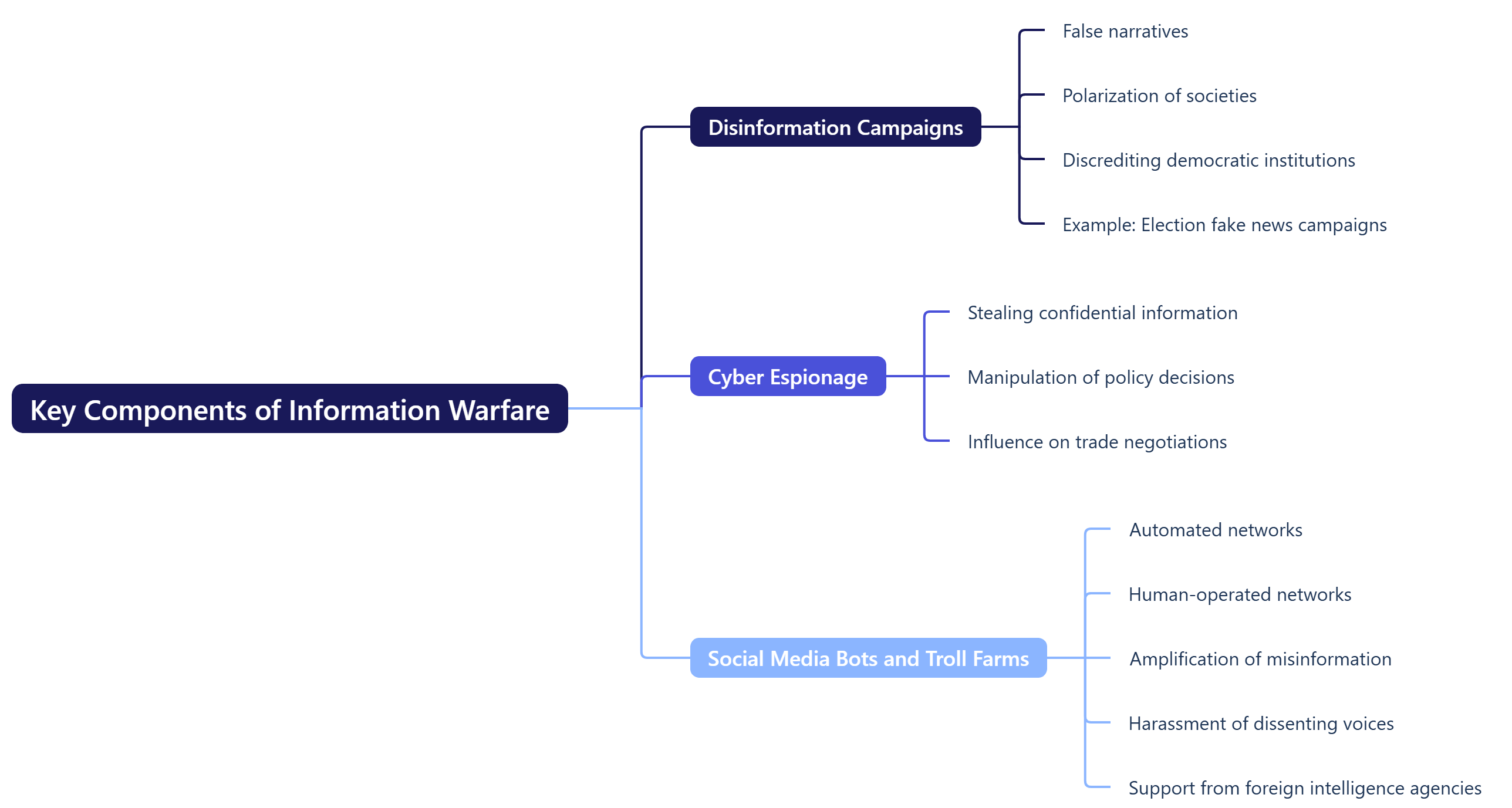
- Disinformation Campaigns: Deliberate spread of false narratives to polarize societies or discredit democratic institutions. For instance, during elections, fake news campaigns can swing public opinion.
- Cyber Espionage: Stealing confidential information to manipulate policy decisions or trade negotiations.
- Social Media Bots and Troll Farms: Automated or human-operated networks that amplify misinformation or harass dissenting voices, often supported by foreign intelligence agencies.
India’s Vulnerability and Response
Recent Examples:
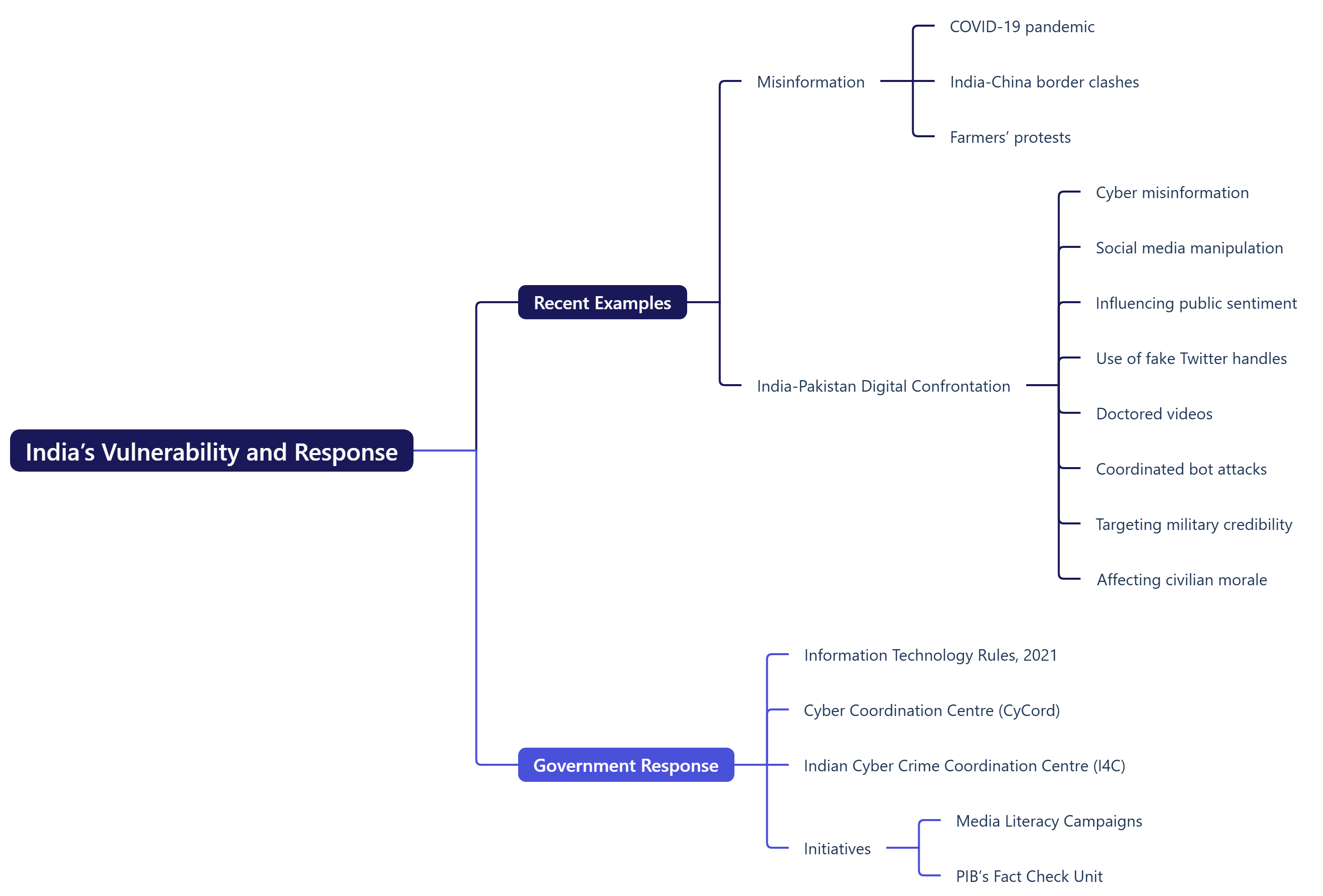
- Misinformation during the COVID-19 pandemic
- Propaganda on India-China border clashes
- Disinformation surrounding farmers’ protests
- India-Pakistan digital confrontation After the recent border skirmishes, both countries engaged in a wave of cyber misinformation and social media manipulation to influence public sentiment and international perception. Reports indicated the use of fake Twitter handles, doctored videos, and coordinated bot attacks targeting Indian military credibility and civilian morale.
Government Response:
- Information Technology Rules, 2021
- Cyber Coordination Centre (CyCord)
- Indian Cyber Crime Coordination Centre (I4C)
- Initiatives like Media Literacy Campaigns and PIB’s Fact Check Unit
Impact of Information Warfare
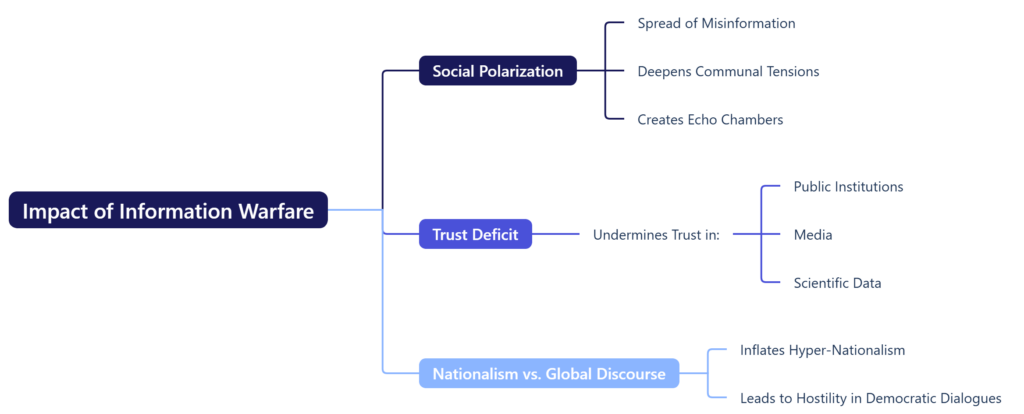
- Social Polarization: The spread of misinformation deepens communal tensions, creating echo chambers.
- Trust Deficit: Undermines trust in public institutions, media, and scientific data.
- Nationalism vs. Global Discourse: Information warfare often inflames hyper-nationalism, leading to hostility in democratic dialogues.
Way Forward
- Digital Literacy as a curriculum mandate
- Strengthening Cyber Laws with global cooperation
- AI Regulation for deepfake prevention
- Fact-checking Ecosystem involving civil society, media, and government
Conclusion
Information warfare is an unseen battlefield shaping geopolitical strategies and domestic stability. As future administrators, UPSC aspirants must not only understand its mechanics but also develop tools to counter it through policy, technology, and awareness. From India-Pakistan confrontations to global misinformation campaigns, the war of narratives is real—and India must be equipped with truth, technology, and resilience to prevail. |



One comment