|
In a world marked by economic turbulence, geopolitical uncertainties, and climate-related disruptions, India’s economic journey stands out as a story of resilience and optimism. Despite facing strong global headwinds, India has maintained robust growth, demonstrating its potential to emerge as a key driver of the global economy.
Current Economic Status
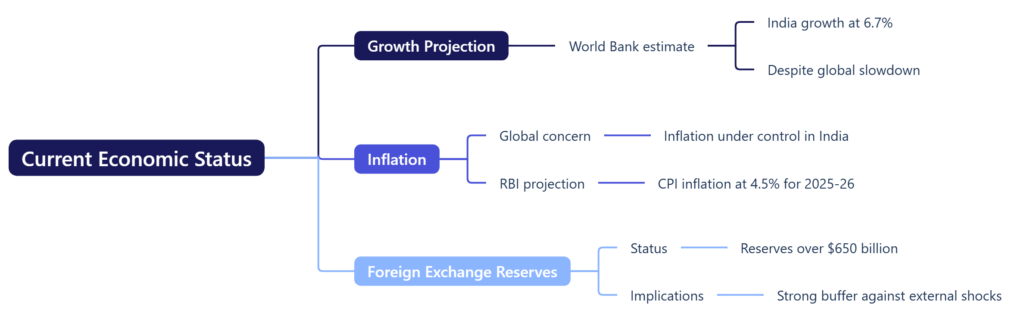
According to the International Monetary Fund (IMF) World Economic Outlook (April 2025), India’s GDP is projected to grow at 6.8% in FY 2025–26, making it the fastest-growing major economy.
- The World Bank also echoed similar sentiments, estimating India’s growth around 6.7% despite a global slowdown.
- Inflation, though a concern globally, has been relatively under control in India, with the Reserve Bank of India (RBI) projecting CPI inflation at around 4.5% for 2025–26.
- India’s foreign exchange reserves remain strong, crossing $650 billion in early 2025, providing a comfortable buffer against external shocks.
Major Global Challenges
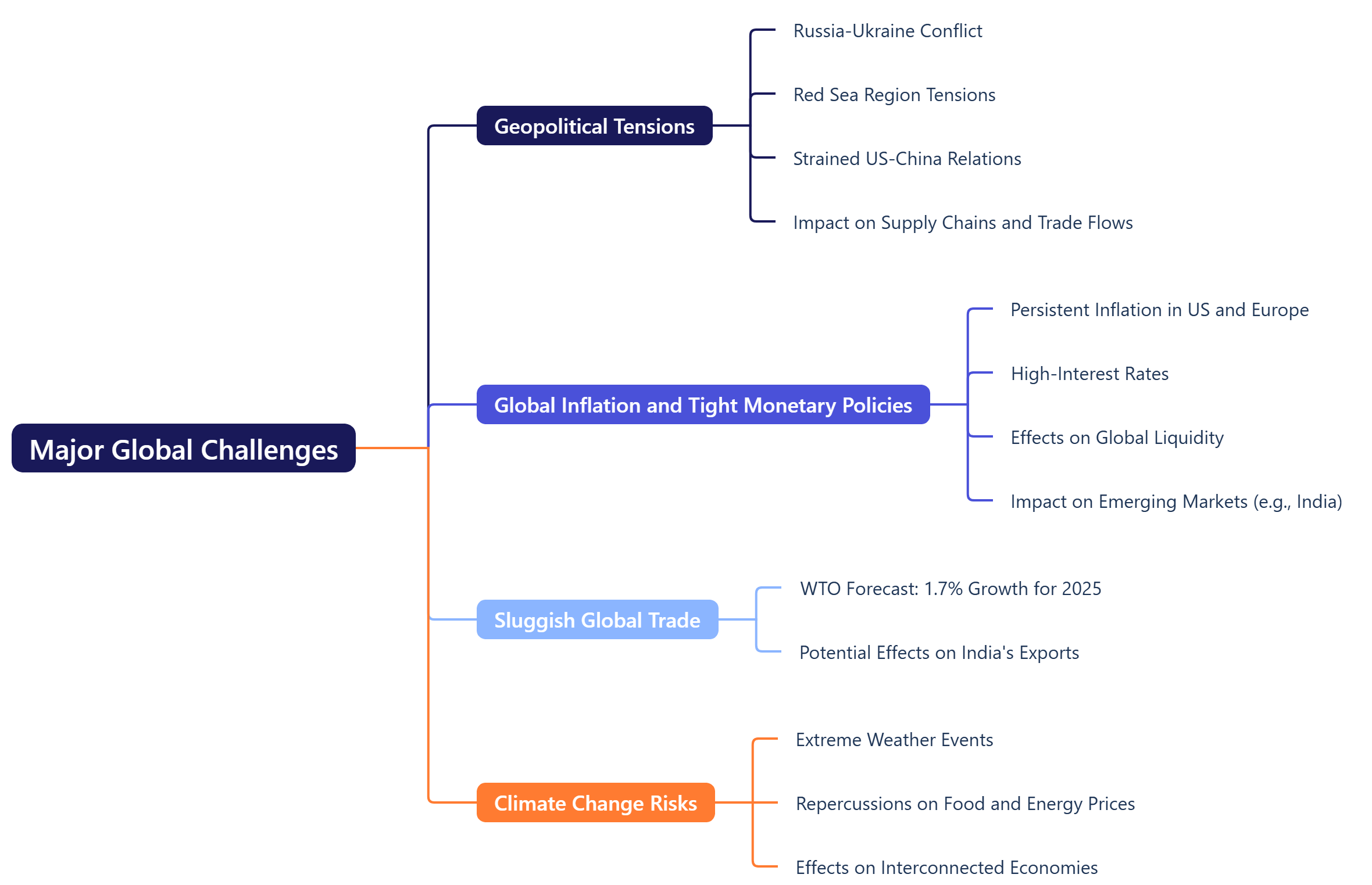
Despite this positive outlook, India is not immune to international challenges:
- Geopolitical Tensions:
The Russia-Ukraine conflict, tensions in the Red Sea region, and strained US-China relations continue to disrupt global supply chains and trade flows.
- Global Inflation and Tight Monetary Policies:
Persistent inflation in the US and Europe has led to prolonged high-interest rates, impacting global liquidity and capital flows to emerging markets like India.
- Sluggish Global Trade:
The World Trade Organization (WTO) forecasts global trade growth at just 1.7% for 2025, which could dampen India’s exports, especially in sectors like textiles, IT services, and automobiles.
- Climate Change Risks:
Extreme weather events, such as the recent floods in South Asia and severe droughts in parts of Africa, have global repercussions on food and energy prices, impacting economies interconnected through trade.
India’s Strengths Amid Challenges
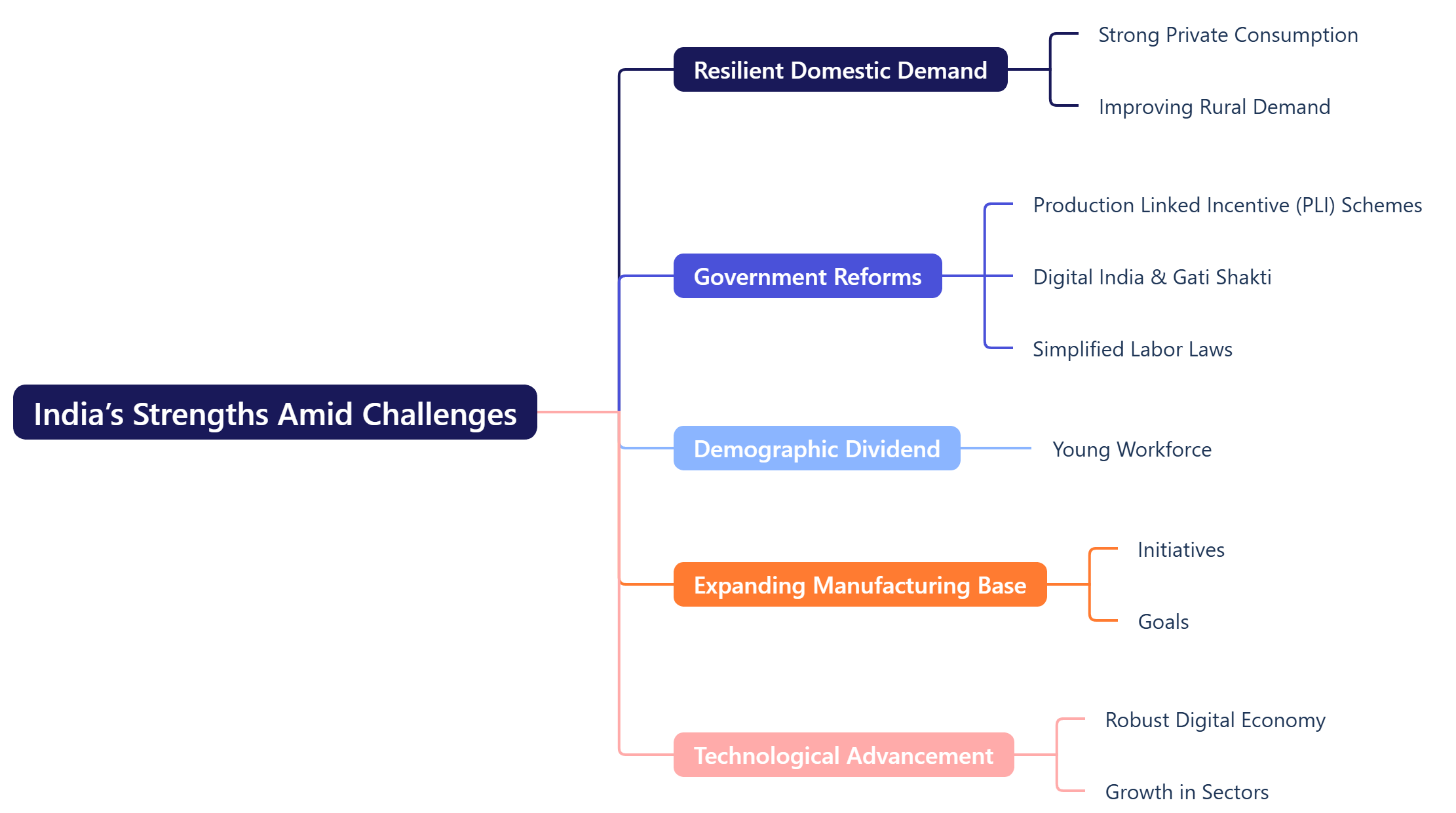
Despite external pressures, several factors have strengthened India’s position:
-
Resilient Domestic Demand
Private consumption, which contributes nearly 60% of India’s GDP, remains strong. Rural demand is improving, aided by higher agricultural output and government support through schemes like PM-KISAN and MNREGA.
-
Government Reforms
- The Production Linked Incentive (PLI) schemes have started bearing fruit, attracting both domestic and foreign investments in sectors like electronics, pharmaceuticals, and renewable energy.
- Digital India and Gati Shakti initiatives are boosting infrastructure and connectivity.
- The simplification of labor laws and continued emphasis on ‘Ease of Doing Business’ is enhancing India’s attractiveness for investors.
-
Demographic Dividend
With over 65% of the population below the age of 35, India’s young workforce provides a competitive advantage in services, manufacturing, and innovation.
-
Expanding Manufacturing Base
Through initiatives like Make in India and Atmanirbhar Bharat, India is diversifying its industrial base, aiming to become a global hub for electronics, defense manufacturing, and green energy.
-
Technological Advancement
India’s robust digital economy, with over 850 million internet users, is fostering growth in fintech, edtech, healthtech, and e-commerce sectors.
Key Challenges
Despite the momentum, India faces several internal and external challenges:
- High Unemployment:
Unemployment remains a concern, especially among youth and skilled graduates. The unemployment rate hovers around 7.5% as of early 2025 (CMIE data).
- Inequality:
Rising income and wealth inequality could undermine social cohesion and slow inclusive growth.
- Dependence on Energy Imports:
India imports nearly 85% of its crude oil needs, exposing the economy to global oil price shocks.
- Skill Gap:
A mismatch between industry needs and workforce skills persists, requiring urgent reforms in education and vocational training.
- Climate Vulnerability:
Agriculture, which supports nearly 40% of India’s population, remains highly vulnerable to climate change, threatening food security and rural livelihoods.
Recent Examples of Resilience
- During the Red Sea crisis, where global shipping routes were disrupted, India quickly adjusted by boosting alternative trade routes and securing energy supplies through strategic reserves.
- Amid global semiconductor shortages, India signed strategic agreements with countries like the US, Japan, and Taiwan under its Semiconductor Mission to build domestic chip manufacturing capacity.
- The success of the Indian Space Research Organisation’s (ISRO) Chandrayaan-3 mission in 2023 and the upcoming Gaganyaan human spaceflight program showcase India’s growing prowess in technology and innovation, contributing to its soft power and technological economy.
Way Forward
To sustain and enhance growth amid global uncertainties, India must focus on:
-
Strengthening Human Capital
Investments in education, healthcare, and skill development are critical to fully harness the demographic dividend.
-
Deepening Structural Reforms
Further reforms in the land, labor, and financial sectors are essential to unleash the next phase of growth.
-
Promoting Green Growth
Given the global push toward net-zero emissions, India should prioritize green infrastructure, renewable energy, and sustainable agriculture.
-
Boosting Exports
India should negotiate more Free Trade Agreements (FTAs), diversify its export basket, and enhance its global competitiveness.
-
Improving Urban Infrastructure
With urbanization accelerating, improving transportation, housing, and sanitation in cities is vital for economic vibrancy.
-
Enhancing Agricultural Resilience
Adopting climate-resilient farming techniques, improving irrigation, and ensuring better price realization for farmers will be key to sustaining rural demand.
Conclusion
India’s economic journey amid global headwinds reflects a blend of strategic policymaking, inherent resilience, and emerging opportunities.
While challenges persist, with prudent reforms, innovative strategies, and sustained investments in human and physical capital, India is well-positioned to not only navigate the storm but to lead the way toward a more equitable and sustainable global future. |


One comment