Introduction
Maternal Mortality Ratio (MMR) is a crucial indicator of a nation’s reproductive health standards, gender equity, and healthcare accessibility. In recent years, India has witnessed a steady decline in MMR, signaling progress toward improving maternal health outcomes. However, behind the numbers lies a complex web of social inequalities, regional disparities, and structural barriers that continue to put the lives of women at risk during pregnancy and childbirth. For aspirants, especially those studying sociology, understanding MMR goes beyond statistics—it offers critical insights into how health intersects with caste, class, gender, and state policy in shaping the lived realities of women in India.
Latest Data on Maternal Mortality Ratio (MMR) in India
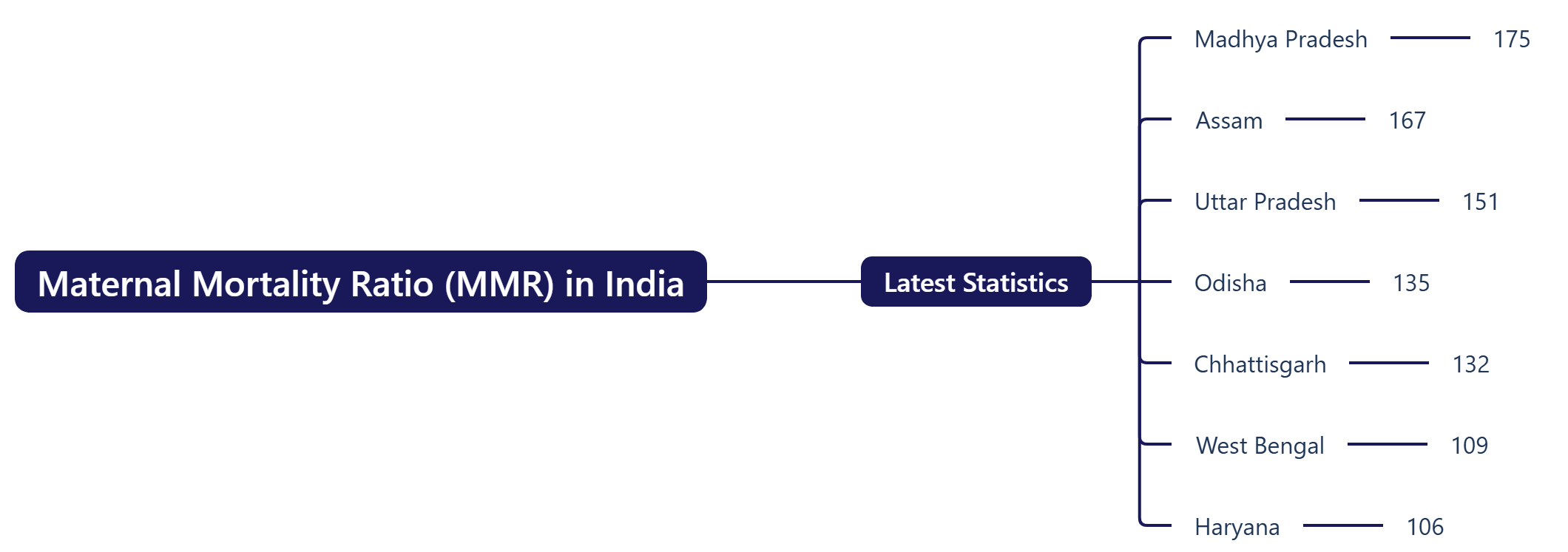
India’s Maternal Mortality Ratio (MMR) has shown a steady decline, falling to 93 per 100,000 live births in 2019-21, according to data released by the Office of the Registrar General & Census Commissioner of India. This marks a notable improvement from 97 in 2018-20 and 103 in 2017-19.Despite this progress, the MMR remains significantly high in several states, including:
- Madhya Pradesh – 175
- Assam – 167
- Uttar Pradesh – 151
- Odisha – 135
- Chhattisgarh – 132
- West Bengal – 109
- Haryana – 106
The 20–29 age group records the highest maternal mortality, followed by the 30–34 age group, reflecting the demographic concentration of childbirth in these reproductive years.
Global Context:
According to the World Health Organization (WHO), more than 700 women die every day globally from preventable causes related to pregnancy and childbirth. Alarmingly, over 90% of maternal deaths occur in low and lower-middle-income countries, indicating deep-rooted structural inequalities in access to healthcare.
The United Nations Sustainable Development Goal 3 (SDG 3) targets a global MMR of less than 70 per 100,000 live births by 2030. While India has made commendable progress, significant regional disparities persist.
Sociological Analysis:
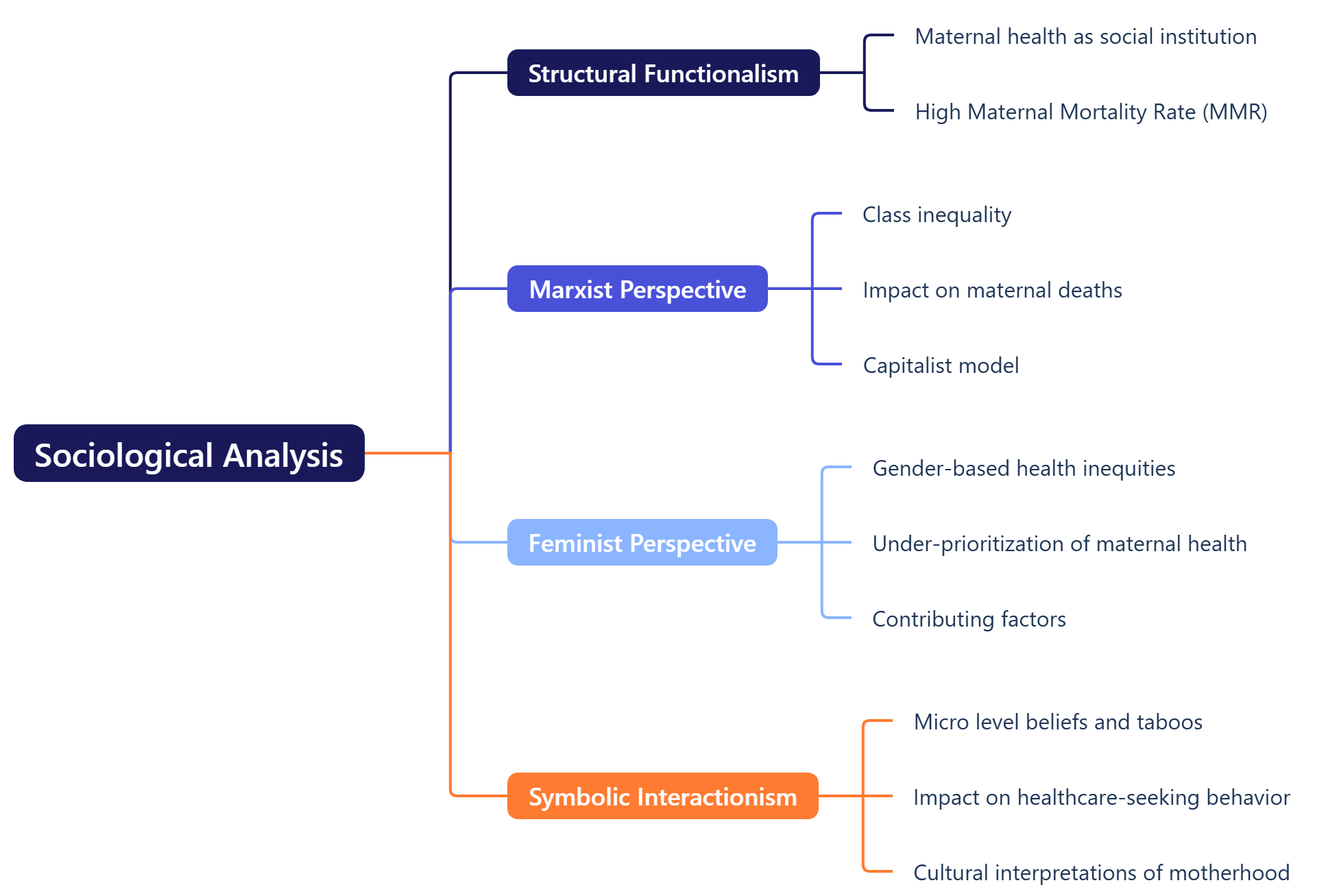
- Structural Functionalism: Maternal health is an essential social institution that ensures the biological reproduction of society. High MMR disrupts societal equilibrium and signals dysfunction in the healthcare system, particularly in rural and underprivileged regions.
- Marxist Perspective: From a Marxist lens, class inequality and unequal access to healthcare contribute to maternal deaths. Poor women lack access to skilled healthcare professionals, antenatal care, and institutional deliveries. The capitalist model of health promotes profit over public good, making reproductive health a luxury for the marginalized.
- Feminist Perspective: Feminist sociology views maternal mortality as a reflection of gender-based health inequities. Despite India’s constitutional commitment to women’s welfare, maternal health is under-prioritized. Patriarchal norms, early marriage, lack of decision-making power, and nutritional discrimination against women contribute significantly to maternal deaths.
- Symbolic Interactionism: At the micro level, societal beliefs, taboos, and stigma around pregnancy and childbirth often prevent women from seeking timely medical help. Cultural interpretations of motherhood often romanticize suffering, overlooking health risks.
Policy Interventions and Way Forward
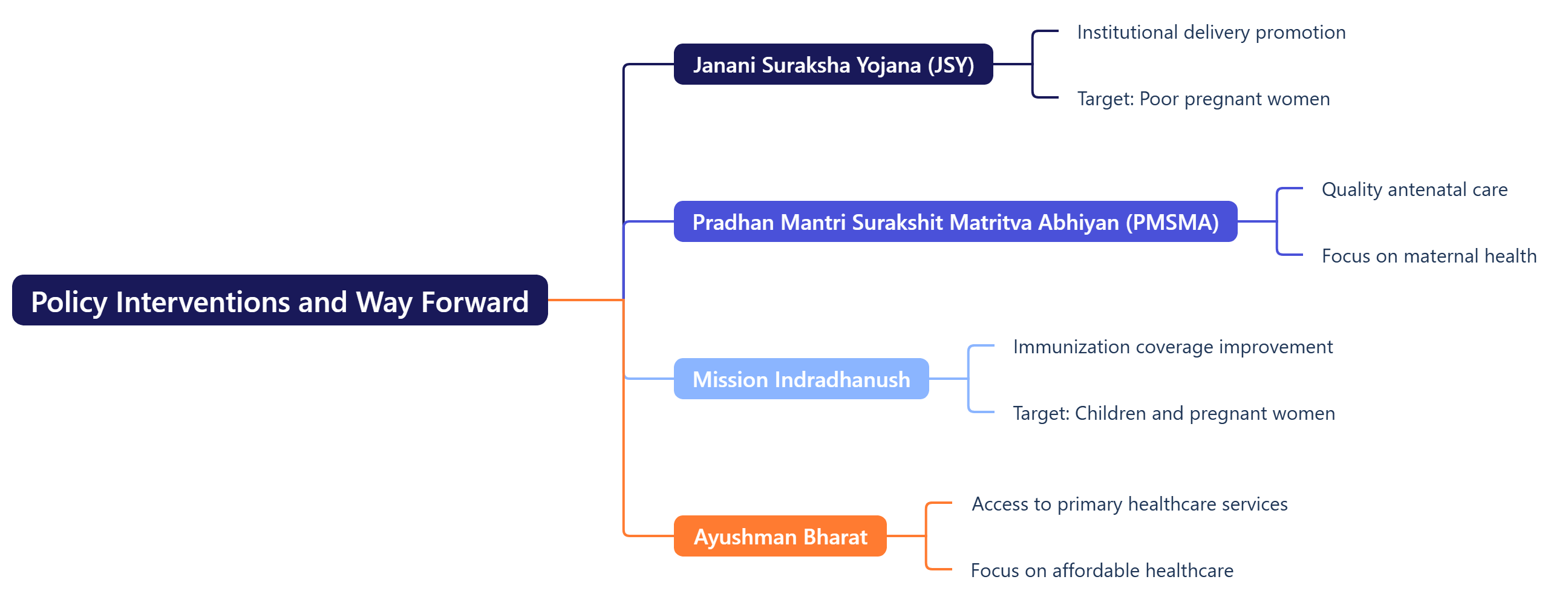
Key interventions to address MMR in India include:
- Janani Suraksha Yojana (JSY) – promoting institutional delivery among poor pregnant women.
- Pradhan Mantri Surakshit Matritva Abhiyan (PMSMA) – ensuring quality antenatal care.
- Mission Indradhanush – improving immunization coverage.
- Ayushman Bharat – enhancing access to primary healthcare services.
Sample Registration System (SRS) data plays a pivotal role in monitoring health trends and shaping maternal health policy in India.
Conclusion
The decline in India’s Maternal Mortality Ratio (MMR) reflects positive strides in public health and women’s reproductive care. However, the persistence of high MMR in certain states and age groups reveals deep-seated social, economic, and gender-based inequalities. Maternal mortality is not merely a medical concern—it is a sociological issue rooted in structural marginalization, poverty, and patriarchy. Sustainable reduction in MMR requires a multidimensional approach that combines accessible healthcare, gender-sensitive policies, community awareness, and sociocultural transformation. Understanding maternal mortality through a sociological lens equips them to critically engage with issues of social justice, development, and gender equity—core themes in India’s path toward inclusive progress.
PYQs
Paper 1
- Discuss the intersectionality of caste, class, and gender in determining women’s access to healthcare services. (2023)
- Examine how the process of socialization influences attitudes toward women’s health and body. (2022)
- Discuss how patriarchy shapes the access of women to health and education. (2021)
- Explain how gender is a social construct and analyze its impact on health outcomes. (2020)
- What do you understand by the term ‘social determinants of health’? Explain with reference to health inequalities in society. (2019)
- How do structural inequalities affect access to healthcare in Indian society? (2018)
- Discuss the sociological significance of women’s reproductive rights in contemporary society. (2017)
- Critically examine the role of the state in ensuring social welfare in the context of health and education. (2016)
- Health and illness are socially constructed realities. Explain. (2015)
- Explain the relationship between development and social problems with special reference to maternal and child health. (2014)
Paper 2
- Assess the effectiveness of government interventions in addressing malnutrition and maternal health among tribal women. (2023)
- Evaluate the impact of programs like Janani Suraksha Yojana and Ayushman Bharat on women’s health in rural India. (2022)
- Critically analyze the challenges faced by women in India in accessing safe and institutional maternal healthcare. (2020)
- Explain how public health policies reflect the changing role of women in Indian society. (2021)
- How do regional disparities affect access to maternal healthcare services in India? Illustrate with examples. (2019)
- Examine the sociological reasons for high maternal mortality in certain states of India despite economic development. (2018)
- Analyze the role of state initiatives in promoting reproductive health and maternal care in India. (2017)
- Discuss the role of social legislation in addressing gender-based health disparities in India. (2016)
- Discuss how cultural beliefs and traditional practices influence reproductive health among Indian women. (2015)
- How has globalization affected women’s health priorities and access to reproductive services in India? (2014)
|