

India Pursuit of Inclusive and Sustainable Growth
(Relevant for Gs paper-3, Inclusive Growth)
Inclusive and Sustainable GrowthInclusive economic growth refers to a growth pattern that ensures equitable distribution of wealth, opportunities, and access to services for all sections of society, particularly the marginalized. In a diverse and populous nation like India, achieving inclusive growth is not only a developmental imperative but also a socio-political necessity. Despite being the world’s fastest-growing major economy, India faces significant challenges in translating economic success into widespread socio-economic benefits. Understanding Inclusive GrowthThe concept of inclusive growth, as promoted by international organizations like the World Bank and the United Nations, goes beyond GDP expansion. It integrates factors such as employment generation, social protection, equal access to education and healthcare, and reduction in inequality. For India, inclusive growth is essential for achieving Sustainable Development Goals (SDGs), reducing regional disparities, and maintaining democratic stability. India’s Growth Trajectory: Achievements and Concerns
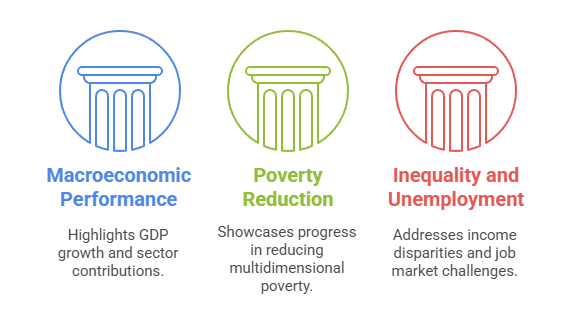
Macroeconomic Performance India’s GDP growth in FY 2023–24 stood at 8.2%, driven by robust manufacturing and construction sectors. It surpassed major economies like China, positioning India as a global growth leader. The services sector, contributing nearly 54% to the GDP, remains a key pillar of economic growth. Poverty Reduction India has made substantial progress in poverty reduction. According to NITI Aayog’s Multidimensional Poverty Index (2023), 13.5 crore people exited multidimensional poverty between 2015–16 and 2019–21. However, over 15% of the population still remains under various poverty indicators such as lack of nutrition, education, sanitation, or housing. Inequality and Unemployment Despite overall growth, income inequality remains a pressing concern. As per the World Inequality Report (2022), the top 10% of the population holds 57% of India’s national income, while the bottom 50% share only 13%. Unemployment, particularly youth unemployment, remains high at around 7.5% (CMIE, 2024), with disparities across rural and urban areas. Underemployment and informality also dilute the benefits of economic growth. Key Pillars of Inclusive Growth in India
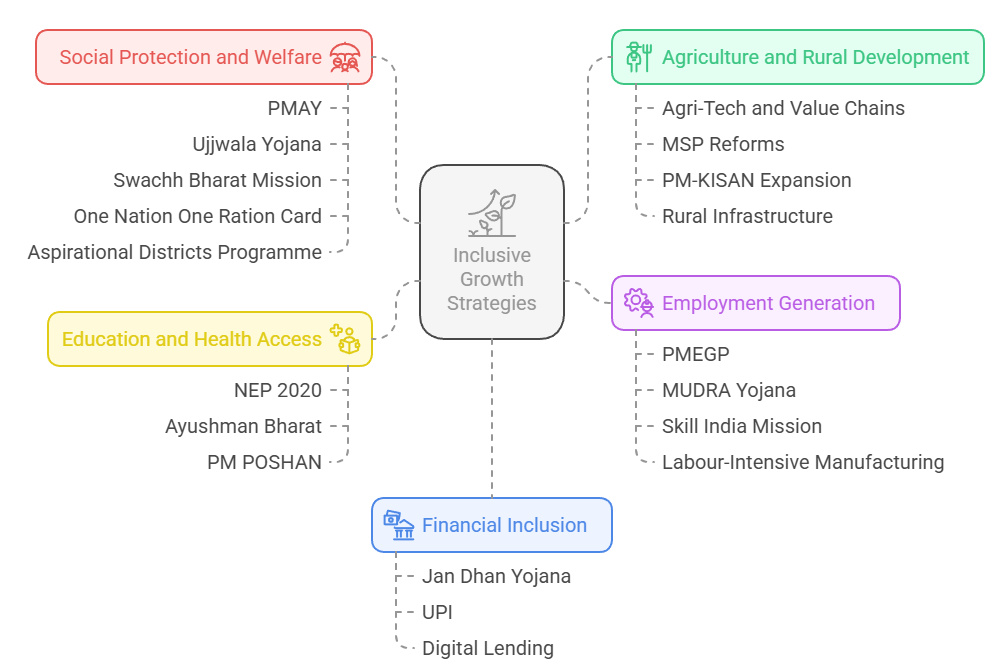
The agriculture sector, employing over 42% of the workforce, contributes only 17–18% to the GDP, reflecting low productivity. Inclusive growth requires:
The government has launched initiatives such as:
Yet, the formal job creation rate remains insufficient. Promoting labour-intensive manufacturing, MSMEs, and gig economy integration is essential.
Human capital development is the backbone of inclusive growth.
Yet, disparities in learning outcomes (as reflected in ASER Reports) and rural-urban healthcare access gaps persist.
Financial inclusion has accelerated through:
However, financial literacy and digital access remain barriers in remote and marginalized communities.
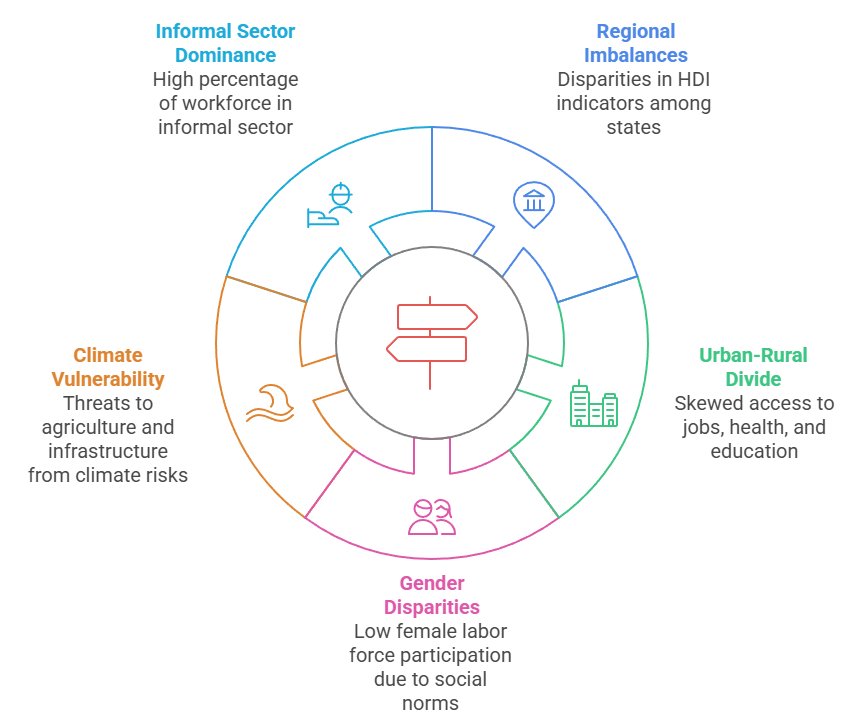
Schemes like PMAY (housing for all), Ujjwala Yojana (clean cooking fuel), Swachh Bharat Mission, and One Nation One Ration Card are crucial social safety nets. The Aspirational Districts Programme targets 112 backward districts, showing improved outcomes in health, education, and infrastructure. Challenges to Inclusive Growth
Way Forward: Strategies for Inclusive Growth
ConclusionIndia’s economic rise must go hand-in-hand with social justice and equity. True development lies not in the prosperity of a few, but in uplifting the many. By addressing inequalities, investing in people, and fostering participatory governance, India can chart a path toward inclusive, resilient, and sustainable growth. This is vital not only for achieving Amrit Kaal’s vision of a developed India by 2047, but also for ensuring harmony, dignity, and opportunities for all. |

To Read more topics, visit: www.triumphias.com/blogs
2 comments