
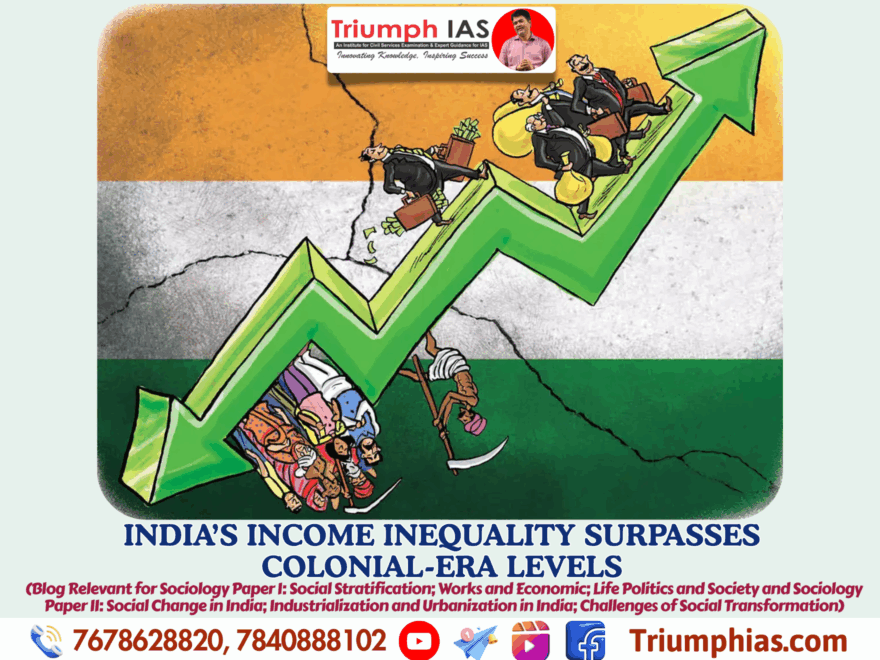
India Income Inequality Surpasses Colonial-Era Levels
(Relevant for Sociology Paper I: Social Stratification; Works and Economic; Life Politics and Society and Sociology Paper II: Social Change in India; Industrialization and Urbanization in India; Challenges of Social Transformation)
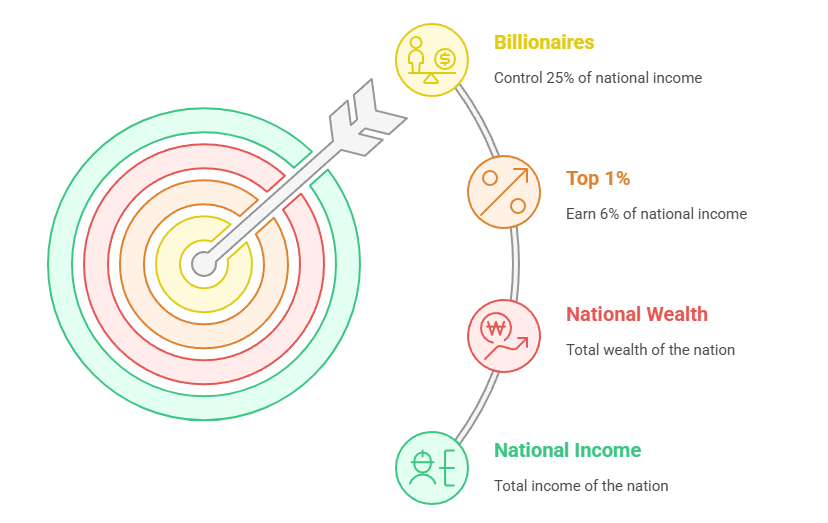
Introduction: India income inequalityIndia’s economic growth story has been hailed globally. With an 8% GDP growth rate, aspirations of becoming the third-largest global economy, and home to over 270 billionaires, India is often seen as an emerging superpower. But behind this glittering facade lies a troubling truth: India’s income and wealth inequality are now worse than during British colonial rule. This alarming observation, drawn from a recent study by the World Inequality Lab, raises fundamental questions about fairness, distribution, and democracy in contemporary India. India Inequality in Numbers:
The report, co-authored by Thomas Piketty, reveals:
Sociological Analysis
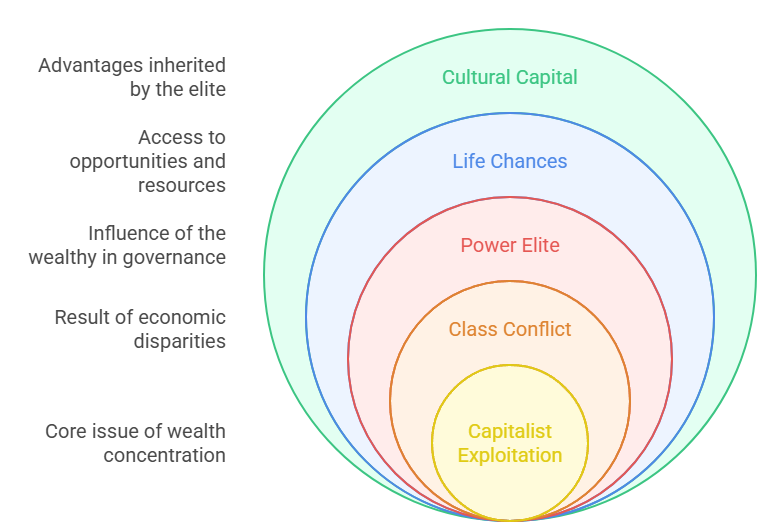
Marx predicted the accumulation of capital in fewer hands under capitalism. The report confirms this trend with billionaire wealth expanding disproportionately while the working class struggles with stagnant wages, unemployment, and rising costs of living. This inequality reproduces class conflict, alienation, and economic dependence of the masses on the capitalist elite. In Marxist terms, we’re seeing the rise of a new bourgeoisie in post-liberalized India, who own the means of production—corporate empires, digital platforms, financial institutions—while the proletariat continues to live with limited access to quality jobs or social services.
Max Weber emphasized how social stratification goes beyond income to include status and power. India’s billionaires not only control wealth but also have disproportionate influence in politics, media, and policy-making. As inequality rises, the life chances of the poor to access health, education, and dignified employment decline, perpetuating poverty across generations.
The nexus between big business and politics mirrors C. Wright Mills’ theory of the power elite—a small group controlling the economy, government, and military. In India’s case, post-2014 reforms have coincided with increasing centralization of power, corporate favoritism, and diminishing institutional checks, pushing India toward plutocracy—rule by the rich.
Pierre Bourdieu explains how elite classes use economic, social, and cultural capital to maintain dominance. In India, wealth translates into better schooling, global exposure, exclusive networks, and access to policy influence. These results in social reproduction where the elite’s children inherit advantages, while the lower classes remain structurally excluded. The Post-1991 Shift: Liberalization and Its DiscontentsSince economic liberalization in 1991, India’s integration into global capitalism has produced both winners and losers. While sectors like IT, finance, and e-commerce flourished, agrarian distress, urban slums, and unemployment among educated youth worsened. The benefits of globalization remained skewed in favor of upper castes and urban elites, exacerbating existing inequalities. As Andre Béteille has pointed out, India’s inequality is not just economic—it is caste and class-based. Post-liberalization policies did not address this intersectionality, making Dalits, Adivasis, and rural populations more vulnerable. Income Inequality vs. Development
Despite stellar growth numbers, India’s Human Development Index (HDI) remains low. The World Inequality Lab warns that India’s high GDP is masking deep social inequities:
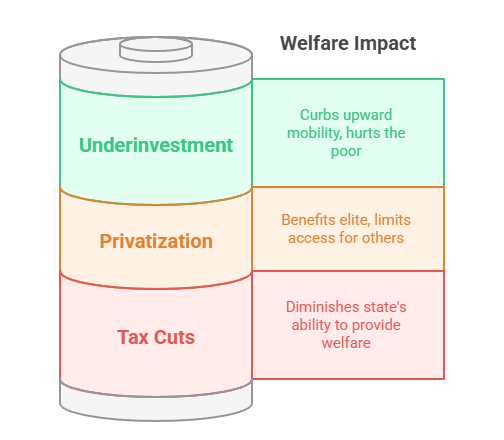
This reflects Amartya Sen’s argument: Development must be about expanding freedoms and capabilities, not just economic growth. Rural-Urban Divide and Spatial InequalityIn cities like Mumbai, billionaires live in luxury skyscrapers while fishermen and slum-dwellers survive next door without sanitation or clean water. This visible spatial inequality is what urban sociologists’ term “segregated urbanism”—where the rich and poor live in parallel but disconnected worlds. This also resonates with the Dependency Theory, where certain classes (just like countries) are kept underdeveloped due to structural exploitation by dominant classes (or nations). Why This Is a an EmergencyIndia’s worsening inequality is not just a statistic—it’s a crisis:
A Roadmap toward Inclusive Development
ConclusionIndia stands at a crossroads. It can continue down a path of rising plutocracy and elite domination or choose equity-driven growth that fulfills its constitutional promises of justice, liberty, equality, and fraternity. The findings of the World Inequality Lab should be a call to action—not just for policymakers but for every citizen. This is a compelling real-world case to apply theoretical frameworks and understand the interplay of structure, agency, and ideology in shaping modern Indian society. PYQsPaper II:
|
 colonial-era economy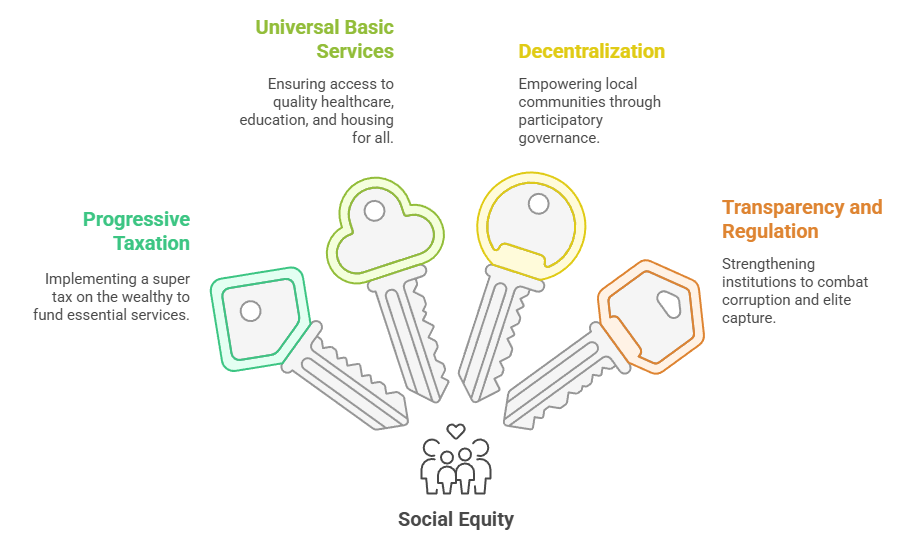

To Read more topics, visit: www.triumphias.com/blogs
Read more Blogs:
Totemism: A Deep Dive into Tribal Identity, Social Cohesion & Belief Systems
One comment