
India Demographic Transition
(Relevant for Sociology Paper II: Population Dynamics)
IntroductionDemographic change is not merely a statistical phenomenon—it’s a mirror to a nation’s social transformation. As India moves through various phases of demographic transition, the ripple effects are seen in its economy, gender dynamics, healthcare system, education, and even politics. This blog provides a fresh insight into the demographic transition in India, backed by data, sociological theories, and real-world implications. Understanding the Demographic Transition Model (DTM)
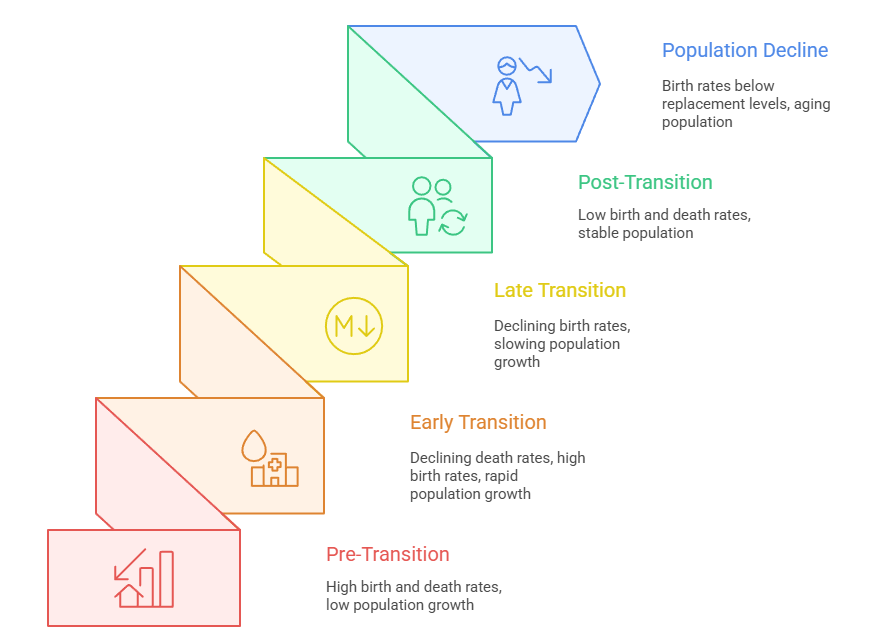
The Demographic Transition Model outlines the transformation of societies from high fertility and mortality to low fertility and mortality over time. It typically includes four to five stages: Stage I – Pre-Transition
Stage II – Early Transition
Stage III – Late Transition
Stage IV – Post-Transition
Stage V (Proposed) – Population Decline
Where Does India Stand in 2025?India is in late Stage III, inching toward Stage IV in certain regions. Data Highlights:
Regional Variation in India’s Demographic Transition
This regional demographic disparity has created a “demographic dualism” in India, with policy implications for education, migration, and employment. Sociological Analysis
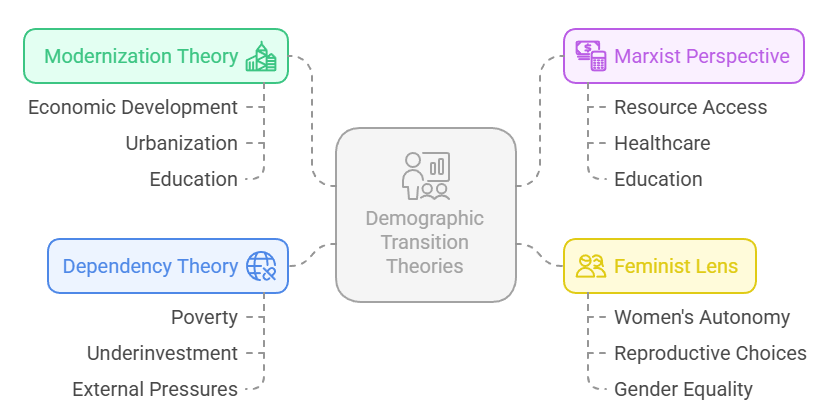
Modernization theory views demographic transition as a natural outcome of societal progress. As countries develop economically, people move from rural to urban settings, literacy increases, and healthcare improves, and social norms around family size evolve. In India, the declining fertility rate and rising life expectancy can be attributed to expanding education, especially among women, urban lifestyles, and increased access to healthcare services. Modernization leads to smaller families and more rational reproductive choices.
Marxist thinkers interpret demographic patterns as reflections of economic inequalities and class structures. They argue that population growth in developing nations is not simply due to cultural factors but is rooted in poor access to resources, education, and healthcare—conditions imposed by capitalist exploitation. In India, marginalized groups often face poor reproductive health services and high child mortality, leading them to have more children as a survival strategy.
Feminist sociologists emphasize the central role of gender in shaping demographic outcomes. They highlight how women’s autonomy, education, and access to reproductive choices significantly influence fertility rates. In many parts of India, high fertility persists due to son preference, early marriage, and women’s lack of agency in family planning decisions. States with better gender equality, like Kerala and Tamil Nadu, have seen faster demographic transition due to empowered female participation in decision-making.
Dependency theory links demographic stagnation in developing nations to their dependence on former colonial powers and global capitalist systems. According to this view, India’s delayed demographic transition, especially in underdeveloped regions, stems from structural constraints such as poverty, underinvestment in human development, and external economic pressures. The theory critiques global inequality and emphasizes that without genuine development and redistribution of resources, demographic control remains elusive. Youth Bulge and Demographic DividendIndia’s working-age population (15–64) now constitutes about 66% of the total population, leading to what economists call a demographic dividend. But:
Ageing India: The Emerging CrisisStates like Kerala, Himachal Pradesh, and Tamil Nadu are facing an aging population crisis with:
Sociological Implication: As joint families disintegrate, the elderly face social isolation and economic insecurity, highlighting the need for age-sensitive policies and old-age homes. Cultural and Religious Influences
Government Initiatives Addressing Demographic Issues
Demographic Transition
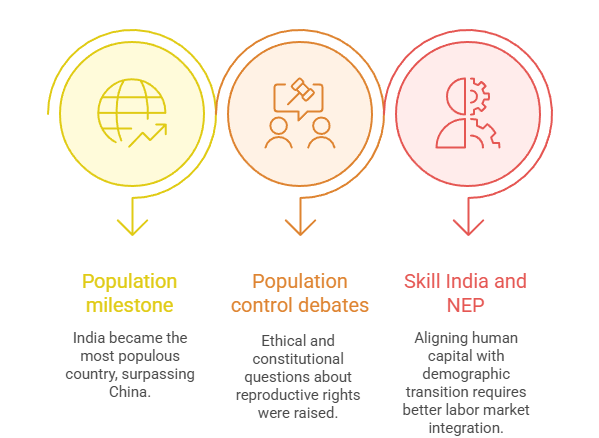
India Surpasses China in Population (2023)
Debates over Population Control Bill
Skill India and NEP 2020
ConclusionIndia’s demographic journey is a paradox of potential and peril. While declining fertility rates and an expanding youth base offer economic opportunities, regional disparities, patriarchal constraints, and aging population demand urgent attention. demographic transition is not just about memorizing stages—it’s about understanding India’s social structure, policy priorities, and future trajectory. PYQsPaper I:
Paper II:
|
To Read more topics, visit: www.triumphias.com/blogs
Read more Blogs:
Best Sociology Optional IAS Coaching in Delhi | Triumph IAS 2025
2 comments