

India and the Global Value Chains: A Strategic Approach
(Relevant for GS paper-3, Economic Growth)
|
India’s aspiration to become a $5 trillion economy by 2027 and achieve developed nation status by 2047 hinges significantly on its integration into Global Value Chains (GVCs). In an era marked by shifting geopolitical dynamics, technological advancements, and evolving trade patterns, India’s proactive engagement with GVCs is not just desirable but essential for sustainable economic growth. Understanding Global Value ChainsGlobal Value Chains refer to the full range of activities involved in the production of goods and services, from conception to end use, where different stages are located across various countries. Participation in GVCs allows countries to specialize in specific segments of production, enhancing efficiency and competitiveness. India’s Current Position in GVCsIndia’s participation in GVCs has been relatively limited compared to other major economies. According to a NITI Aayog report, India’s share in global component trade stands at approximately 3%. However, with targeted reforms and strategic integration, this share can potentially rise to 8% by 2030 . Opportunities for India in GVCs
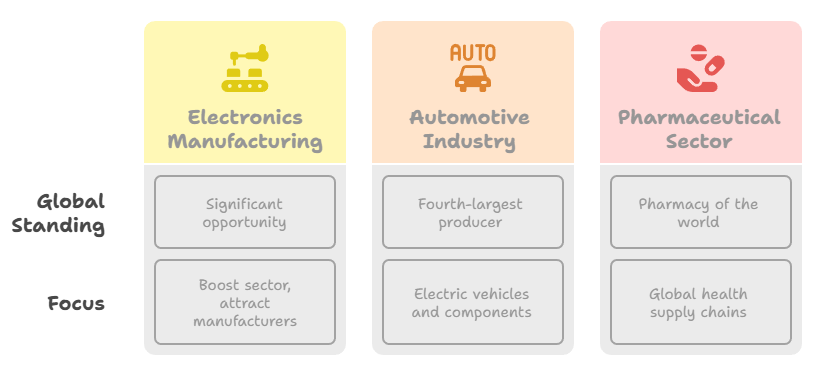
The electronics sector presents a significant opportunity for India. In FY23, domestic electronics production surpassed US$ 101 billion. Initiatives like the Production Linked Incentive (PLI) scheme aim to bolster this sector, attracting global manufacturers and enhancing export potential
India has emerged as the fourth-largest global producer of vehicles, with an annual production of nearly six million units. The automotive sector’s integration into GVCs can be further strengthened by focusing on electric vehicles (EVs) and related components .
Known as the “pharmacy of the world,” India supplies over 50% of global demand for various vaccines and 40% of generic demand in the US. Leveraging this strength can position India as a critical player in global health supply chains . Challenges to GVC Integration
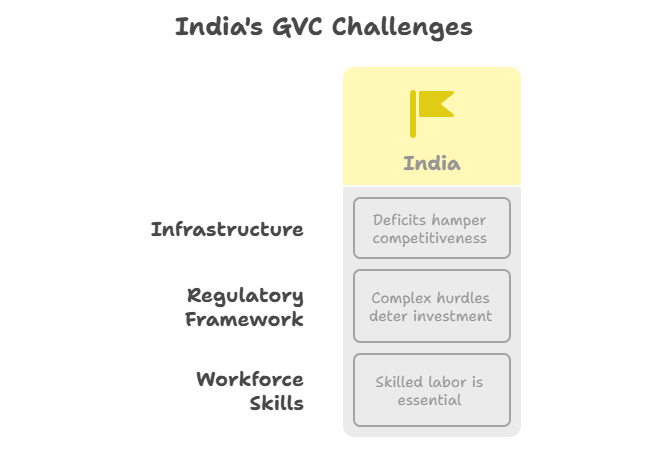
Inadequate infrastructure, including transportation and logistics, hampers India’s competitiveness. Projects like the East Coast Economic Corridor aim to address these gaps by enhancing connectivity and industrial development .
Complex regulatory frameworks and bureaucratic delays deter foreign investment and participation in GVCs. Streamlining procedures and ensuring policy stability are crucial for attracting global partners.
A skilled workforce is essential for high-value manufacturing. Investments in education and vocational training are necessary to meet the demands of advanced manufacturing sectors. Strategic Initiatives and Partnerships
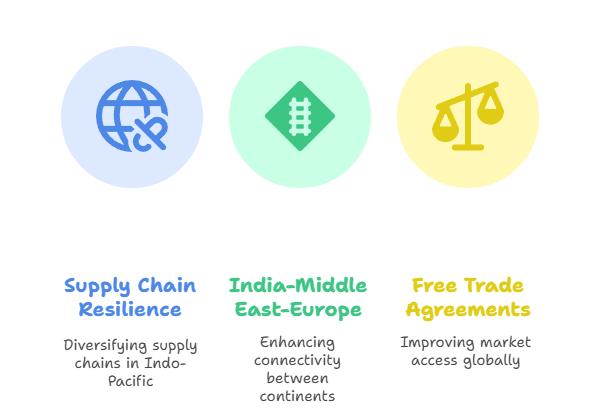
India, along with Japan and Australia, launched the SCRI to diversify and secure supply chains in the Indo-Pacific region, reducing dependence on any single country
This initiative aims to enhance connectivity between India, the Middle East, and Europe, facilitating smoother trade flows and integrating India more deeply into global supply chains
India’s FTAs with countries like the UAE, Australia, and EFTA members are designed to improve market access and integrate Indian industries into global markets The Road AheadTo capitalize on these opportunities, India must:
ConclusionIndia stands at a pivotal juncture where strategic actions can significantly enhance its role in Global Value Chains. By addressing existing challenges and leveraging its strengths, India can transform into a global manufacturing and services hub, driving economic growth and development in the years to come. |


To Read more topics, visit: www.triumphias.com/blogs
One comment